What the work is
Herbert Bayer designed the installation of MoMA’s Bauhaus: 1919–1928 exhibition, which opened in December 1938. The museum records nearly seven hundred examples across media. This brief addresses that presentation rather than every exhibition associated with Bayer.
How it was made
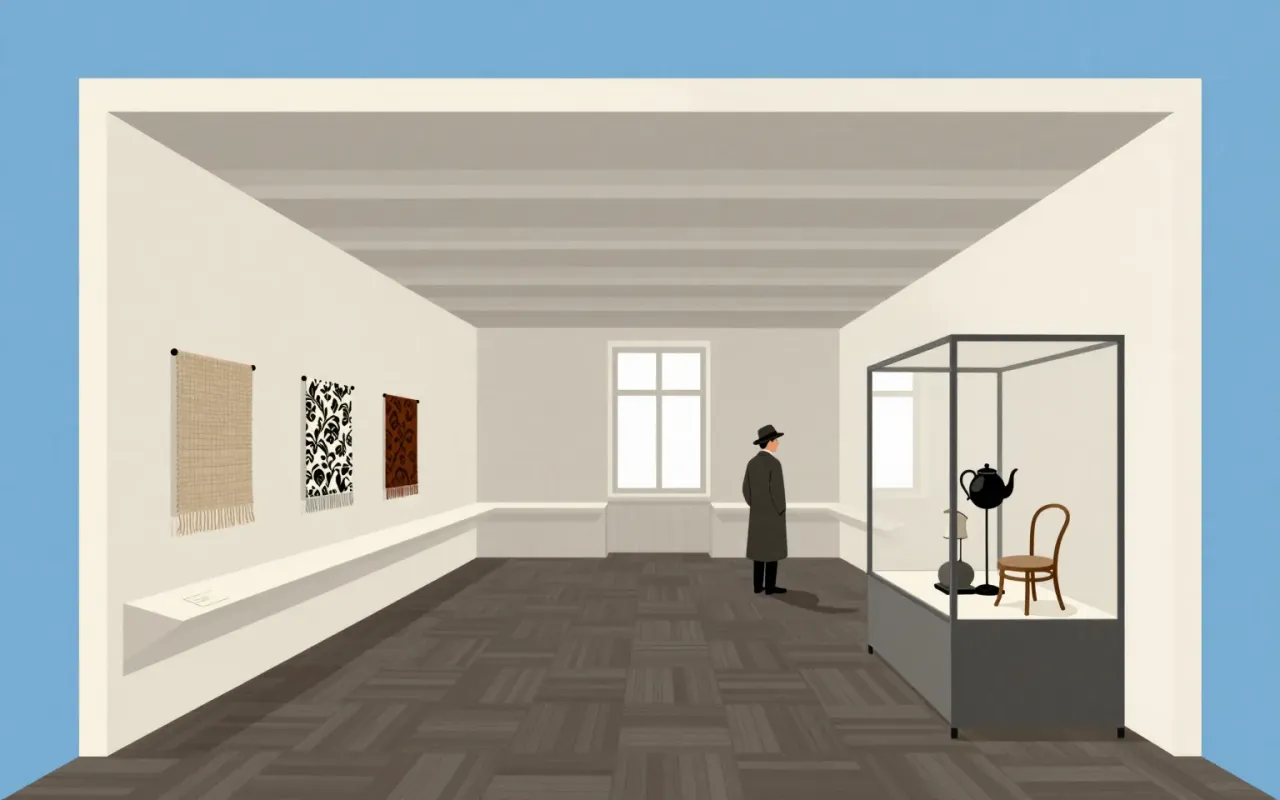
Textiles, metalwork, graphic material and other objects were gathered within one survey. Bayer’s role was to turn a diverse body of work into an encounter that visitors could navigate, applying display ideas to the museum setting.
What works
Placing different media in relation can make a school’s ambitions more intelligible than separating every discipline. Exhibition design gives the curator’s argument a spatial form and a sequence of attention.
What does not
The dates in the title matter. A survey ending in 1928 is a selective account of a school that continued afterwards, and its scale should not be mistaken for completeness.
What it influenced
MoMA identifies the Bauhaus as a model for its own multidisciplinary organization. Bayer subsequently designed Road to Victory with Edward Steichen, extending his work on how photographs and other material meet the moving viewer.
Is it worth your time
Worth studying through installation photographs and the checklist together. Ask what relationships the layout constructs and what falls outside the chosen period. The exhibition is both evidence about the Bauhaus and an authored interpretation of it.