designbriefs
Automotive

Citroën DS

A car that landed from the sky — and changed what mass production could absorb.

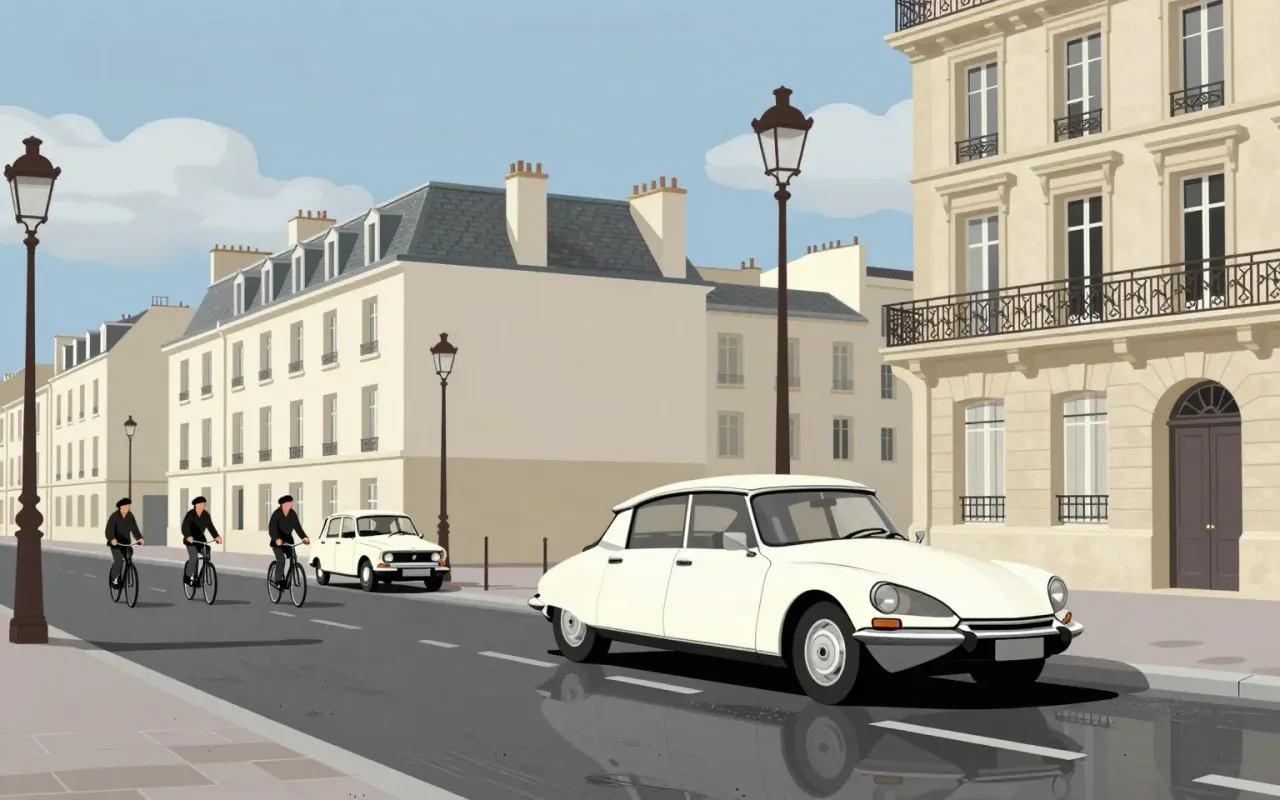
The Citroën DS is an industrial design for a mass-production automobile. Flaminio Bertoni co-styled it with André Lefèbvre. Paul Magès developed its hydropneumatic self-levelling suspension. It used hydropneumatic suspension and disc brakes — the first mass-production car to do so. It set new standards in ride quality, handling, and braking. It pushed the envelope in the ride vs. handling compromise possible in a motor vehicle. Its body design was aerodynamic and futuristic. Roland Barthes described it as looking as if it had 'fallen from the sky'. The DS Series 3 introduced directional headlights to automotive mass-production.

Subject
Work
Design credit
Flaminio Bertoni
Discipline
Industrial design
Organisation
Citroën
Worth your time?

Yes. Study the whole thing.

4.5/ 5
What works
  • ride-quality
  • handling
  • braking
  • aerodynamics
What does not
  • whatItInfluenced
  • whatDoesNot
Study it if
  • industrial-designers
  • automotive-historians
  • systems-thinkers
Skip it if
  • brand-strategists
  • digital-designers
  • typographers
The design analysis1 min read

What the work is

The Citroën DS is an industrial design for a mass-production automobile. It is defined by its aerodynamic, futuristic body and its integration of hydropneumatic self-levelling suspension and disc brakes.

How it was made

Flaminio Bertoni co-styled the Citroën DS with André Lefèbvre. Paul Magès developed its hydropneumatic self-levelling suspension. The DS used hydropneumatic suspension and disc brakes — the first mass-production car to do so.

What works

It set new standards in ride quality, handling, and braking. It pushed the envelope in the ride vs. handling compromise possible in a motor vehicle. Its body design was aerodynamic and futuristic. Roland Barthes described it as looking as if it had ‘fallen from the sky’. The DS Series 3 introduced directional headlights to automotive mass-production.

What does not

The sources do not establish any failure mode, limitation, or drawback of the DS. No claim is made about reliability, cost, serviceability, aesthetics over time, or user experience beyond ride, handling, and braking.

What it influenced

The sources do not state what the DS influenced. No successor models, designers, movements, or industries are named as affected by it.

Is it worth your time

Yes. It redefined what a production car could do in ride, handling, and braking — not through incremental refinement but by integrating radical systems into a single industrial design.

Same discipline · Automotive3 of 3
Up next in Design

Comic Sans

Vincent Connare · 1994 · 10:00

A font designed with a mouse for cartoon speech bubbles became a tool for memory science — and a litmus test for design dogma.

10:00