What the work is
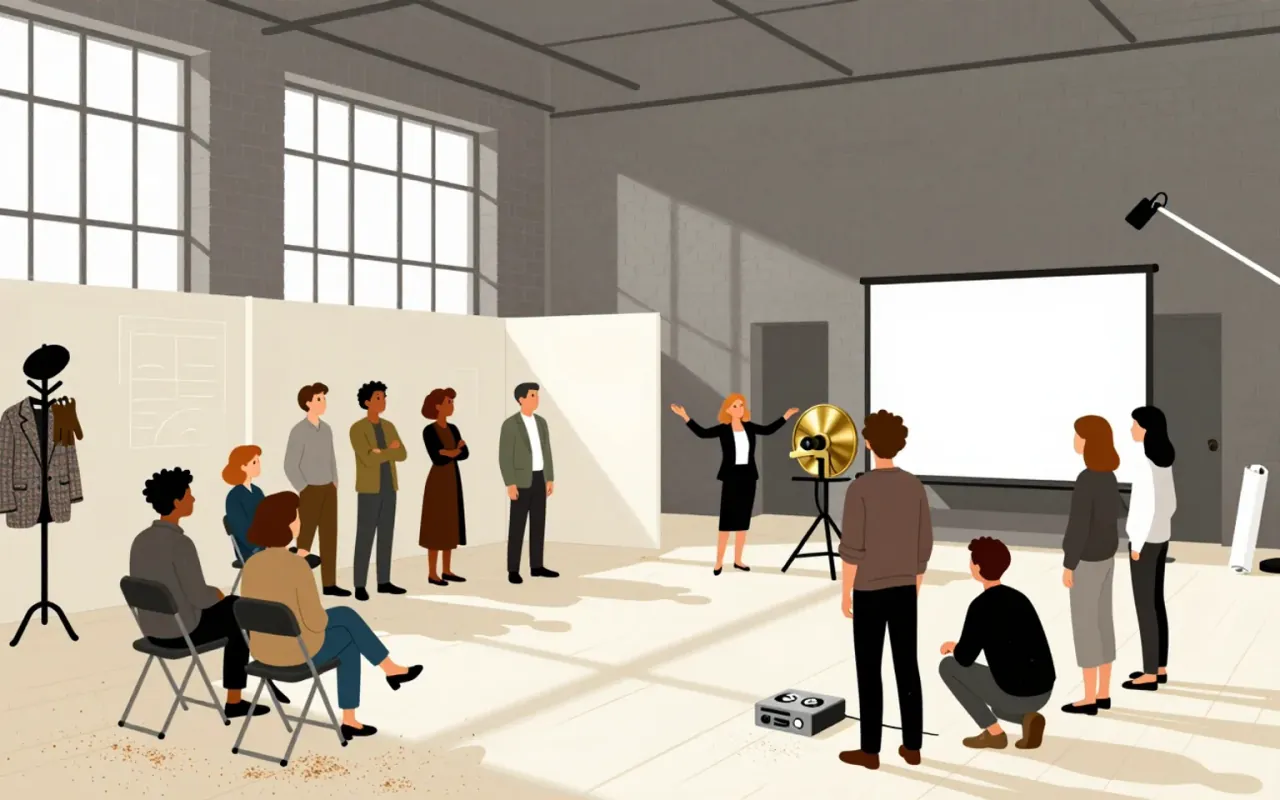
Fun Palace was an East London project developed from 1961 by Cedric Price with theatre director Joan Littlewood and cybernetician Gordon Pask. It remained unbuilt.
How it was made
The project centred on flexible space rather than a permanently fixed architectural programme. The collaboration brought architectural planning together with theatrical activity and an interest in responsive systems.
Price had started his own practice in 1960, the year before the Fun Palace project began.
What works
Its useful challenge is to treat a building’s capacity to change as part of the brief. Spaces can be considered in relation to activities and their changing requirements, rather than only as a completed arrangement to be photographed.
What does not
The proposal never became an operating building. Its ambitions therefore cannot be reported as measured visitor outcomes or proof that the proposed organisation would have worked exactly as intended.
What it influenced
Price’s flexible-space ideas influenced Richard Rogers and Renzo Piano’s Centre Pompidou. He also developed related ideas at a smaller scale in London’s Inter-Action Centre, connecting the proposal with subsequent architectural work.
The Inter-Action Centre at Kentish Town, London, dated 1971, is where Price used some of those ideas on a more modest scale.
Is it worth your time
Worth studying for cultural buildings and adaptable programmes. Read its influence alongside its unbuilt status: a project can change architectural thinking without supplying the practical evidence of a completed, inhabited building.