What the work is
Koloman Moser was a prolific applied artist who designed across graphic works, fashion, stained glass, ceramics, glassware, tableware, silver, jewellery, and furniture — not as isolated objects, but as coordinated expressions of a single aesthetic principle.
How it was made
Moser co-founded Wiener Werkstätte in 1903 to produce household goods through studio-based craft collaboration. He co-published Die Quelle (1900–1902), a three-volume portfolio of graphic designs for tapestries, fabrics, and wallpaper. His architectural commissions included mosaics and stained glass for the Kirche am Steinhof (1904) and decorative schemes for Otto Wagner’s Linke Wienzeile Buildings (1904).
What works
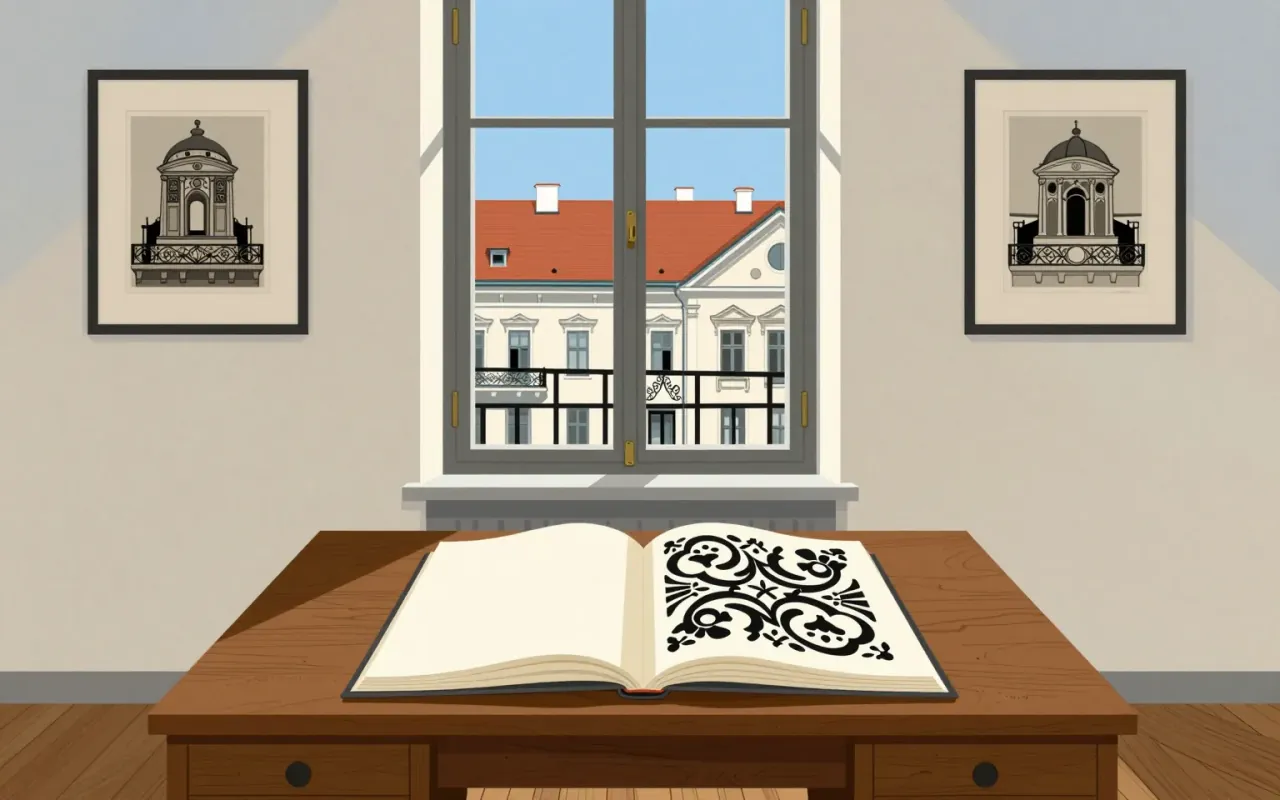
His synthesis of classical Greek and Roman motifs — clean lines, repetitive patterns — functions as a deliberate counterweight to Baroque excess. This method delivers visual coherence across disparate media without relying on historical pastiche or narrative illustration.
What does not
The material does not establish Moser as an industrial designer in the mass-production sense. No claim links him to machinery, standardisation, patents, or factory systems. His work remains tied to artisanal execution and bespoke commission.
What it influenced
The material does not state what Moser influenced. No downstream effects, adopters, or lineages are named or implied in the sources.
Is it worth your time
Yes — his output across media establishes a coherent design logic rooted in classical restraint, not stylistic eclecticism. It is worth your time if you are tracing how functional domestic objects became vehicles for formal discipline in early modernism.