What the work is
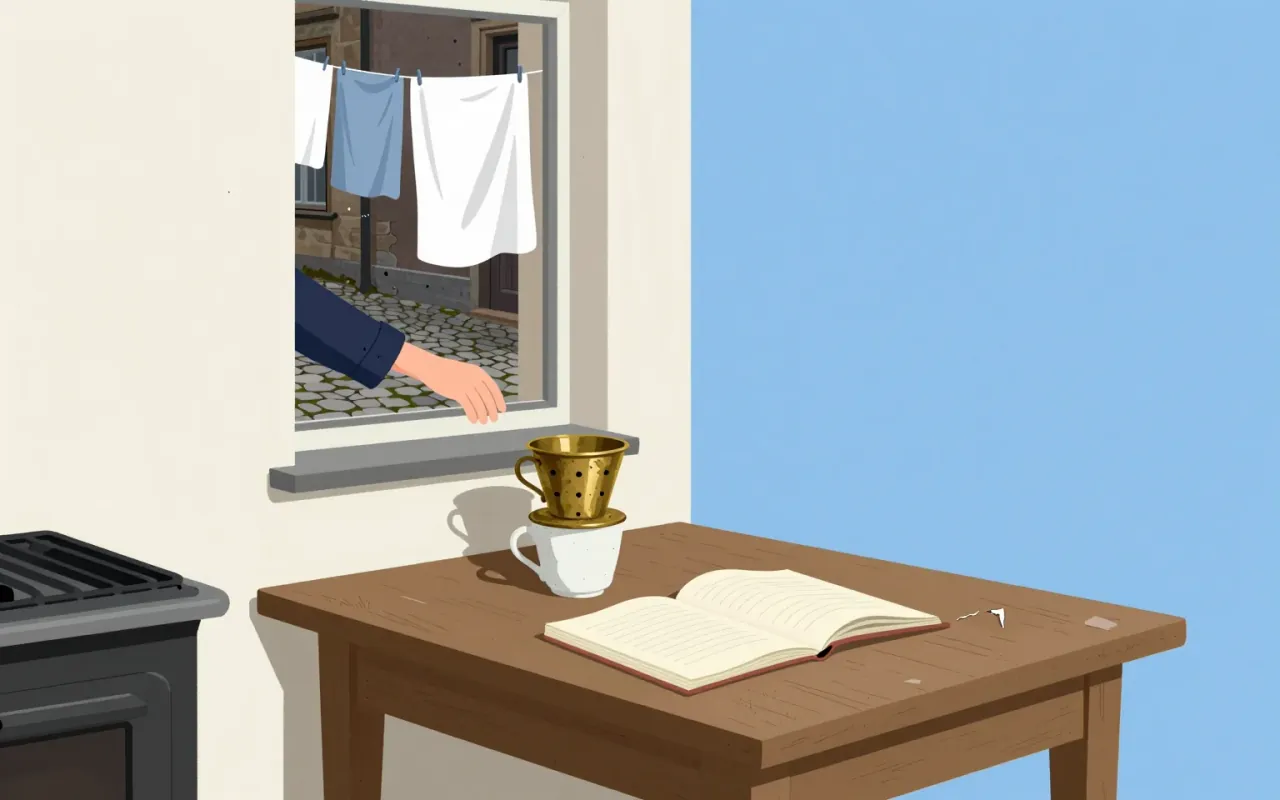
Melitta Bentz developed her paper coffee filter in Dresden in 1908. Her experiment paired a perforated brass vessel with blotting paper taken from a notebook.
Wikipedia’s account of Bentz names three problems she found in brewing coffee. Percolators, which cycle boiling water through the grounds, were prone to overextraction. Existing espresso filters left grounds in the drink. Linen bags and cloth filters were difficult to use and impossible to clean. After some trial and error she tried the notebook paper in the brass pot, and her solution aimed at better-tasting coffee with an easier process.
How it was made
The paper sat inside the perforated vessel. Water passed through the coffee and filter into a receiving cup, while the paper retained grounds and could be removed after brewing.
What works
The design addressed brewing and cleaning together. A simple replaceable part changed the routine around a reusable vessel, placing the messy material in something that could be lifted out.
What does not
Making the filter disposable also made replacement paper part of the system. Ease of cleanup and continuing material consumption are linked features; neither should disappear from an assessment of the design.
The paper supply could itself become a constraint. When the First World War began, Bentz’s husband and elder son were drafted, and her brother Paul Liebscher helped keep the company afloat. Metals were being used for Zeppelin construction, paper was rationed, and the British blockade made it hard to import coffee beans, so demand fell.
What it influenced
Bentz and her husband established the Melitta business in 1908, and the company subsequently developed the filter and its presentation. The original improvised arrangement became the starting point for manufactured brewing products.
At first the couple made filters at home, with Hugo handling production and Melitta leading marketing. After the war the company expanded rapidly. Several imitators of the design appeared in the early 1920s, and in 1925 the company created the red and green packaging it still uses. In 1929 it moved from Dresden to Minden, and in 1932 it introduced cone-shaped filters, and the first Melitta lettering appeared that year to protect the business further from imitators.
Is it worth your time
Worth studying for everyday problem solving. Identify the role of each component before comparing later filter shapes. The core lesson is how an inexpensive material can reorganise a task when placed at the right point in the process.