What the work is
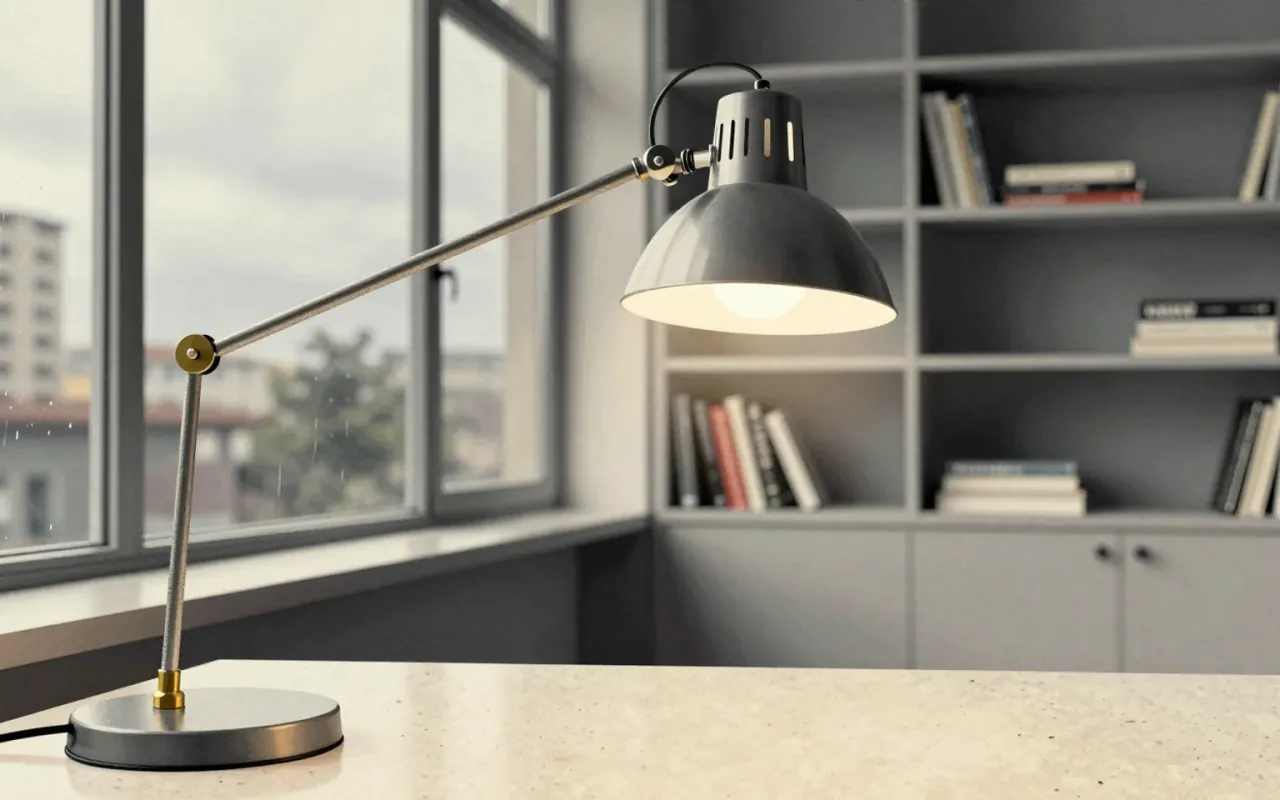
Michele De Lucchi and Giancarlo Fassina designed the Tolomeo desk lamp for Artemide in 1986. Its name is the Italian form of Ptolemy. The original desk version combines a heavy base, two polished aluminium arm sections and a matte aluminium reflector.
How it was made
External steel tension cables connect to springs inside the arms. Each original arm section is approximately 45 centimetres long, while the reflector head can swivel through 360 degrees. These are separate parts of the adjustment system: the arms position the lamp and the head changes the reflector’s orientation.
What works
The useful design lesson is the division of a task among visible components. Read the base, arms, cables and reflector together, rather than treating the lamp’s outline as the whole design. The swivelling head gives a concrete point of comparison with a fixed shade.
What does not
Adjustability is worth examining in relation to an actual desk. The published arm dimensions and the presence of a substantial base give you two specific things to check: the position you need the reflector to reach and the space available for the base. Appearance alone cannot settle that fit.
What it influenced
The Tolomeo design has extended into floor lamps and wall sconces. Comparing those variants offers a focused study question: which elements of the desk lamp remain useful when its relationship to the supporting surface changes? This is a documented product family, rather than evidence that every later articulated lamp descends from it.
Is it worth your time
Study the Tolomeo for the relationship between adjustment and form. Following the path from base to reflector makes a familiar desk object a clear example of several components working together.