What the work is
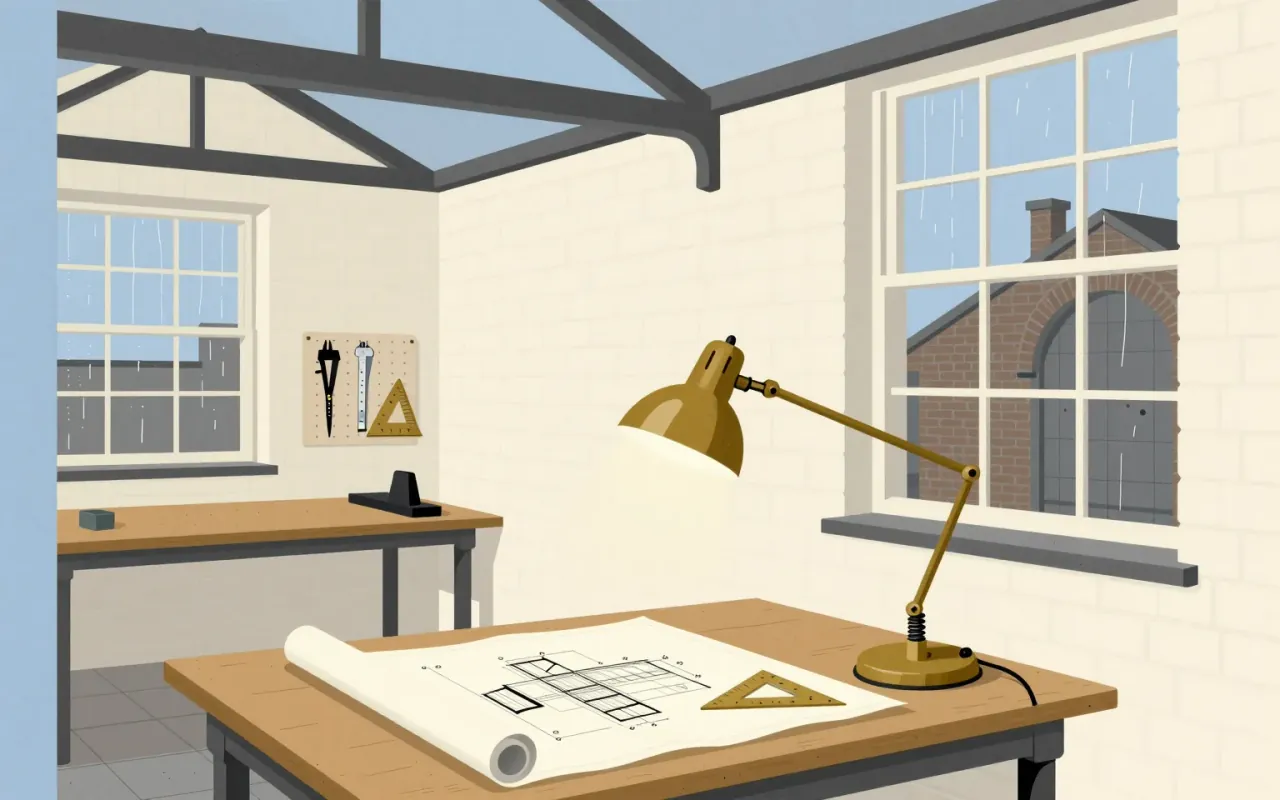
A balanced-arm lamp. Not a desk lamp, not a task light by definition — just a lamp whose arms stay in place due to spring-and-joint balance.
How it was made
George Carwardine, a vehicle suspension specialist, designed the lamp in 1932 using a spring-and-joint mechanism derived from his suspension work. He patented it (UK patent 404,615), manufactured it himself in Bath at Cardine Accessories, then licensed production to Herbert Terry and Sons in 1934.
What works
All springs are placed near the base. The joints and spring tension allow movement into a wide range of positions which the lamp maintains without clamping.
What does not
The material does not establish any aesthetic intent, user interface refinements, material specifications, dimensions, weight, finish, or ergonomic claims. It says nothing about durability, cost, service life, or user experience beyond positional stability.
What it influenced
The material does not state what the Anglepoise lamp influenced. No successors, imitators, derivatives or cultural effects are mentioned.
Is it worth your time
Yes — it is a rare case where a single mechanical insight solves a functional problem across domestic and professional contexts, with no compromise in stability or adjustability.