A name written as a mark
Frank Mason Robinson, John Pemberton’s bookkeeper, devised the Coca-Cola name and selected its distinctive cursive lettering. The writing draws on Spencerian script, a form of formal handwriting familiar in nineteenth-century America. The logo dates to 1885, the year before the drink’s first sales at Jacob’s Pharmacy in Atlanta on May 8, 1886. The name Robinson devised refers to two of the drink’s original ingredients, coca leaves and kola nuts.
Script in commercial use
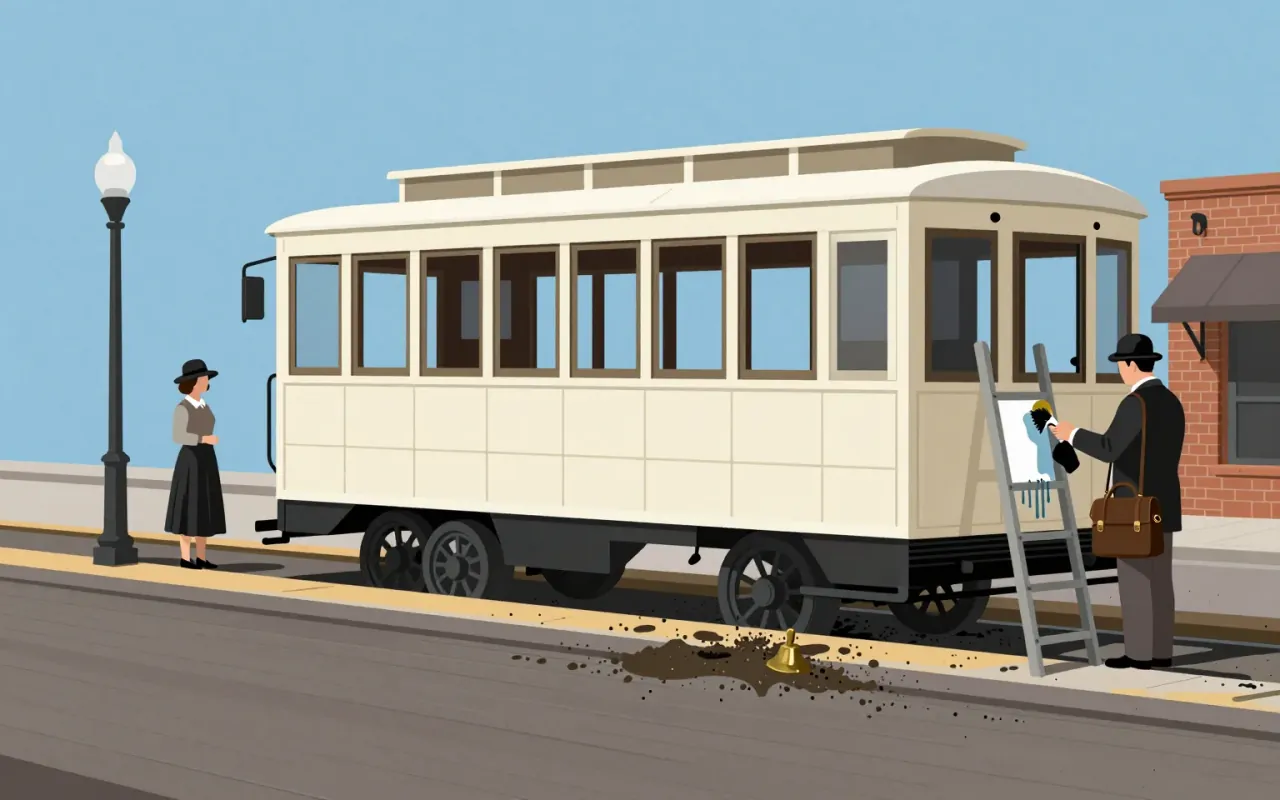
Robinson also contributed to early promotion, including banners, streetcar signs and drink coupons. The lettering belonged to that wider effort to establish recognition for a named product. Its history is distinct from the later development of the contour bottle. The first advertisement for the drink ran in the Atlanta Journal on May 29, 1886, and Robinson is credited with suggesting that thousands of free drink coupons be given away. The name itself was handled with care: the company long preferred the full name to the nickname “Coke”, fearing the shorter term would become a generic trademark, and it adopted “Coke” officially in 1941 and registered it in 1945.
Looking at the lettering
Study the wordmark as a continuous arrangement rather than as a set of interchangeable font characters. Examine the repeated Cs, the spacing and the relationships between broad gestures and smaller letters. Then compare the mark at different sizes. These questions help explain what a script-based identity asks of reproduction and recognition without attributing every part of the brand’s history to the lettering alone. Two later episodes show how far the mark is treated as a thing in itself. In 1951 a conspiracy theory in Egypt held that the logo, reflected in a mirror, spelled out a phrase in Arabic, and the company came under scrutiny over it. In Australia in 2011 the “share a Coke” campaign replaced the logo on bottles with first names, drawn from the 150 most popular names in the country, and the same campaign reached the UK in 2013.