What the work is
A method of architectural practice that treats buildings, landscapes, furnishings, and details as inseparable carriers of poetic meaning rooted in place, tradition, and history.
Enric Miralles Moya (1955–2000) was a Spanish architect from Barcelona who graduated from the Barcelona School of Architecture in 1978. In 1984 he formed an office in Barcelona with his first wife, Carme Pinós, which they led together until 1991. In 1993 he formed EMBT Architects with his second wife, Benedetta Tagliabue. Wikipedia says his architectural language can be difficult to classify, and that it draws on Spanish architects such as Alejandro de la Sota, José Antonio Coderch and Josep Maria Jujol, on Le Corbusier, Louis Kahn and Alvar Aalto, and on Russian Constructivism.
How it was made
Miralles used numerous models and iterative drawings as the main tools of the design process. He began from landscape or townscape context and designed holistically—from building mass to furniture and exterior installations.
Miralles designed freely formed buildings that use massive building materials and steel and grow from their relationship with the environment. The materials are often unusual and are generally left with natural surfaces. The built work shows the range: with Pinós, the Igualada Cemetery (1985 to 1994), the Olympic archery range for the 1992 Summer Olympics and a pergola for the Olympic village; with Tagliabue, the Santa Caterina Market hall conversion in Barcelona and the Scottish Parliament Building in Edinburgh. The furniture includes the Sentada chair for Artespaña and, in 1993, the Iñes Table, designed for a project in Grenoble as a multi-use piece accommodating a variety of working and storage requirements.
What works
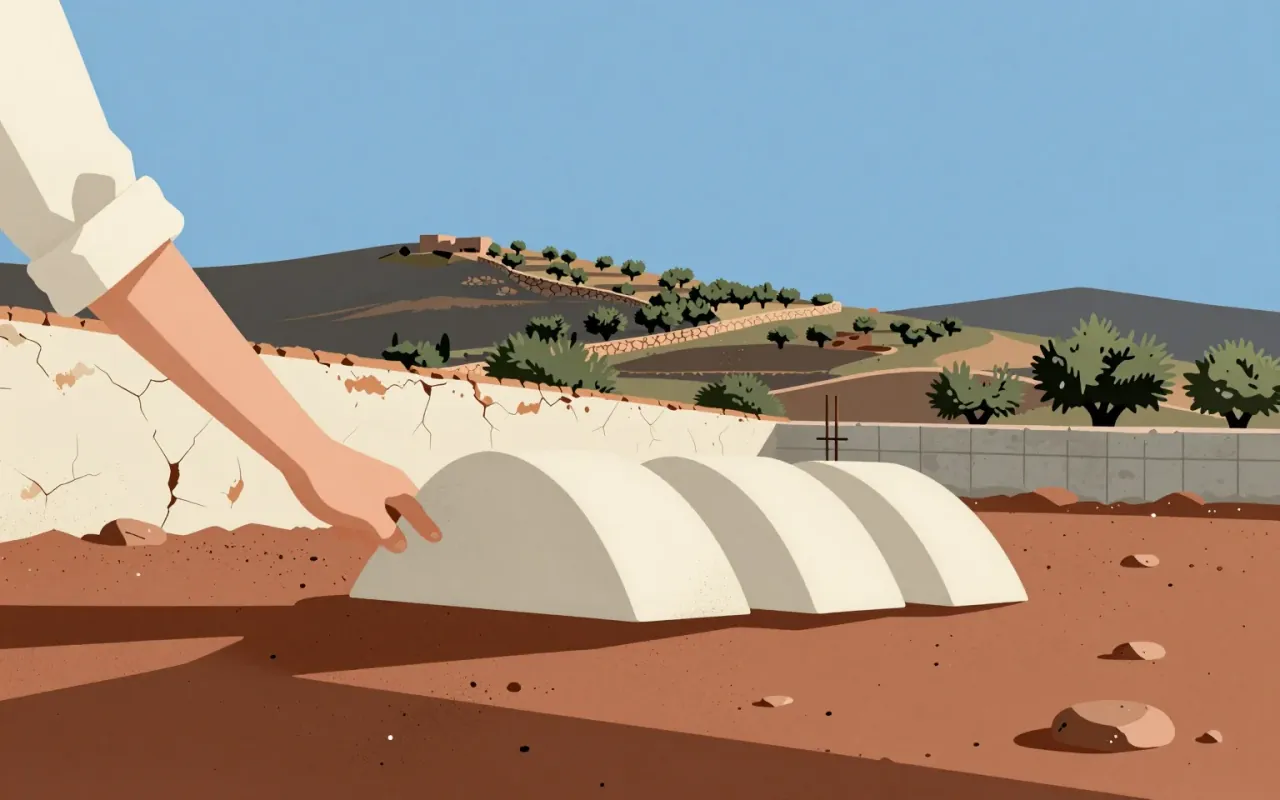
The integration of environment, form, material, and detail into a single semantic system works. The execution of detail carries equal meaning to overall form. Form and material serve as personal, poetic interpretations—not illustrations—of place and history.
Wikipedia reports that his critics attest to the personal, poetic reading of place, tradition and history. Charles Jencks, writing in Architecture Today, summed up the style as a preference for piling on motifs and ideas, such as upturned boats, keel shapes, deep window reveals, crow-steps, prow shapes and diagonal gutters, and he described the Scottish Parliament as a kind of small city with too much to digest in one short visit.
What does not
The sources do not establish any failure, limitation, or shortcoming in Miralles’ work. No claims about cost, buildability, maintenance, user experience, or post-occupancy performance appear.
The Scottish Parliament Building was his largest and most controversial project, and it was unfinished when he died of a brain tumour at 45. The Scottish Parliament and the Gas Natural building in Barcelona were finished only after his death. Jencks called the dark granite gun-shaped motif that repeats at huge scale “the most arbitrary of several questionable ornaments”, and said the parliament would take three or four visits to judge. The building later won the 2005 RIBA Stirling Prize.
What it influenced
The sources do not state what Miralles influenced. No successors, movements, projects, policies, or pedagogical shifts are named or implied.
Is it worth your time
Yes—if you are interested in how architecture can embed meaning through material, detail, and environmental reciprocity, not just form.