What the work is
The Musée d’Orsay is the adaptive reuse of the Gare d’Orsay railway station in Paris, led by Gae Aulenti after her role expanded from interior designer to overall architectural planner.
How it was made
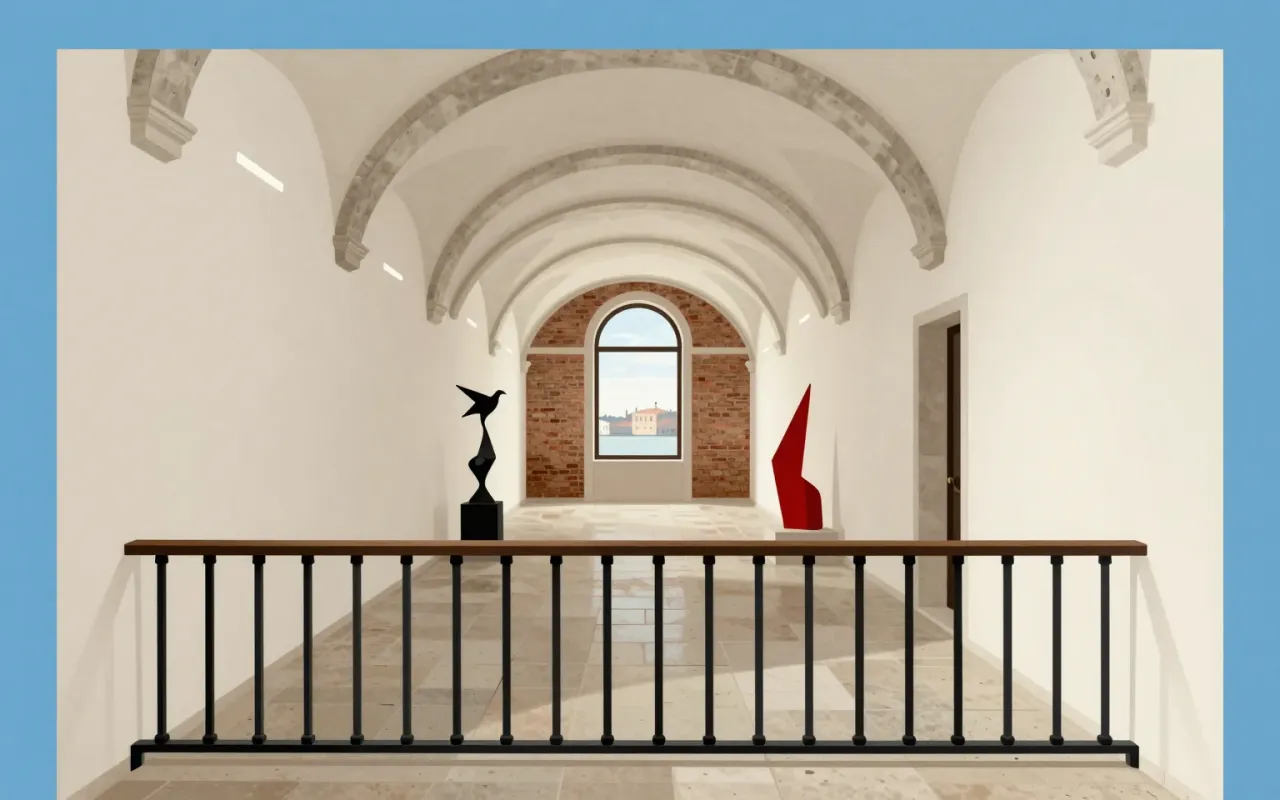
Aulenti expanded from interior designer to overall architectural planner after disagreements between the original firm ACT and the curators. She divided the Gare d’Orsay into three levels. She re-aligned the ground-floor corridor to the long axis and set it on a gentle slope to form a sculpture garden. She added balconies overlooking the corridor to the mezzanine and upper level. She introduced natural light via the original barrel-vault ceiling, Rue de Lille windows, and new oculi. She added artificial lighting to achieve uniform illumination. She advocated for reductions to the ACT design’s neo-classical ornamentation per curatorial feedback.
What works
The three-level division clarifies circulation and collection zoning. The sloped, realigned ground-floor corridor creates a legible central spine and functional sculpture garden. Balconies extend viewing access vertically. Layered natural light (vault, windows, oculi) combined with artificial lighting achieves uniform illumination. Reduction of neo-classical ornamentation responds directly to curatorial priorities for neutrality and focus.
What does not
The document does not establish that Aulenti designed new structural elements, altered load-bearing systems, relocated services, or specified materials, finishes, or fixtures. It does not say she resolved conflicts with ACT beyond her expanded role, nor does it describe visitor flow, accessibility provisions, conservation methodology, or budget constraints.
What it influenced
The document does not state what the project influenced. No subsequent works, designers, policies, or movements are named or implied.
Is it worth your time
Yes. It demonstrates how a single architect can pivot from interior specialist to lead planner mid-project, then impose coherent spatial logic on a contested historic structure — without inventing new architecture, but by editing, realigning, and recalibrating what already existed.