What the work is
Grete Jalk designed the GJ Lounge Chair in 1963. MoMA’s example, manufactured by Poul Jeppesen in Denmark, is made from teak plywood. Its folded form should not be confused with a chair that folds shut for storage.
How it was made
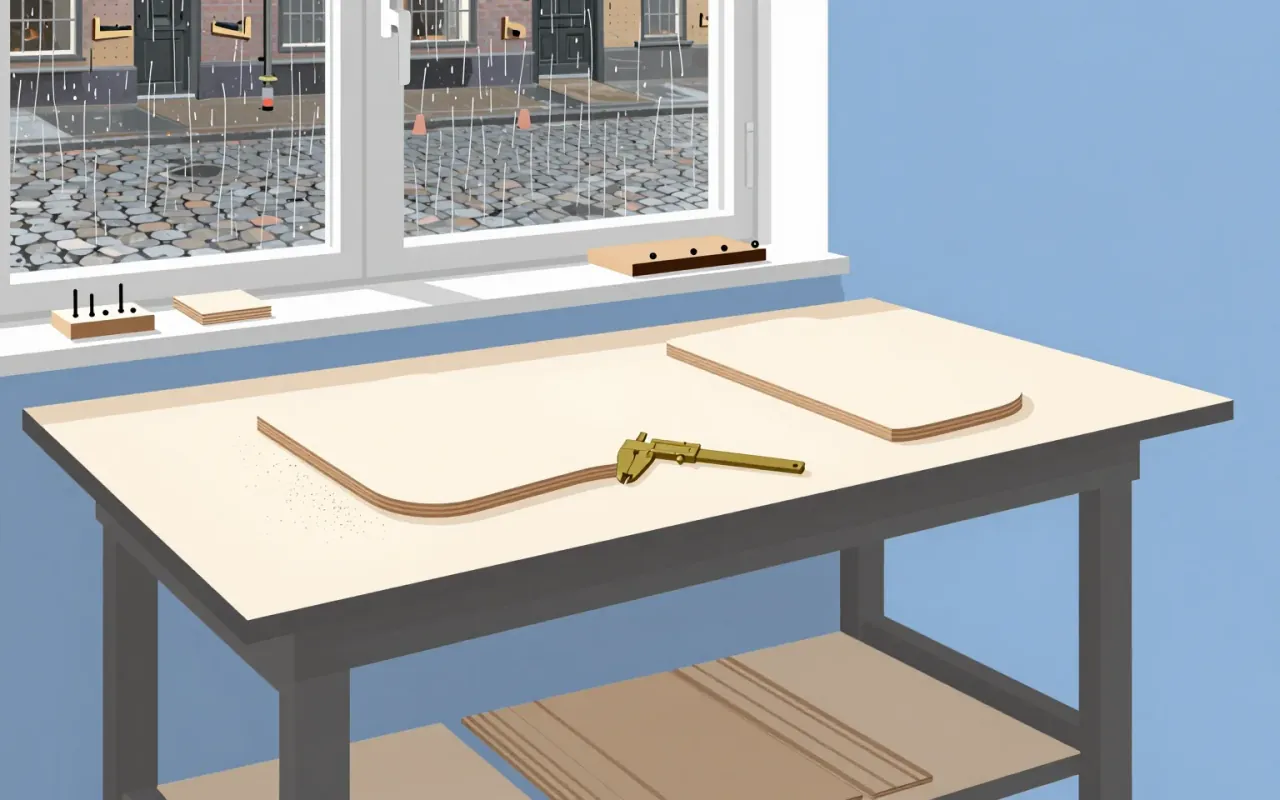
The seat and back are formed from two pieces of plywood. MoMA describes the lamination process as sufficiently difficult that only about three hundred chairs were produced during the 1960s.
What works
The small number of components makes the construction readable. Follow the changing direction of each surface: folds give the sheet material volume, turning a flat-material idea into a spatial structure.
What does not
Simple appearance did not translate into straightforward manufacture. The limited early production is a concrete reminder that reducing the number of parts can shift complexity into the process used to make each part.
What it influenced
The design was reissued in 2009. Its return to production and inclusion in MoMA’s plywood and women-in-design exhibitions document continuing interest in Jalk’s material experiments.
Is it worth your time
Worth studying for anyone developing formed surfaces. Sketch the two components separately before drawing the assembled chair; this reveals how much work their geometry performs before any additional piece is introduced.