A textile that holds its shape
Marcel Wanders designed Knotted Chair for the Dutch collective Droog Design. The work combines macramé with composite materials developed through collaboration with the aviation faculty at Delft University of Technology.
Craft and material research
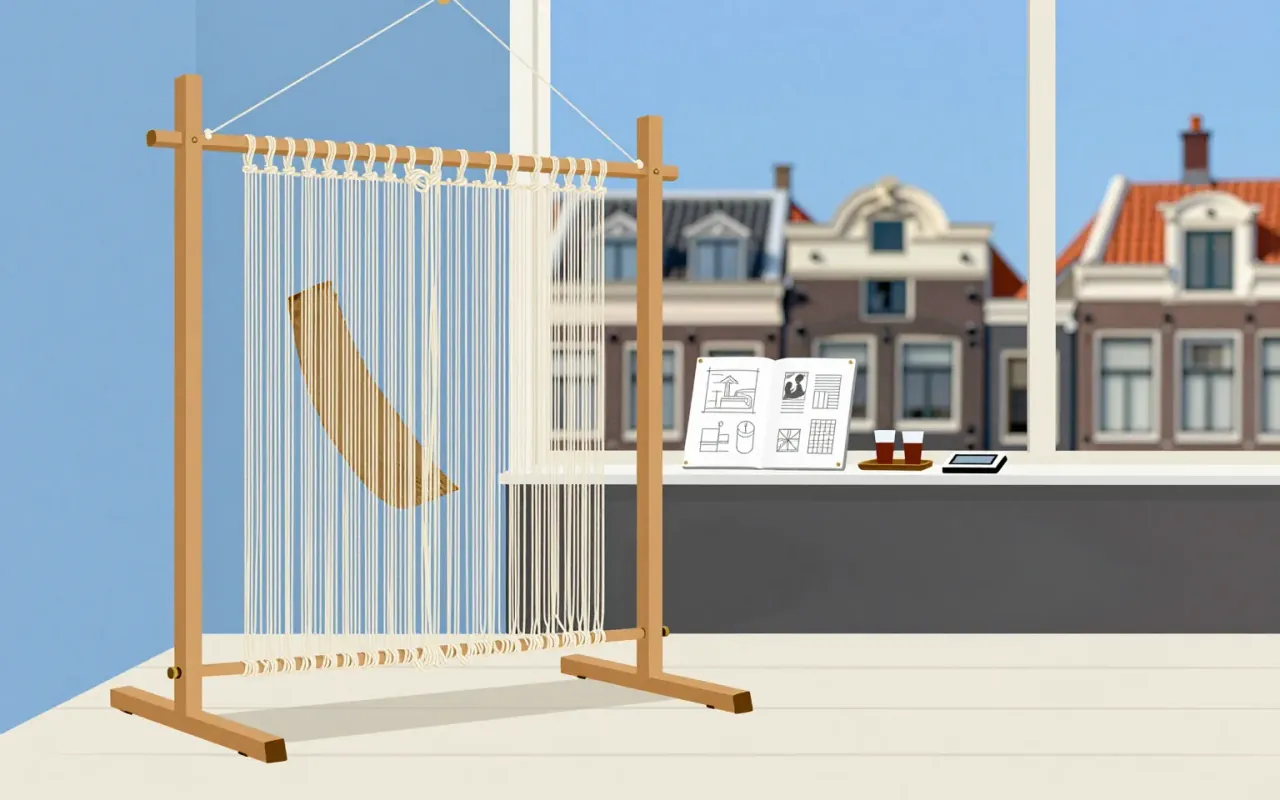
Aramid fibres surround a carbon core to form the cord. The cord is knotted by hand, shaped, and impregnated with epoxy resin. Hardening the resin fixes what began as a flexible network into a chair. The making process connects a familiar textile technique with a different structural behaviour.
What to examine
Examine the knots, the openings between them and the overall curve as distinct scales of the same construction. The useful question is how the final object carries signs of its flexible beginning. Compare a process photograph with the finished chair: the transition explains more than describing the result as either handmade or high-tech. Neither label alone accounts for how it takes form.