What the work is
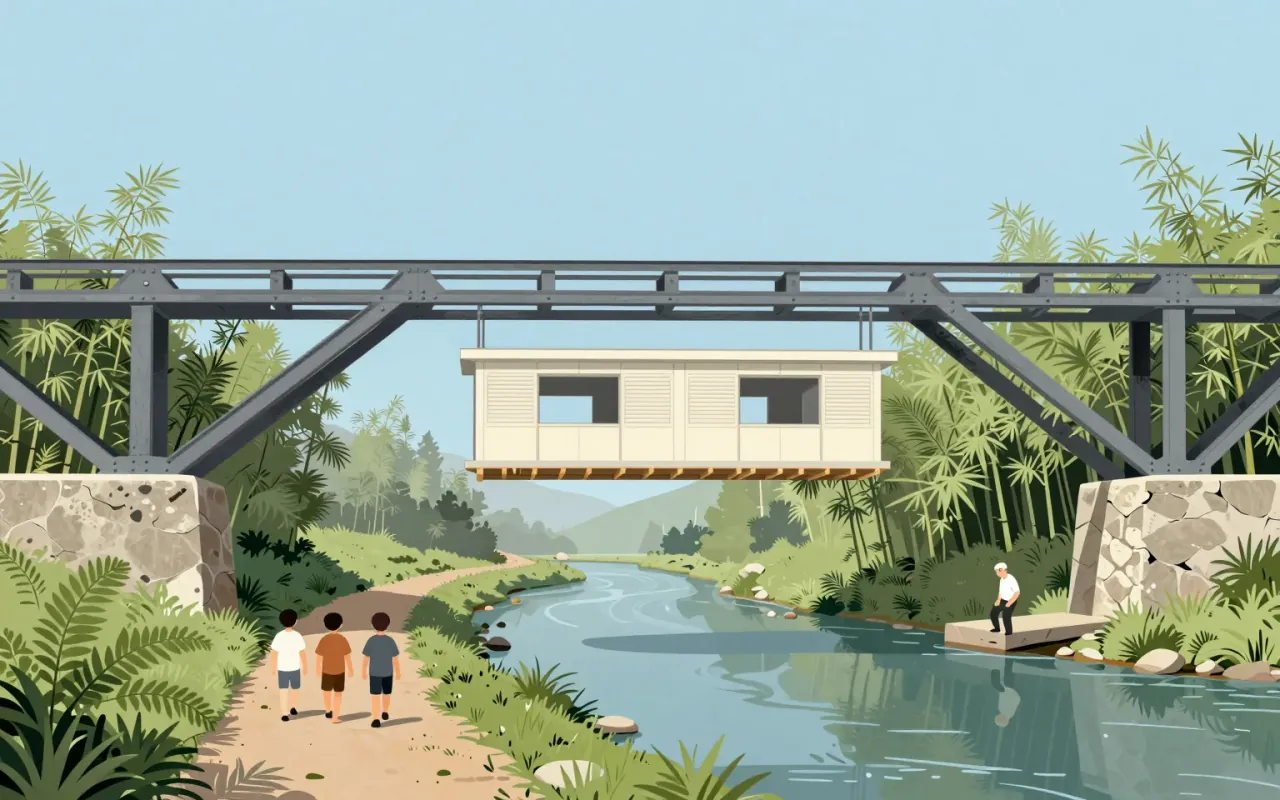
Li Xiaodong’s Bridge School in Xiashi, Fujian, offers a concrete introduction to his architectural practice. Completed in 2008, the project is credited to Li Xiaodong Atelier and its team, with the village as client.
How it was made
Two steel trusses span the creek, and the school occupies the space between them. The arrangement joins a building programme with a crossing, placing a small educational facility within the village’s larger pattern of connections.
What works
The project addresses more than the boundary of its rooms. A shared piece of infrastructure can connect separated places while accommodating a specific use, making the relationship to the settlement central to the architecture.
What does not
The award jury’s account of social unity is an appreciative interpretation. It does not replace evidence from residents and teachers about daily use or the building’s longer-term operation.
What it influenced
Bridge School received an Aga Khan Award in the 2008–2010 cycle. The recognition supplies a documented point of reference for discussing Li’s work, without treating one project as proof of every claim about the practice.
Is it worth your time
Worth studying through a site plan before the architectural photographs. Trace the crossing and the school entrances, then consider how the two uses meet. The project is strongest as a proposition about relationships at a small scale.