What the work is
In his 2009 TED talk, Stefan Sagmeister described closing his design studio for a year after seven years of work.
How it was made
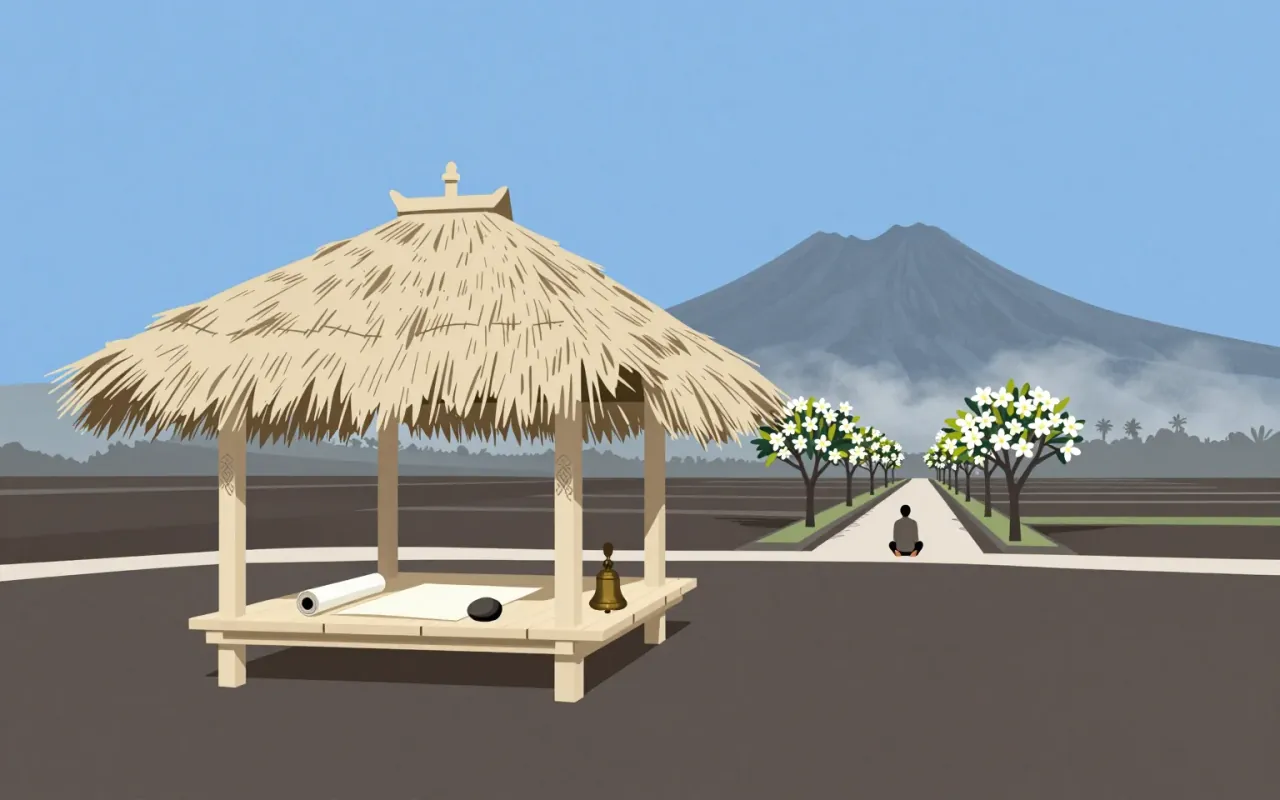
He proposed redistributing some years usually reserved for retirement across working life. TED’s account links the break with experiments and projects inspired by time in Bali, treating the interval as part of creative development.
TED’s running notes give the rule in two parts: add five years to your planned working life, and take a year off every seventh year. Sagmeister had just returned from a long sabbatical in Indonesia when he spoke, and the notes say that the busyness of that time cleared his mind and renewed his excitement in his own work. He gave his reason in six words: “My job became a calling again.” The post-sabbatical work he showed included new furniture and the opening titles for a work in progress called “The Happy Film,” which the notes say were created by pigs, ducks and monkeys.
What works
The proposal protects time that client deadlines can otherwise consume. Giving experimentation a place in the calendar makes it an explicit commitment instead of an activity left to spare moments.
What does not
A studio able to fund a long closure is not representative of every designer’s circumstances. One person’s experience does not demonstrate that the same schedule will improve another practice or be economically possible.
What it influenced
The talk made his working arrangement available for public discussion. Its useful legacy is a question about how creative time is organized, rather than a universal productivity formula.
The notes record one more detail. The notes cite Sagmeister’s straw poll as showing that about 5 percent of TEDsters had taken a sabbatical. Their suggested follow-up: find someone who has taken one, ask how they did it and whether it was worth it, then start to make your own plan.
Is it worth your time
Worth watching as a personal case study. Separate the principle of protected experimentation from the exact length of the break, then consider what resources and obligations made his version possible.