What the work is
AEG appointed Peter Behrens as an artistic consultant in 1907. His work for the electrical company extended across its logotype, publicity, products and industrial buildings.
The same year, Wikipedia says, he became a founding member of the German Werkbund, an organisation focused on improving the design of everyday objects and products. It describes the AEG turbine factory as the first large-scale demonstration of the Werkbund’s aims, and says Behrens designed the entire corporate identity, including logotype, product design and publicity. For that he is considered the first industrial designer in history.
How it was made
The scope joined graphic and industrial design with architecture. The 1909 turbine factory in Berlin was part of a wider relationship with the company, rather than a standalone architectural commission detached from its public identity.
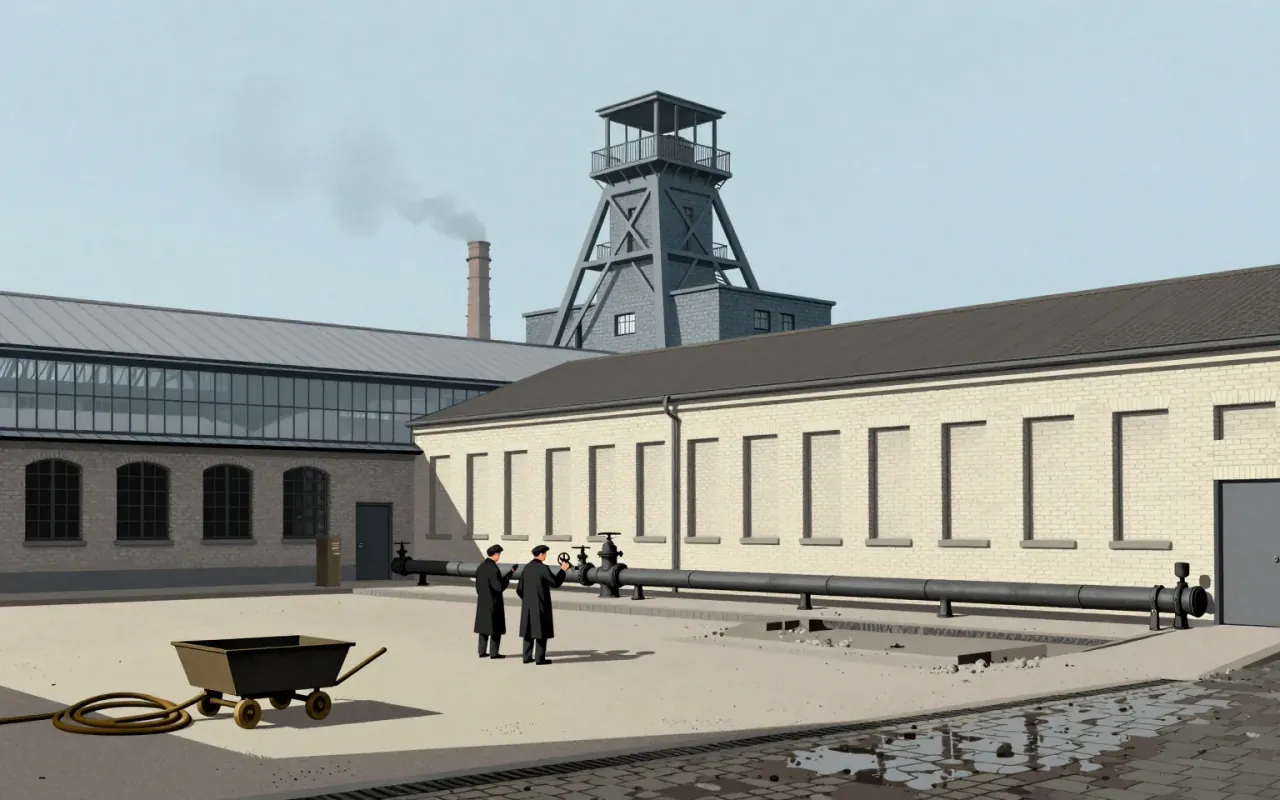
The buildings were a series of factories at AEG’s two Berlin sites. The best known is the 1909 Turbine Factory at Moabit, which Wikipedia calls an early example of Modernism. At the Humboldthain site he then designed four new buildings; his projects there include the High Voltage Factory (1909-10), the Large Motors Factory (1912) and the Small Motors Factory (1913). These showed that he was as interested in massive, bold, classical and picturesque effects, depending on context, as in expressing modernity.
What works
The programme makes corporate identity tangible at several scales. A printed mark, an appliance and a factory can all shape how an organisation is understood, even though their practical requirements differ.
What does not
A broad design remit does not mean every object shares one form. Behrens’s buildings responded to different settings, so the programme is better examined through relationships and decisions than reduced to a uniform visual formula.
What it influenced
Behrens’s AEG work became an early landmark in coordinated corporate design. His practice also employed figures including Walter Gropius, Ludwig Mies van der Rohe and Le Corbusier, placing the office within a wider architectural network.
Is it worth your time
Worth studying for the scope of identity work. Compare a graphic application, product and building, and identify which values connect them. Consistency can operate through purpose and treatment as well as repeated shapes.