What the work is
Arabesco is a table by Carlo Mollino. The Montreal Museum of Fine Arts dates its example to 1950 and credits its production to Apelli e Varesio in Turin.
How it was made
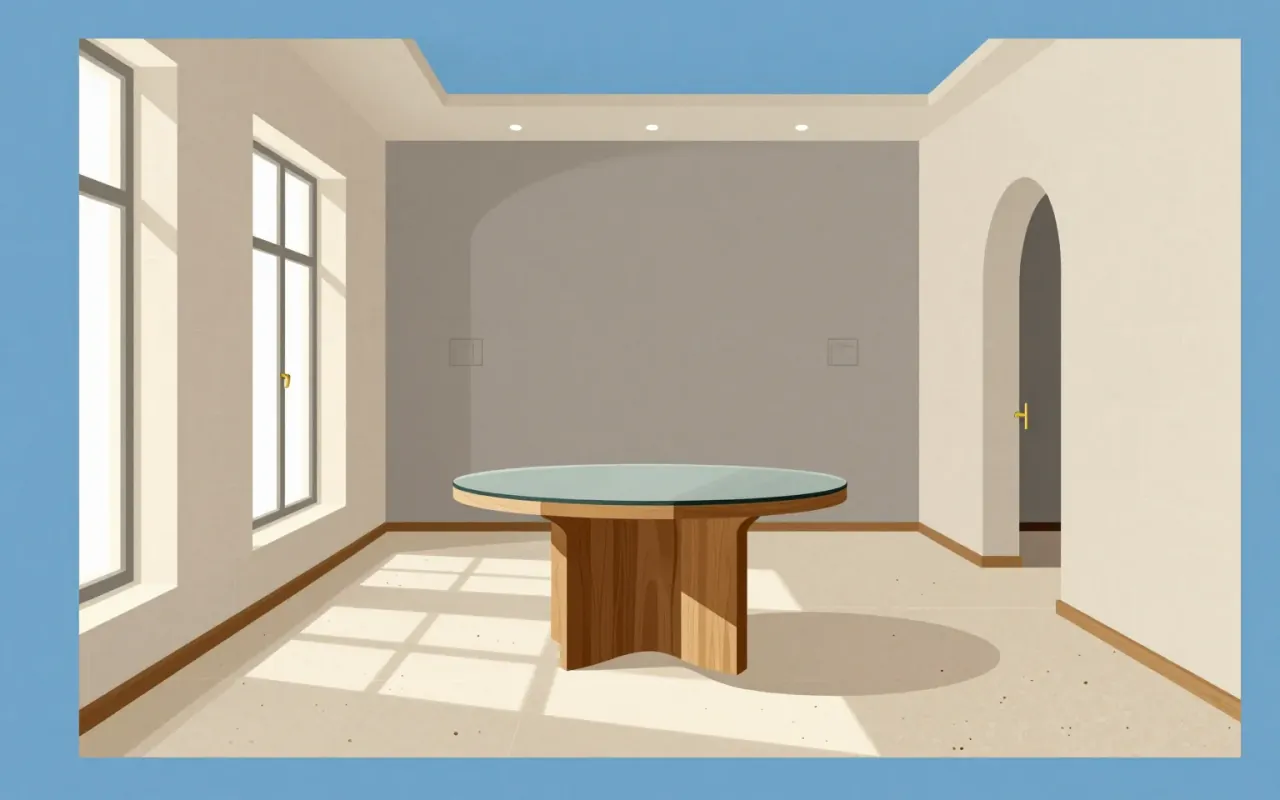
The museum identifies maple-faced plywood, glass and brass. Those different materials divide the object into a shaped wooden structure, a transparent surface and metal elements, rather than disguising everything beneath one finish.
What works
The combination rewards looking through the table as well as at its outline. A transparent surface makes the relationship between the top and its support part of the visual composition.
What does not
The catalogue identifies one historical example. Later editions should be checked independently: the name Arabesco does not establish that their veneers, glass specifications or fittings match this object.
What it influenced
The table is held in the museum’s Liliane and David M. Stewart collection. That provides a documented place for it in design history, without requiring an unsupported claim that later organic furniture copied it.
Is it worth your time
Worth examining for the interaction of surface and support. Compare a plan view with a side view, then ask how replacing transparent glass with an opaque top would change the reading of the structure.