What the work is
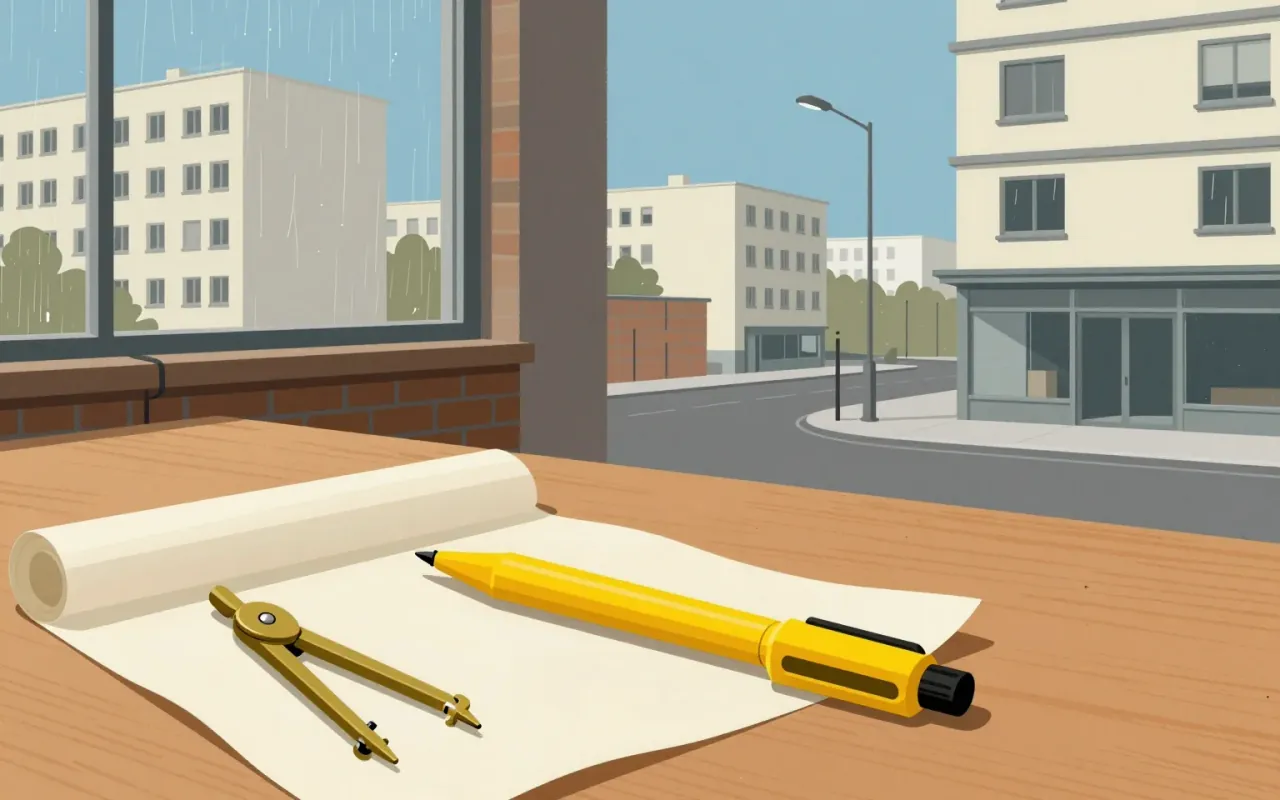
The Bic Cristal is an inexpensive, disposable ballpoint pen mass-produced by Société Bic of Clichy, Hauts-de-Seine, France, introduced in 1950.
It is the best-selling pen in the world, with the 100 billionth sold in September 2006, and it is in the permanent collection of the Museum of Modern Art in New York. In 2025 the Cristal and the Décolletage Plastique design team were included in MoMA’s exhibition Pirouette: Turning Points in Design. It is sold in six types of point and 18 colors.
How it was made
Bich invested in Swiss metal-shaping technology precise to 0.01 millimetres to produce a 1mm stainless steel ball. It developed an ink with viscosity that neither leaked nor clogged. The pen was designed by the Décolletage Plastique team at Société PPA between 1949 and 1950.
Marcel Bich had acquired the rights to László Bíró’s ballpoint design in 1944, and he founded Société PPA with Edouard Buffard in 1945; the name stood for Porte-plume, Porte-mines et Accessoires. The Cristal was launched in December 1950 under a ballpoint patent licensed from Bíró. Bich dropped the “h” from his surname, and in 1953 an advertising executive, Pierre Guichenné, advised shortening it to Bic as a name that was easy to remember and would work worldwide. The ink flows by capillary action down the tube to the ball, which turns within a brass bearing. In 1961 the stainless steel ball was replaced by a harder tungsten carbide one, ground to an accuracy of 0.1 μm.
What works
Its hexagonal shape grants strength and three grip points for high writing stability. Its transparent polystyrene barrel and polypropylene tube show ink level. A tiny pressure-equalising hole in the barrel maintains internal air pressure.
The hexagonal form is meant to resemble a standard wooden pencil. Since 1991 the polypropylene cap has carried a small hole to reduce the risk of suffocation if it is inhaled, and polypropylene is used for the cap because it absorbs impact better than polystyrene, making the pen less likely to crack if dropped onto its cap. The pen measures 14.9 cm by 1.3 cm with the cap and 14.45 cm by 0.64 cm without it.
What does not
The material does not establish durability, ergonomics beyond grip points, service life, repairability, environmental impact, or user experience beyond stability and ink visibility.
On its history, the pen reached the American market in 1959, selling at 29 cents with the slogan “writes first time, every time”. The French Ministry of Education approved it for classroom use in 1965. Bich also invested in advertising, hiring the poster designer Raymond Savignac in 1952, and early French advertisements called the Cristal the “Atomic pen”.
What it influenced
The material does not state what the Bic Cristal influenced. No claims about influence, legacy, or emulation appear in the sources.
Is it worth your time
Yes — it is the definitive case study in industrialising precision, visibility, and disposability in one object. Its constraints and trade-offs remain legible today.