What the work is
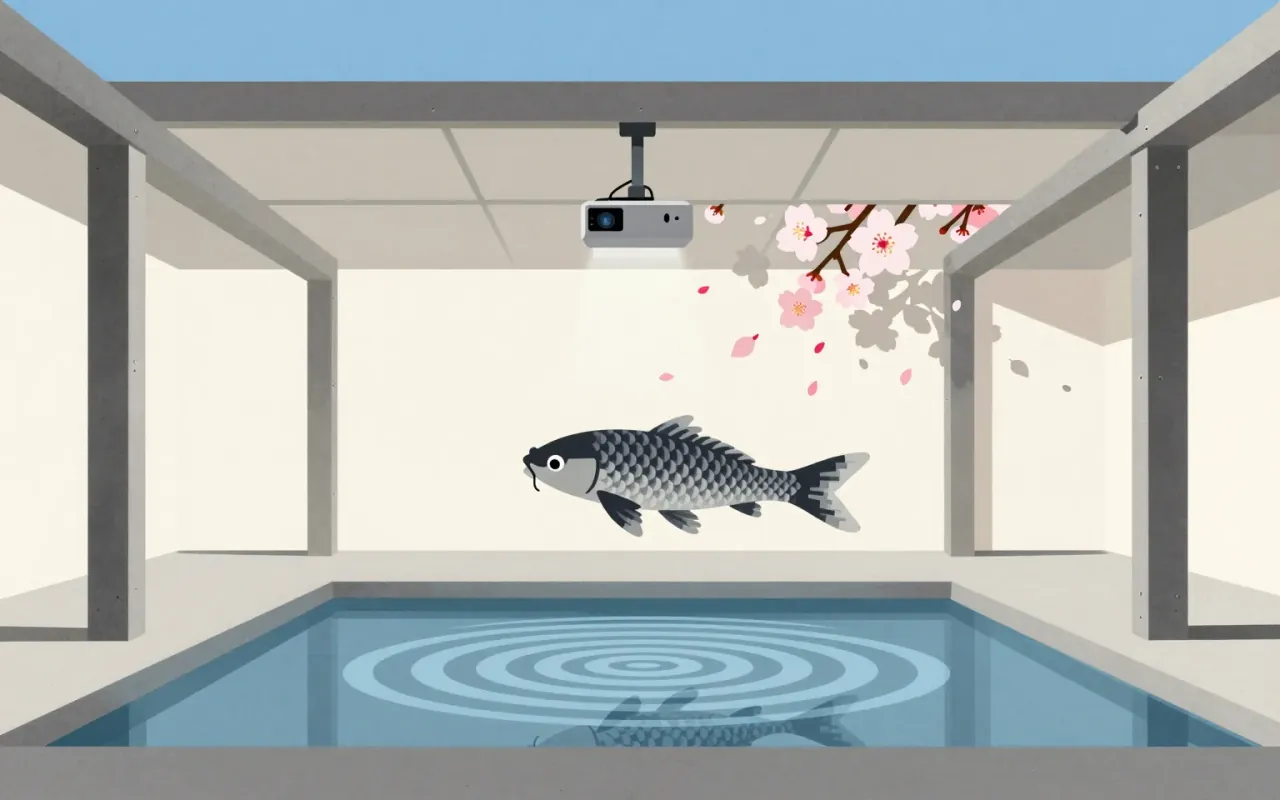
teamLab Borderless at Azabudai Hills opened in February 2024. The organizers describe a museum without a map, where artworks move between spaces. This brief concerns that version of the experience, rather than conflating it with the earlier Tokyo venue.
How it was made
The official guidance explains that fixed artwork captions are absent because works move. An app supplies the concept of the nearest work and allows participation in Infinite Crystal World, connecting interpretation with the visitor’s changing position.
What works
The arrangement challenges the expectation that each work occupies one stable place. Following change can become part of looking, and the route a visitor takes helps shape the sequence of encounters.
What does not
An unmapped experience can also make orientation harder. The venue’s own information records dark spaces and restrictions affecting access to some works; the ideal of free exploration is not identical for every visitor.
What it influenced
The design offers a concrete case for integrating digital content, physical circulation and interpretation. Its significance for study lies in that combination, rather than an unsupported claim that immersion automatically creates deeper engagement.
Is it worth your time
Worth examining if spatial interaction is your interest. Observe how you decide where to go and how you learn what you are seeing. This is a sourced design assessment, not a firsthand visit report.