What the work is
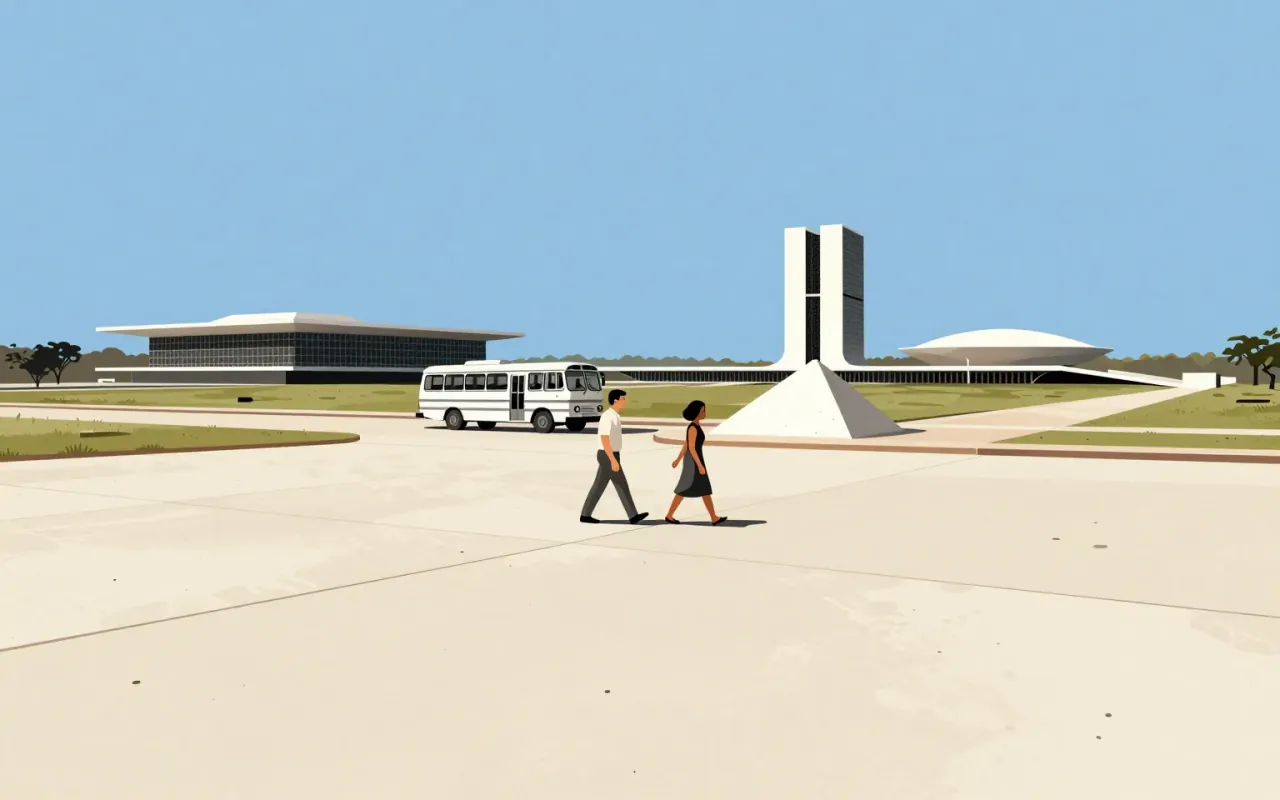
Lucio Costa’s Plano Piloto organizes Brasília through intersecting axes and differentiated urban functions. UNESCO describes it through monumental, residential, social and bucolic scales. The plan should be distinguished from Oscar Niemeyer’s individual public buildings.
How it was made
Administrative spaces, residential units and central services occupy different parts of the arrangement, with extensive open areas connecting its scales. The design treats the capital as an organized whole rather than an accumulation of independent streets.
What works
The plan makes relationships visible at city scale. Comparing the axes with the neighborhood units helps reveal how government, housing and open space were placed within one spatial proposition.
What does not
A readable plan does not settle the experience of moving through it. Daily routes, access to services and the life of the wider city need their own evidence; the diagram alone cannot demonstrate social success.
What it influenced
Brasília entered the World Heritage List in 1987. Preservation therefore concerns the relationships among spaces as well as individual monuments, raising questions about how a living city can change while retaining its planned character.
Is it worth your time
Worth studying by moving between scales. Read the overall plan, then follow one everyday journey. That comparison exposes what a powerful urban diagram explains and what it leaves to lived experience.