What the work is
A perennial-based gardening method centred on plant structure and seasonal life cycles—not floral decoration.
How it was made
Oudolf draws plans by hand. He selects long-lived clump-forming perennials for stability. His early work used block groupings based on structure and texture. His recent work blends species in more naturalistic arrangements.
Oudolf is a Dutch garden designer, nurseryman and author, born in 1944, and a leading figure of the “New Perennial” movement, which uses bold drifts of herbaceous perennials and grasses chosen at least as much for structure as for flower colour. He and his wife Anja opened their nursery at Hummelo, in Gelderland, in the 1980s, and his own garden there was established in 1982. It began with yew hedges and blocks, an architectural style that owed much to Mien Ruys, the designer who dominated post-war Dutch garden design. The garden has gone through many changes that reflect his developing designs.
The shift in his planting has been described as a move from a painter’s perspective to one informed by ecology. It first appeared in his public work in 2004 as part of the Lurie Garden in Chicago, and can be seen in the New York High Line project. There, the planting relied heavily on plants native to the region: a matrix of grasses with perennials grouped throughout, meant to convey how plants grow and intermingle in the wild.
What works
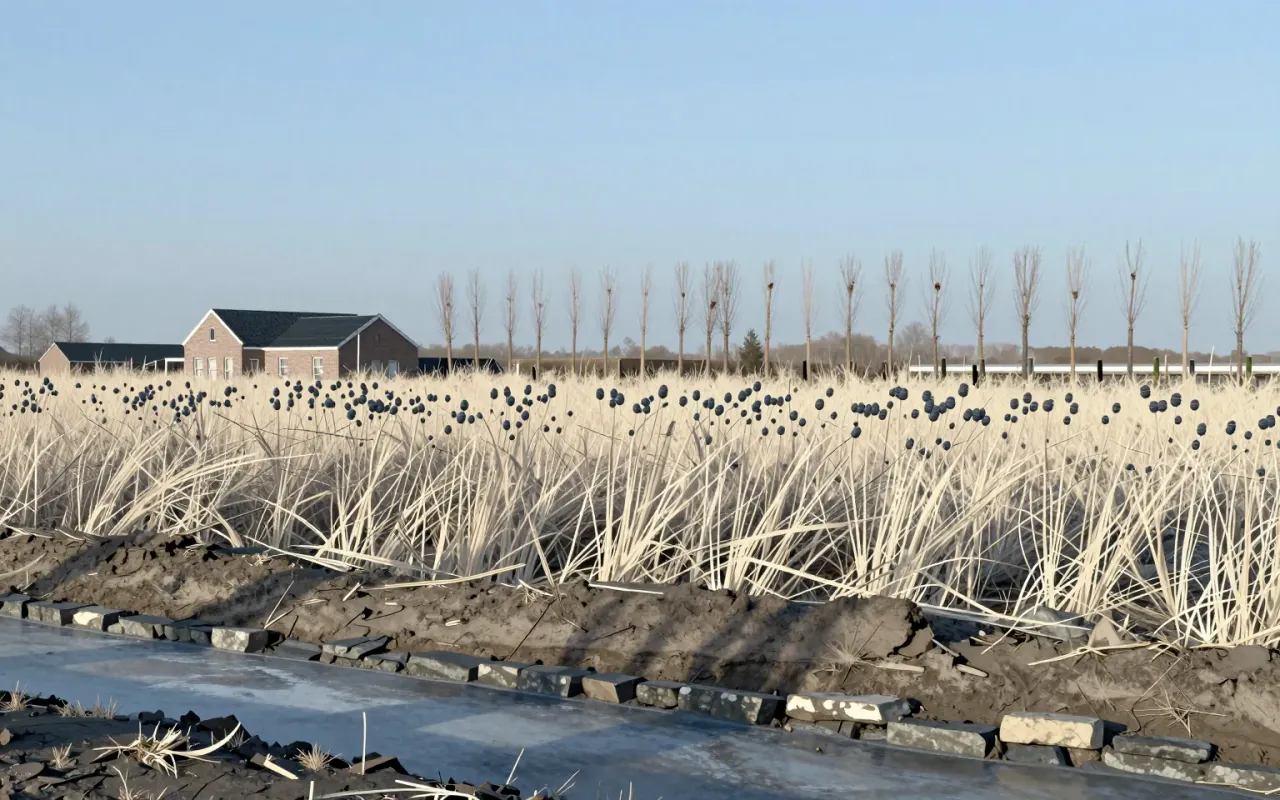
Gardens remain visually coherent years after planting. Hand-drawn plans hold over time. Early spring and late autumn retain visual interest. Structural traits—leaf shape, seed pods—carry the design before and after flowering.
What does not
The method does not prioritise flowers or colour. It does not rely on annuals or short-lived species. It does not aim for peak seasonal spectacle alone.
What it influenced
The work influenced contemporary public landscape design by shifting focus from horticultural display to ecological longevity and structural legibility across seasons.
His projects include the High Line (New York City, 2006), the Lurie Garden in Millennium Park, Chicago (made with Kathryn Gustafson and Shannon Nichol), Battery Park in New York, Scampston Hall in England, the Hauser & Wirth garden in Bruton, Somerset (2013), the Singer Laren Sculpture Garden in the Netherlands (2018) and the Oudolf Garden Detroit at Belle Isle Park (2020). In 2011 he made the interior garden of the Serpentine Gallery pavilion in London with Peter Zumthor.
He has written books, mostly with co-authors, including Designing With Plants (1999) and Planting Design: Gardens in Time and Space (2005), both with Noel Kingsbury, and Hummelo: A Journey Through a Plantsman’s Life (2015). Five Seasons: The Gardens of Piet Oudolf (2017), a documentary directed by Thomas Piper, follows gardens he designed through five seasons. His awards include the Veitch Memorial Medal (2002), the New York City Public Design Commission Award for Excellence (2004) and the Elizabeth Medal of Honour (2023).
Is it worth your time
Yes—if you need to understand how perennial structure, not colour or bloom, can anchor multi-year landscape fidelity.