What the work is
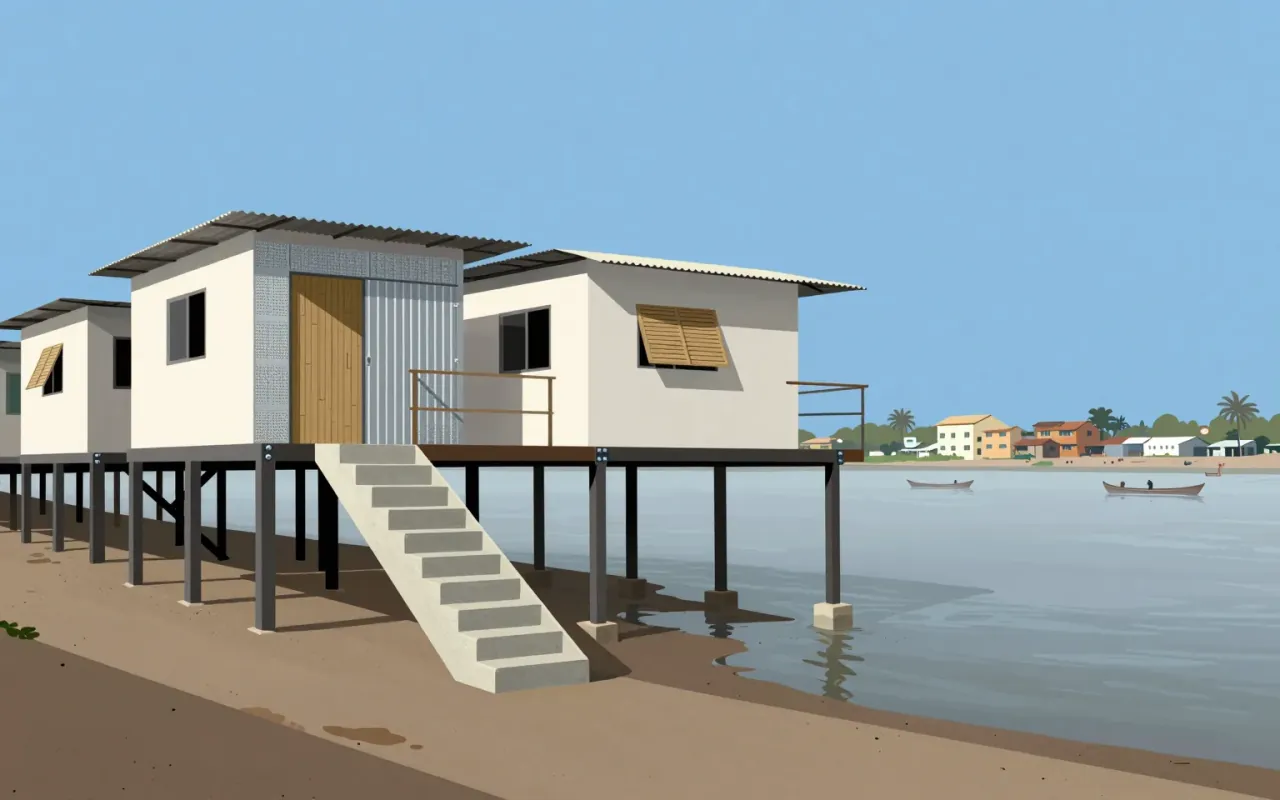
A body of research-led architectural activity by Kunlé Adeyemi through NLÉ, focused on rapidly growing cities in developing countries. It includes prototype housing for urban tropical environments and the Makoko Floating School project—including its second and third iterations.
How it was made
Adeyemi founded and leads NLÉ, an Amsterdam-based architecture, design and urbanism practice. He investigates rapid urbanization—especially in Lagos—through observation and questioning of existing systems. His method produces contextually inspired solutions, including prototype housing and floating school structures.
What works
The work establishes a method: observing informal urban systems in Lagos, interpreting them as generative constraints, and producing physical prototypes (e.g., floating schools) as spatial arguments. It treats the city as a source—not a problem to be solved.
What does not
The Makoko Floating School collapsed in June 2016. The document does not establish durability, regulatory approval, replicability, or long-term community ownership. It does not claim the work resolved flooding, tenure, or infrastructure deficits.
What it influenced
The document does not state what the work influenced. No claims about adoption, policy change, pedagogical impact, or derivative projects appear in the sources.
Is it worth your time
Yes—if you are assessing how architectural practice can respond to informal urban growth through iterative, site-specific prototyping. No—if you expect built permanence, scalable construction systems, or policy integration.