What the work is
Braun’s identity is more than its wordmark. The company’s design history describes a shared approach to appliances, developed through its own teams and collaboration with the Ulm School of Design. It should not be credited entirely to Dieter Rams.
How it was made
Artur and Erwin Braun’s leadership connected product development with figures including Fritz Eichler, Hans Gugelot and Otl Aicher. Rams later led design from 1961 to 1995. Consistency emerged through repeated decisions across products rather than one isolated logo commission.
What works
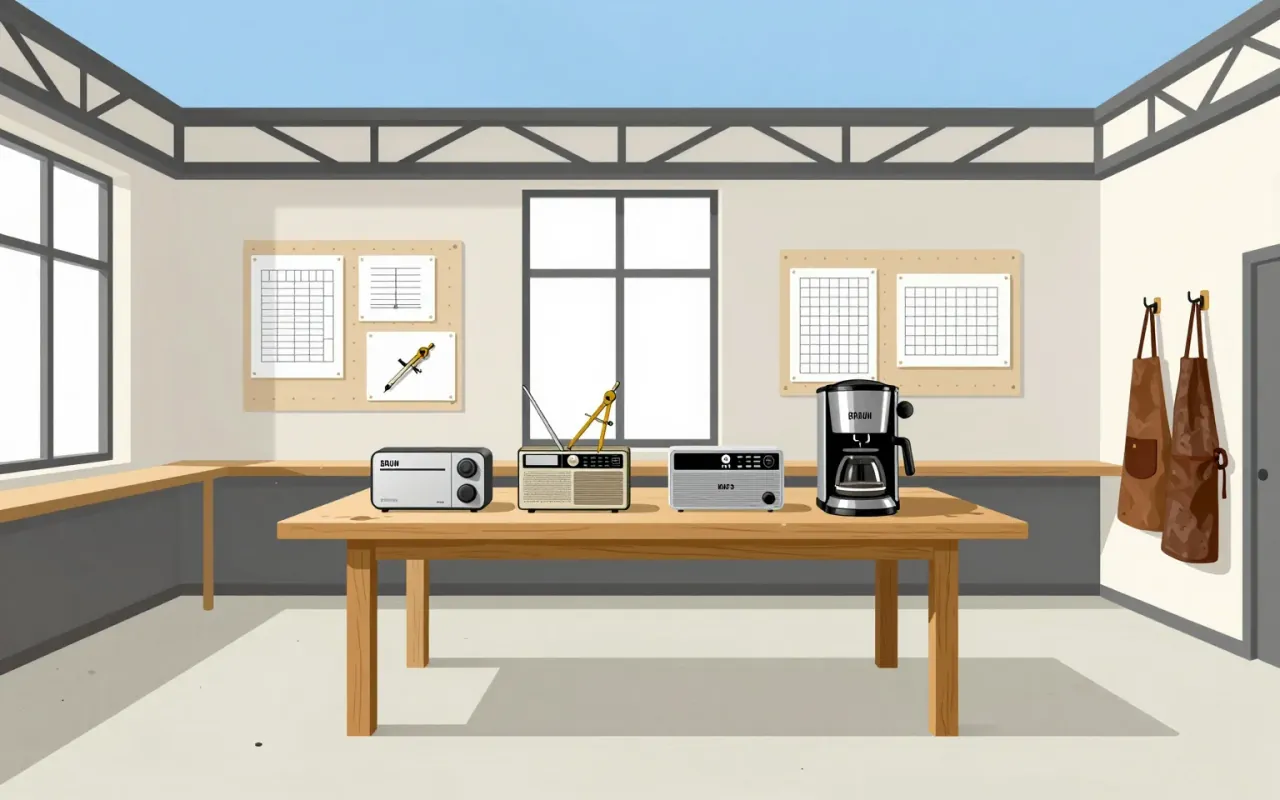
A common treatment of order and visual hierarchy can make a varied catalogue feel coherent. The useful lesson is the relationship between a recognisable family and the different controls each appliance requires.
What does not
Consistency becomes a liability if it makes distinct functions look interchangeable. A restrained appearance alone says little about how easy an appliance is to operate, maintain or repair.
What it influenced
Braun’s own retrospective presents this continuity as central to the brand. For designers, it offers a case for examining how institutional direction and individual product decisions reinforce one another over time.
Is it worth your time
Worth studying alongside specific Braun objects. Compare the layout of controls, proportions and graphic information, then identify what changes with the task. The identity becomes clearer in those comparisons than in a logo sheet alone.