What the work is
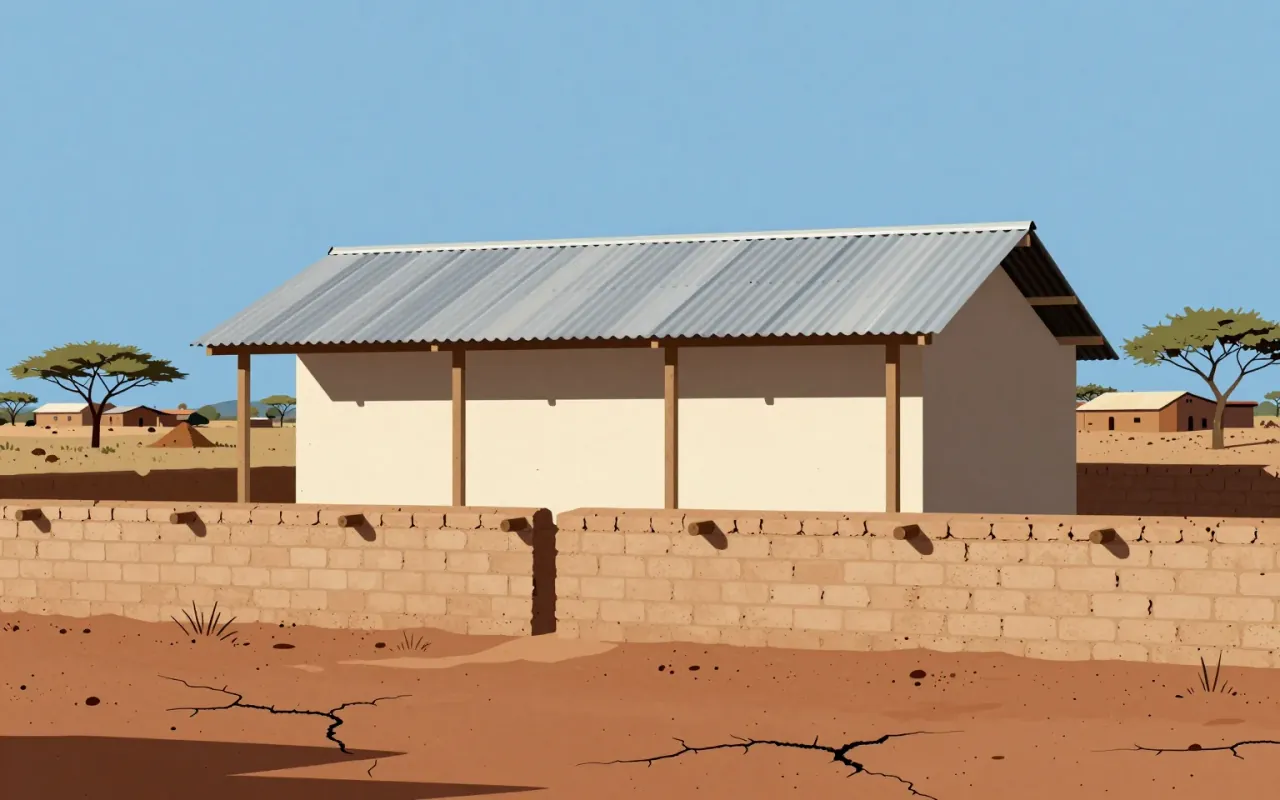
The Gando Primary School — and its 2012 library addition — is a community-built educational building in Burkina Faso using un-plastered compressed earth blocks, a raised tin roof for airflow, and clay pots set into the roof for daylighting.
How it was made
Kéré built with village inhabitants, using sand-drawn plans to include illiterate participants. The entire population of Gando helped construct the primary school. Locals were trained on site and produced mud bricks and bottomless clay pots for the library roof.
What works
The building delivers measurable thermal improvement: interior temperatures are 6–8°C lower than conventional concrete schools. Its design enables passive cooling, uses only local earth, avoids imported timber, and embeds skill transfer through on-site training.
What does not
The document does not establish scalability beyond Gando, nor does it claim universal applicability. It makes no claims about cost, durability over decades, or performance in non-arid climates.
What it influenced
The document does not state what the work influenced. No external projects, policies, institutions or designers are named as influenced by it.
Is it worth your time
Yes. It demonstrates how material constraint, literacy barrier, and climate urgency can produce architecture that is technically legible, socially embedded, and measurably more comfortable than conventional alternatives.