What the work is
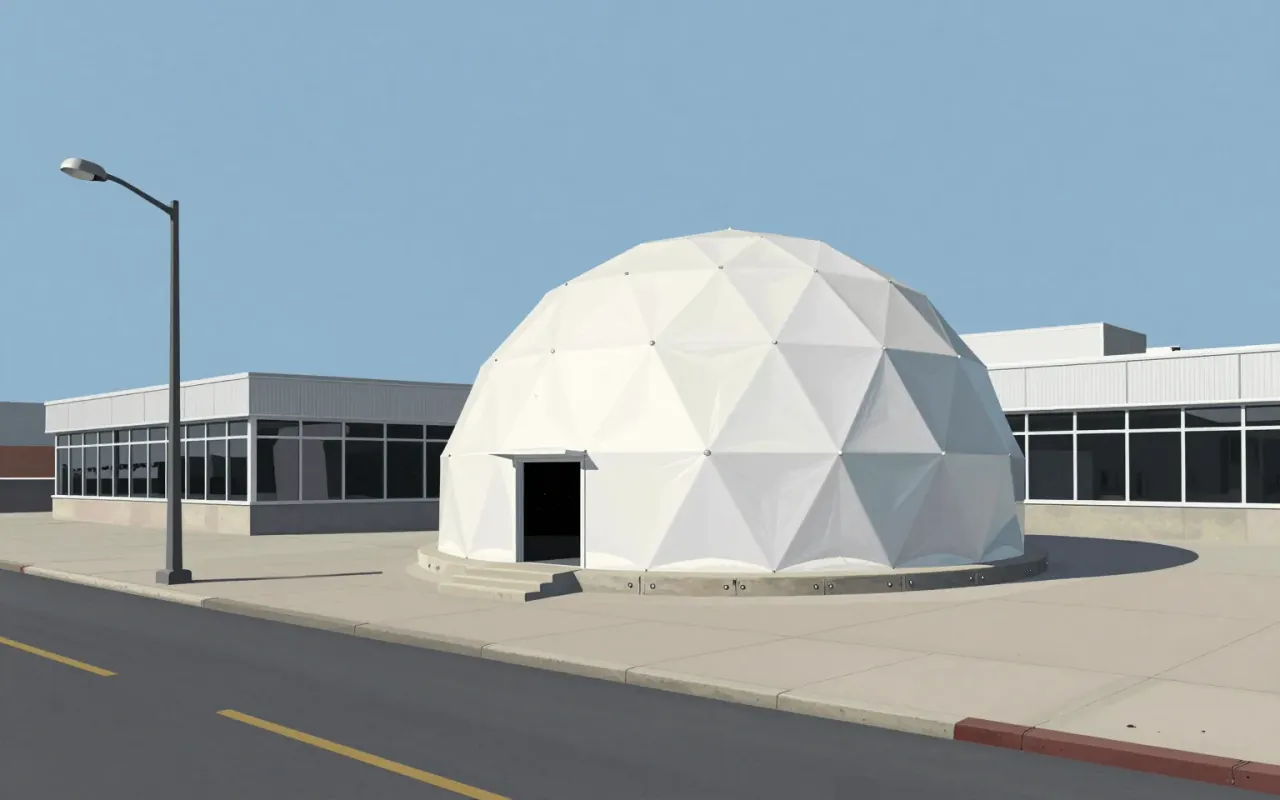
A set of interrelated structural experiments: a 4.3-metre geodesic dome, tensegrity frameworks, and Otisco Project domes up to three stories tall—all grounded in the principle of ‘maximum gain of advantage from minimal energy input’.
How it was made
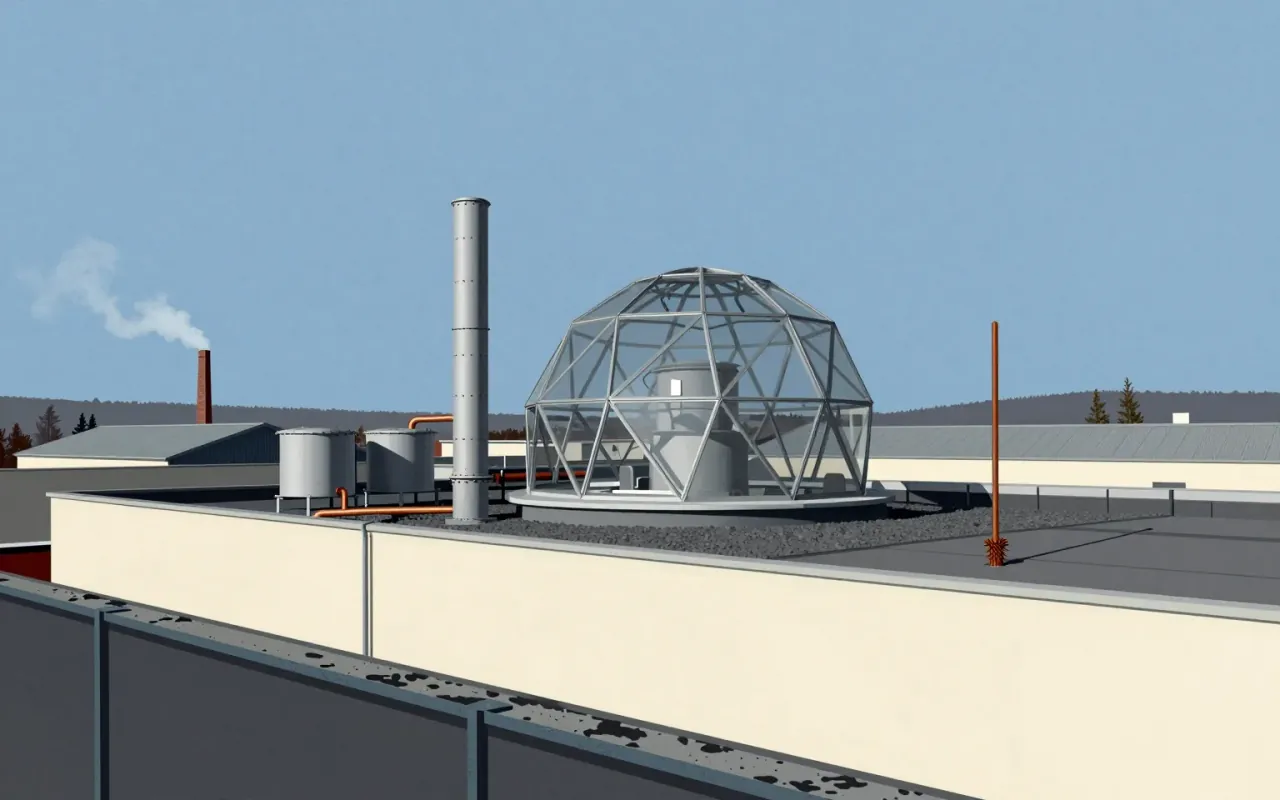
Fuller built a 4.3-metre geodesic dome from aluminium aircraft tubing and a vinyl-plastic skin in icosahedral form. He developed tensegrity systems using non-touching compression members suspended by tensional members. He tested on-site construction via the Otisco Project using sprayed concrete over wireforms.
What works
The dome held student weight without collapse. The tensegrity structures eliminated flexure and bending moments. Otisco-built domes up to three stories proved remarkably strong.
What does not
The patent application omitted Walther Bauersfeld’s prior dome work—so it does not establish originality in dome geometry. It does not resolve the tension between empirical demonstration (e.g., suspending students) and scalable fabrication.
What it influenced
It influenced later lightweight structural systems, tensegrity-based sculpture and architecture, and the rhetorical framing of design as energy-optimised problem-solving—but the document does not name specific works, designers, or movements beyond Fuller’s own projects.
Is it worth your time
Yes—if you are examining how structural logic, material constraints, and patent strategy converge in mid-century design thinking. Not if you seek verified attribution, systemic critique, or technical completeness.