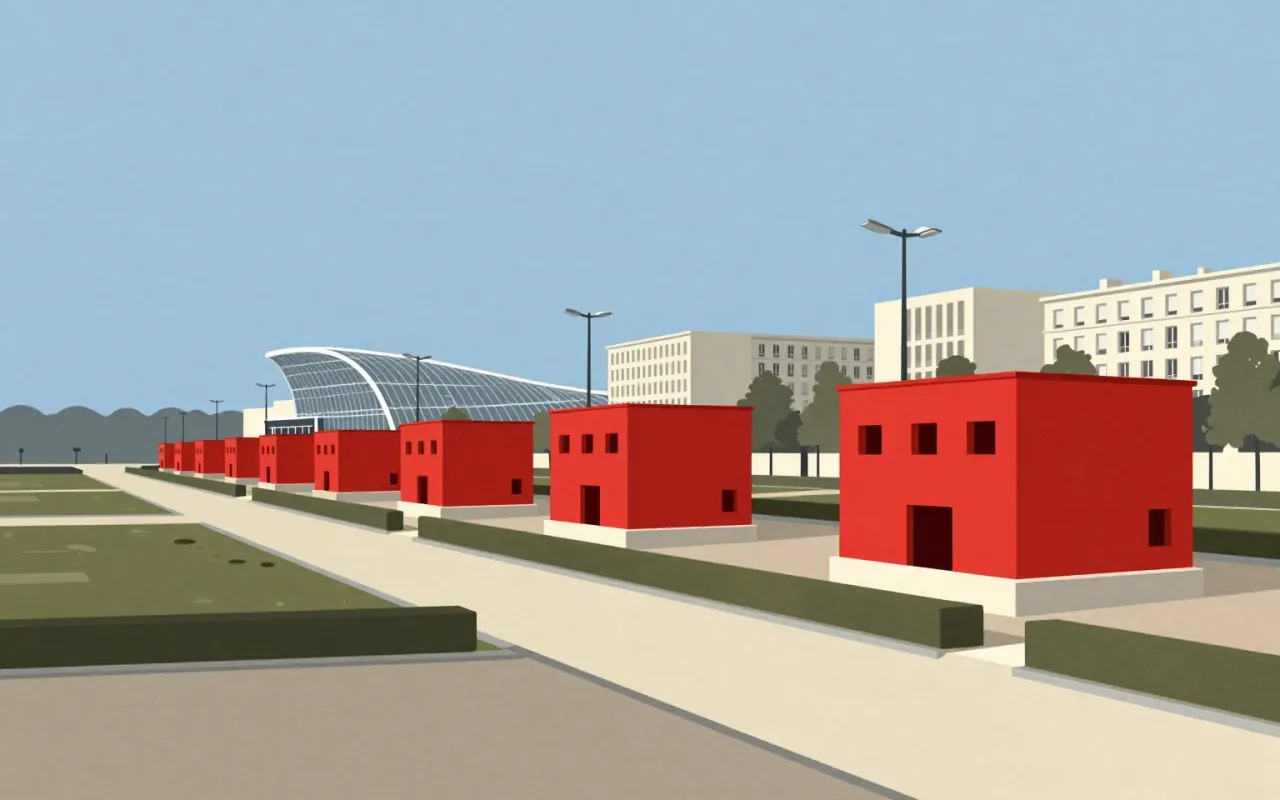
What the work is
A theoretical and pedagogical framework that treats architecture as a tool to question and revise social structures, using diagrammatic methods and event-based montage.
How it was made
Tschumi combined film and literary theory with architecture, drawing on Eisenstein’s structural diagramming to investigate the interstitial condition between space, event, and movement. His pedagogical work at the Architectural Association in the early 1970s was oriented by the May 1968 uprisings and the Situationist International.
What works
His method exposes conventional links between architectural sequences and their constituent elements, then invents new associations through defamiliarization, de-structuring, superimposition, and cross programming.
What does not
The material does not establish any built work beyond Parc de la Villette as evidence of his methods. It does not attribute specific buildings to Tschumi individually, nor does it confirm construction dates, materials, dimensions, or budget constraints.
What it influenced
Tschumi’s event montage challenged contemporaries who treated montage as purely formal, shifting focus to programmatic organisation across space, event, and movement.
Is it worth your time
Yes — if you need to understand how architecture can operate as a critical, non-hierarchical tool for social revision rather than representation.