What the work is
A unified practice spanning urban planning, architecture, design, and art—anchored in humanistic intent and tested through modular physical models.
How it was made
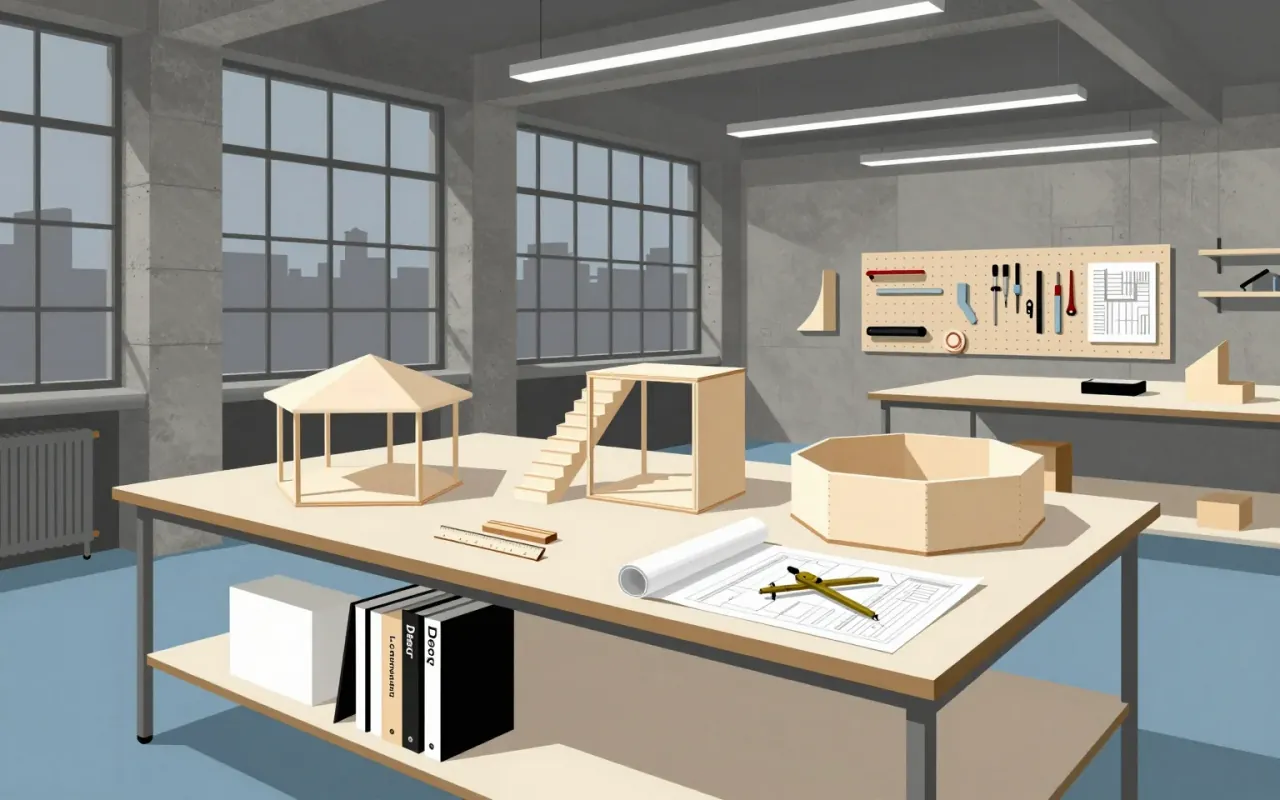
She built modular physical models to test spatial configurations. She extended her architectural practice into furniture design for UNESCO with Domeau & Peres. She translated architectural research into contemporary art exhibitions and graphic deconstructions.
What works
Her work establishes movement, livability, and psychological respite as non-negotiable architectural outcomes. It unifies disciplines without subordinating one to another. The 1996 Golden Lion confirms its early recognition as unconventional.
What does not
The material does not establish a defined furniture typology, a signature material palette, a consistent formal language, or a reproducible production method. It does not attribute specific buildings, interiors, or artworks to Decq individually—only her studio’s integrated practice.
What it influenced
The material does not state what Decq’s work influenced. No downstream projects, designers, movements, policies, or institutions are named as influenced by her.
Is it worth your time
Yes—if you are mapping how architecture absorbs and redistributes agency across scale, discipline, and medium. No—if you expect a singular object, fixed style, or resolved aesthetic doctrine.