What the work is
Van de Velde’s work is a methodological project: a theory and practice of design that synthesises rational conception and ornamental function. It begins with functionalism as foundational — ‘no place in the society of the future for anything which is not of use to everyone’ — and extends into architecture, applied arts, and aesthetic theory.
How it was made
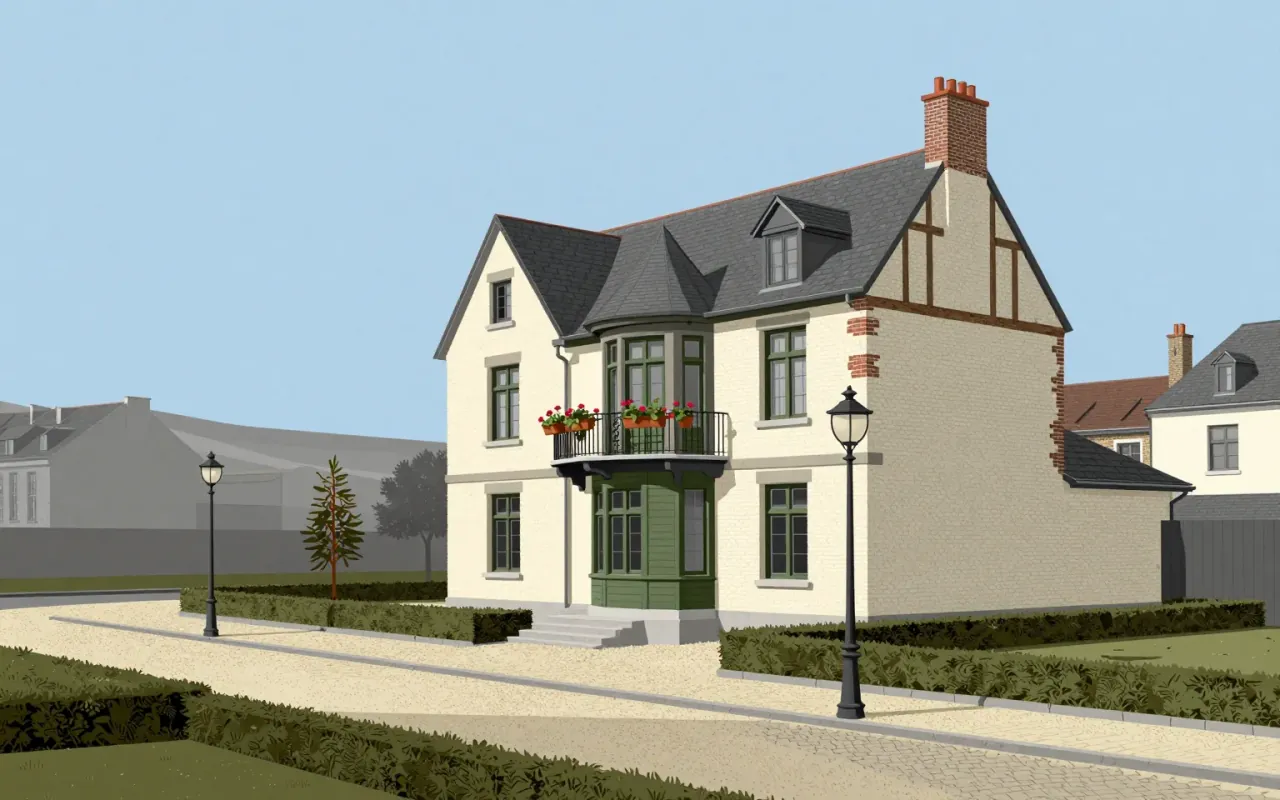
Van de Velde shifted from neo-impressionist painting to applied arts in 1892, working across silver and goldsmithing, chinaware, cutlery, fashion, carpet, and fabric design. He grounded his first architecture — Villa Bloemenwerf in Uccle — in British Arts and Crafts principles. He applied abstract curvature, not naturalistic forms, and integrated engineering logic and rational calculation into design decisions.
What works
His synthesis of engineering logic and ornament works as a coherent intellectual framework. His advocacy for functionalism as social principle works as a constraint that shapes material choices, form, and scope. His use of abstract curvature — distinct from nature — works as a formal signature aligned with rational-ornamental theory.
What does not
The sources do not establish any built work beyond Villa Bloemenwerf. They do not name clients, collaborators, materials, dimensions, dates of construction, or manufacturing methods. No furniture, interiors, or objects are described in physical terms — only their conceptual framing.
What it influenced
The sources do not state what Van de Velde influenced. Influence is absent from all verified claims. The brief does not extrapolate beyond the document.
Is it worth your time
Yes. His work establishes a decisive pivot from ornament-as-decor to ornament-as-rational-function — a hinge between Arts and Crafts idealism and modernist functionalism. It rewards close attention for its methodological clarity, not its aesthetic legacy.