What the work is
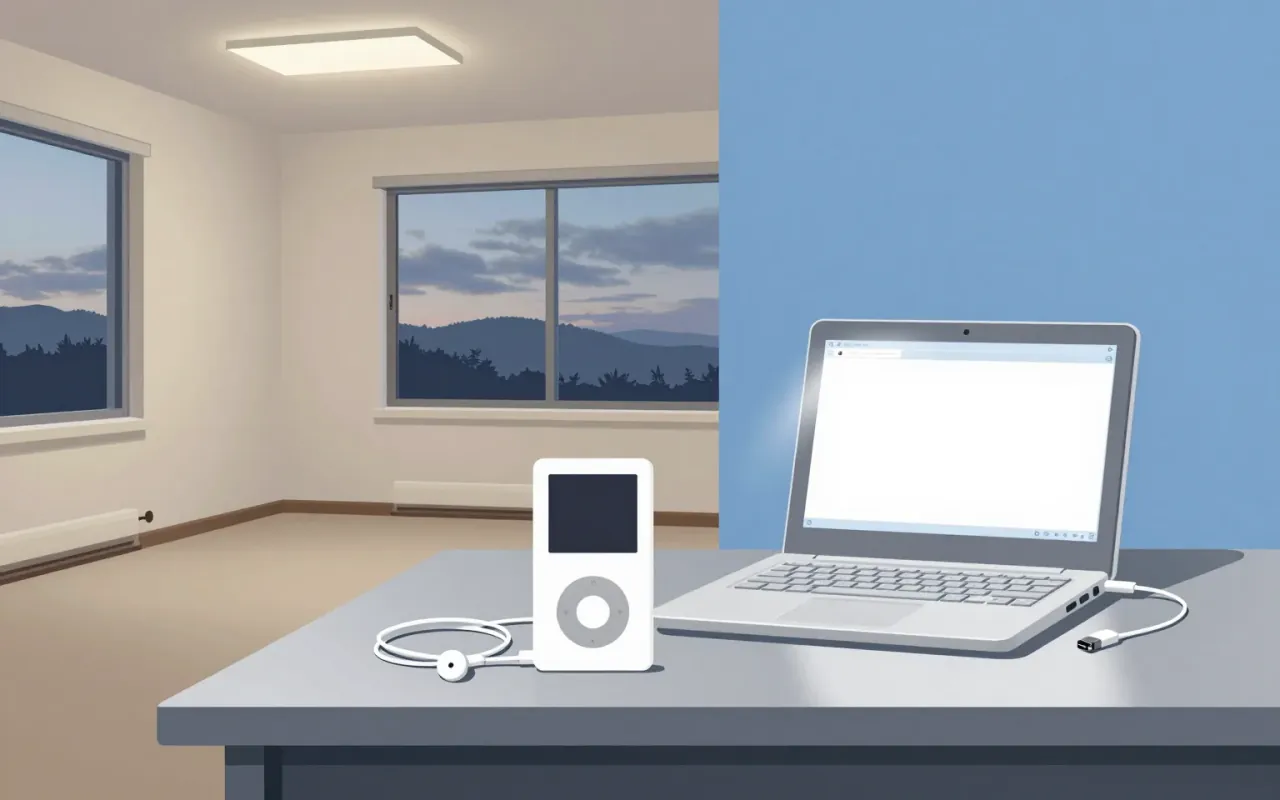
The iPod is a portable digital audio player released by Apple on 10 November 2001. It was discontinued on 10 May 2022. It had a total lifespan of over 20 years.
How it was made
Apple contracted Pixo to design the user interface and firmware. Tony Fadell’s team and PortalPlayer built a prototype in eight months. The iPod launched 10 months after the Macintosh version of iTunes. Apple secured the iPod trademark despite prior registration by Joseph N. Grasso for Internet kiosks.
What works
Its physical form drew from the 1958 Braun T3 transistor radio. Its wheel-based interface referenced Bang & Olufsen’s BeoCom 6000 telephone. These references established visual and interaction continuity with high-design precedents while enabling one-handed navigation of large music libraries.
What does not
The sources do not establish material composition, dimensions, manufacturing process, ergonomics, or any functional limitation — including battery life, storage scalability, or software extensibility. No claim is made about durability, repairability, or user error rates.
What it influenced
The iMac — Ive’s first major assignment as senior vice-president of industrial design in 1997 — helped pave the way for the iPod. The iPod in turn helped pave the way for the iPhone and iPad, forming a lineage of Apple hardware defined by tight hardware-software coupling.
Is it worth your time
Yes. Its 20-year lifespan, 450 million units sold, and role as Apple’s longest-running discontinued product make it a critical object for understanding industrial design constraints, licensing pragmatism, and cross-disciplinary hardware-software integration.