What the work is
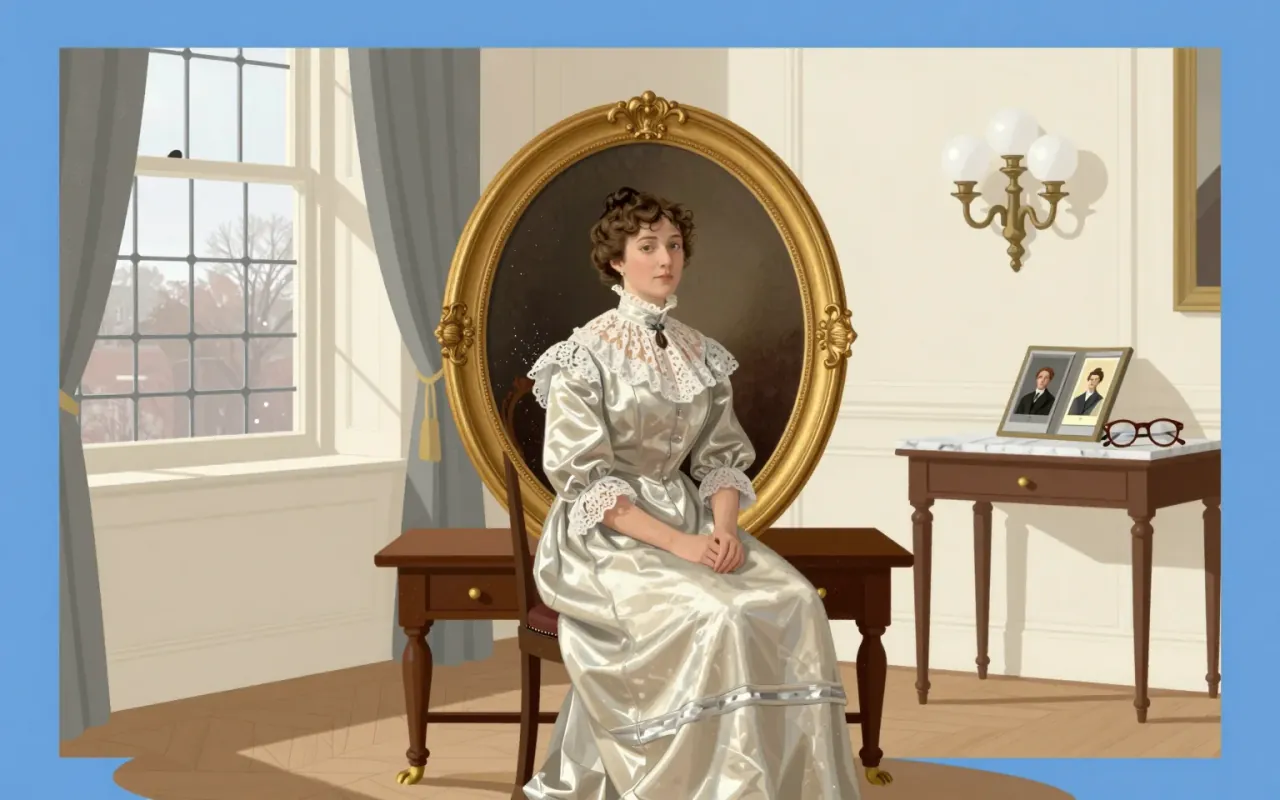
A practice of photo-based, adaptive portraiture grounded in character study. The Service Society is a series of portraits of Irish domestic servants employed by wealthy American families during the Gilded Age.
How it was made
She uses letters, diaries, photographs, and ephemera to construct imagined but plausible human experiences. She adapts observations from others’ lives, not her own. She likens this process to method acting. Her portraits are photo-based and adaptive.
Helfand uses images generated with AI in her painting practice, and The Service Society is informed by extensive archival research. A solo show of thirty-five of the paintings was held in the spring of 2024 at the Jim Kempner Fine Art gallery in New York. Eight new paintings from the series were then shown at the INKMiami Art Fair, at Art Basel Miami, later that year.
She has been invited to speak about AI and the creative process, at Cooper Hewitt in 2019, at Caltech in 2023, and in an online symposium sponsored by the Royal College of Art in London later that year. As a visual artist she has spoken about AI’s potential to generate new ideas about form, particularly in her own portraiture.
What works
It establishes dignity through disciplined restraint: using primary sources to anchor imagination, refusing autobiographical projection, and treating portraiture as bearing witness rather than self-expression.
The framing is her own. In a 2021 lecture she described her painting as an act of bearing witness, and she has said that an anonymous subject is not a lost subject. The description of the method as drawing on primary sources, and as likened to method acting, comes from the artist’s account of her work, not from an independent assessment of it.
She had an earlier career in writing and design. She holds a BA in graphic design and architectural theory (1982) and an MFA in graphic design (1989), both from Yale University, where she later taught for more than twenty years. From 1982 until 1986 she wrote soap operas for Procter & Gamble and became a junior scriptwriter on CBS’s Guiding Light. In 1990 she was appointed design director of the Philadelphia Inquirer Magazine, and three years later she started her own studio.
What does not
The material does not establish any engagement with abstraction, formal innovation, or technical experimentation beyond photo-based adaptation. It does not claim critique of archival power structures, nor does it address gaps or silences in the sources themselves.
What it influenced
The material establishes no influence on other works, movements, designers, or disciplines.
Her wider body of work goes well beyond the portraits. With her late partner William Drenttel she founded Winterhouse Studio in 1997, and in 2003 she launched the Design Observer website with Michael Bierut and Rick Poynor. She wrote Paul Rand: American Modernist (1998) and Scrapbooks: An American History (Yale University Press, 2008), and her other books include Design: The Invention of Desire (2016) and Face: A Visual Odyssey (2019). In 2013 she and Drenttel won the AIGA medal.
Is it worth your time
Yes—if you’re interested in how portraiture can reassert dignity through archival fidelity rather than authorial presence.