What the work is
A series of MoMA exhibitions—Mutant Materials (1995), Workspheres (2001), Safe (2005), Design and Violence (co-established with Jamer Hunt)—that repositioned design as a mediator of technological innovation, not decoration.
How it was made
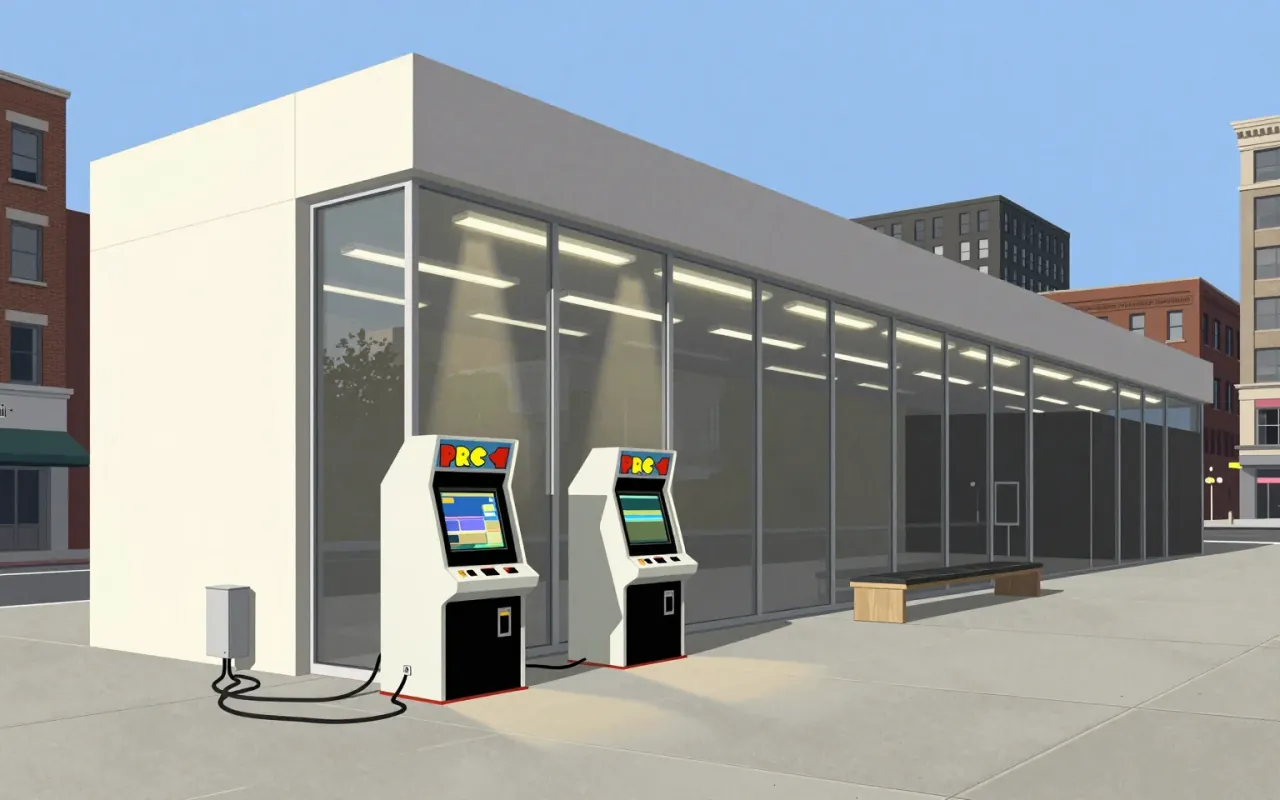
Antonelli built exhibitions by adapting prior conference presentations—like ‘Safe: Design Takes on Risk’ from Aspen 2003 into MoMA’s 2005 ‘Safe’—and by selecting contested objects: video games (Pac-Man, Tetris, Minecraft), industrial artefacts (Boeing 747), and ambiguous items tied to violence or aggression. She co-established ‘Design and Violence’ with Jamer Hunt to physically represent sex, aggression, and smelliness.
What works
Placing playable video games in galleries made interaction design legible as practice. Including the Boeing 747—even as an attempted acquisition—forced a confrontation with scale, systems, and authorship in design. Framing risk, violence, and bodily functions as design problems shifted curatorial framing from form to consequence.
What does not
The material does not show Antonelli resolving debates over authorship, defining design’s ethics, or establishing new acquisition criteria for MoMA. It does not describe audience metrics, critical reception, or institutional resistance.
What it influenced
Her exhibitions influenced how museums treat video games and industrial objects as design—not as media or engineering—but the material gives no evidence of influence beyond MoMA’s collection policy or public discourse on design’s scope.
Is it worth your time
Yes—if you need to understand how design curation became a tool for reframing technology’s role in daily life. Her work is not about taste or aesthetics but about expanding what counts as design, and why that expansion matters now.