9:56 in production Ch. 1 · Origin / 9:56 · ceiling 15 min
The Gem paper clip succeeded because it solved a physical problem; Vaaler’s did not — and nothing else matters.
The Gem paper clip is a functional resolution — not an invention, not a statement. Its form emerged from wire-bending practice, not theory. It answers one constraint: hold paper securely without damage. Nothing more. Nothing less.
Look closely Worth your time?
Yes. Study the whole thing. 4.5 / 5
What works Solves a specific mechanical problem Demonstrates how form follows repeated physical testing, not theory Shows that widespread adoption can precede documentation What does not Vaaler's design works The Gem clip required new materials or processes The Gem clip was patented The Gem clip was designed in Norway Study it if Designers solving physical constraints Historians of unattributed industrial objects Students of functional minimalism Skip it if Those seeking symbolic meaning in everyday objects Readers looking for biographical attribution The design analysis 1 min read
What the work is
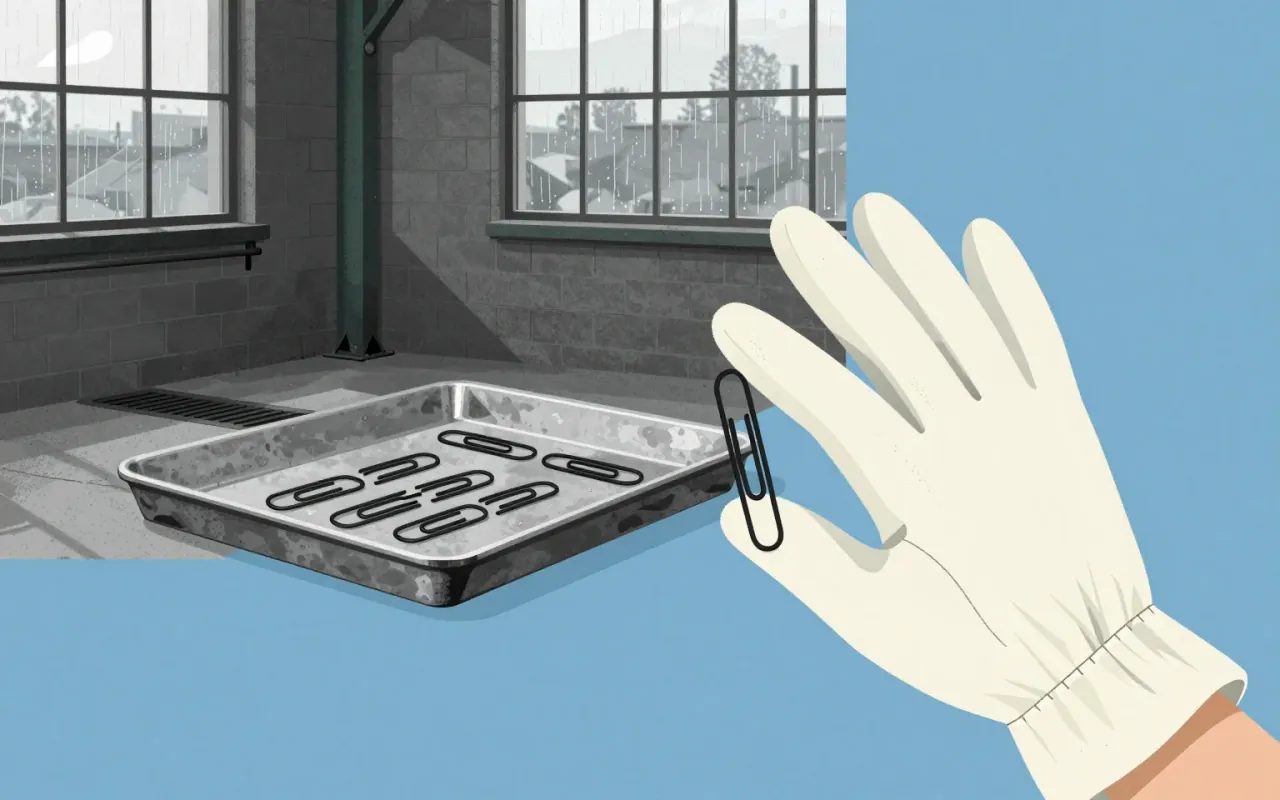
The Gem paper clip is a bent-wire fastener, first likely produced in Britain in the early 1870s.
How it was made
The Gem paper clip was made by bending a single piece of wire into two overlapping loops, with no solder, weld, or fastener.
What works
It grips without tearing, stores without tangling, and is easy to use — qualities unchanged since at least 1893.
What does not
Johan Vaaler’s 1901 design does not work: it lacks two full loops, making it difficult to insert paper.
What it influenced
The Gem clip influenced no named movement, school, or later object in the sources — its influence is confined to function and ubiquity.
Is it worth your time
Yes — it reveals how a functional constraint (holding paper without damage) produced a form so stable it resisted improvement for over 150 years.
Same discipline · Industrial 4 of 83