What the work is
Milton Glaser’s programme for Poppy Records provides a specific case within Push Pin’s record graphics. A 1972 interview identifies work extending from stationery and labels to album covers. It should not be assigned jointly to Glaser and Seymour Chwast without individual credits.
How it was made
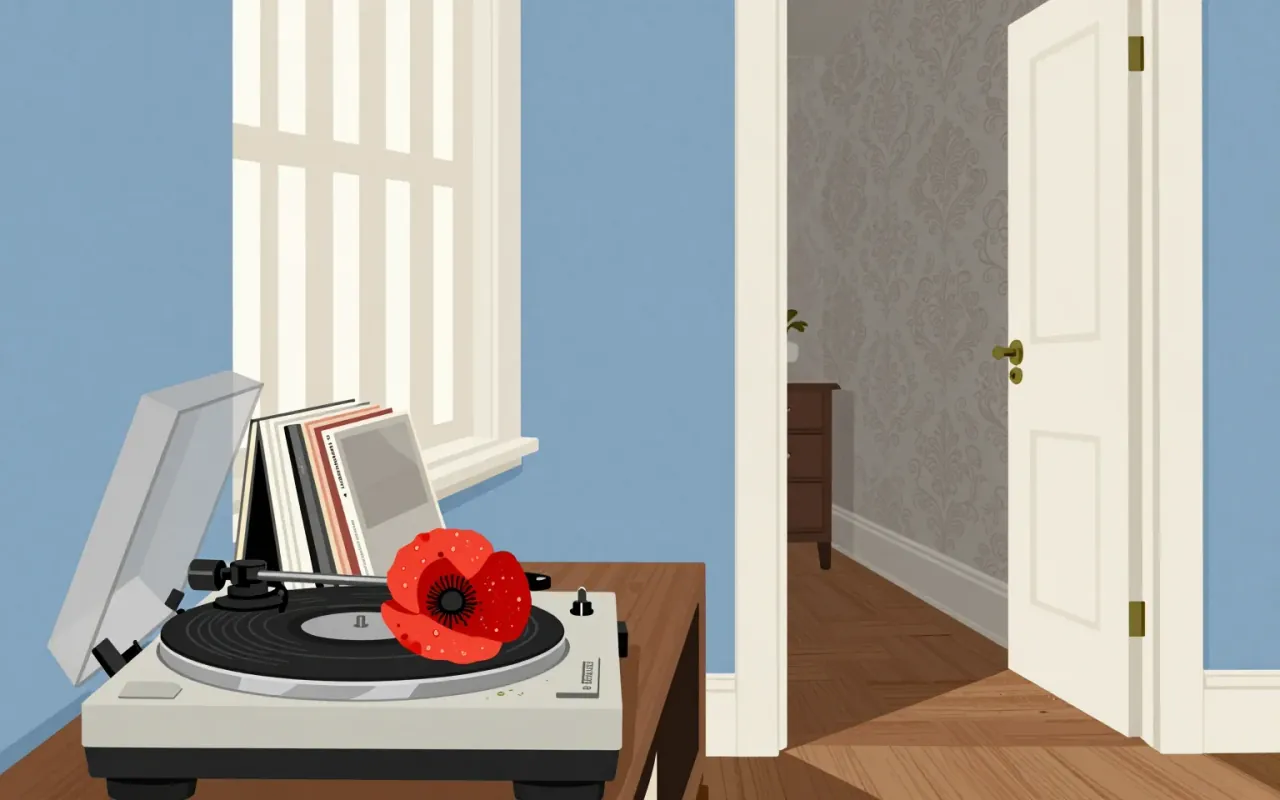
The SVA archive traces Glaser’s relationship with label founder Kevin Eggers to 1966. It preserves Poppy promotional imagery in which flowers appear in unexpected settings, connecting illustration with a recurring musical identity.
What works
The record sleeve can participate in a larger set of associations. A label, poster and piece of correspondence can share a sensibility while doing different jobs, giving the music a visual context beyond one cover image.
What does not
A compelling label identity can compete with the individuality of its artists. Each release still needs to communicate something specific, and the studio name should not obscure the contributor responsible for a particular design.
What it influenced
The archive documents Glaser’s later work for Eggers’s other labels. That continuing relationship is a traceable development; it is more precise than presenting all illustrated album covers as the result of one Push Pin formula.
Is it worth your time
Worth studying by comparing several formats from the same programme. Ask what belongs to the record label and what belongs to the artist. Keep sleeve, label and promotional poster distinct when assigning credits.