What the work is
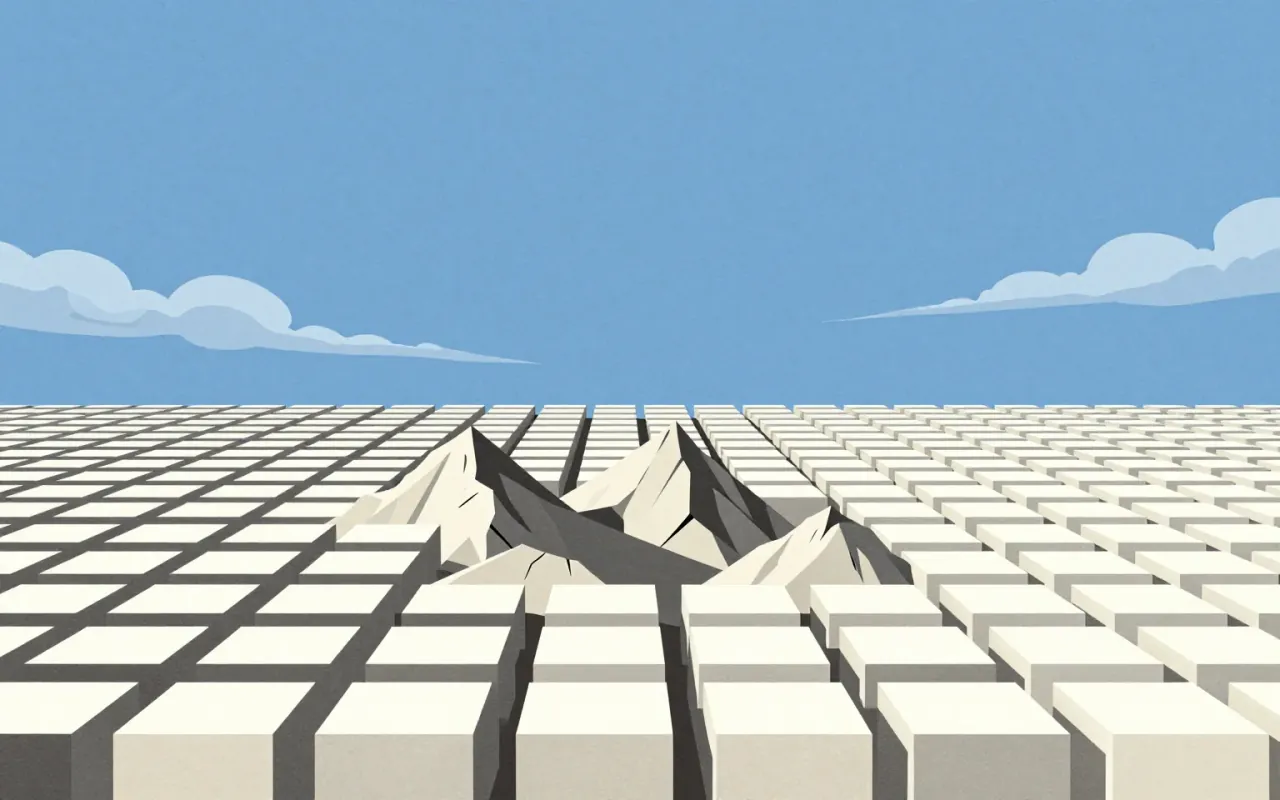
Superstudio’s Continuous Monument is a series of theoretical architectural images. MoMA’s St. Moritz Revisited sheet dates to 1969 and credits the group and its collaborating architects. It is a proposal in representation, not a completed building.
How it was made
The sheet combines pasted printed paper, coloured pencil and oil stick on board. Across the series, vast gridded structures enter landscapes, placing a repeated architectural order against particular terrain.
What works
The exaggeration makes a design question difficult to ignore: what happens when one system is extended everywhere? Representation can test that ambition without requiring an actual structure at the depicted scale.
What does not
The image supplies no evidence that such a structure could operate as a city or support everyday life. Treating it as an engineering proposal would misread the kind of work being presented.
What it influenced
MoMA preserves the series within visionary architectural drawing. Its continuing usefulness lies in the capacity of an unbuilt image to provoke questions about totalizing systems and the relationship between architecture and landscape.
Is it worth your time
Worth studying as an argument made visually. Compare the repeated grid with what changes from landscape to landscape. The productive question is what that collision reveals, rather than how to reproduce the monument as a style.