What the work is
Arne Jacobsen designed the SAS Royal Hotel in Copenhagen, which opened in 1960. The commission extended from the building’s exterior to furniture, lighting, textiles and restaurant cutlery.
The client was the airline Scandinavian Airlines System. King Frederik IX and Queen Ingrid opened the hotel on July 1, 1960, and at completion it was the largest hotel in Denmark. It stands twenty stories and 69.60 metres high, and is described as Copenhagen’s first skyscraper and, until 1969, the tallest high-rise in Denmark.
How it was made
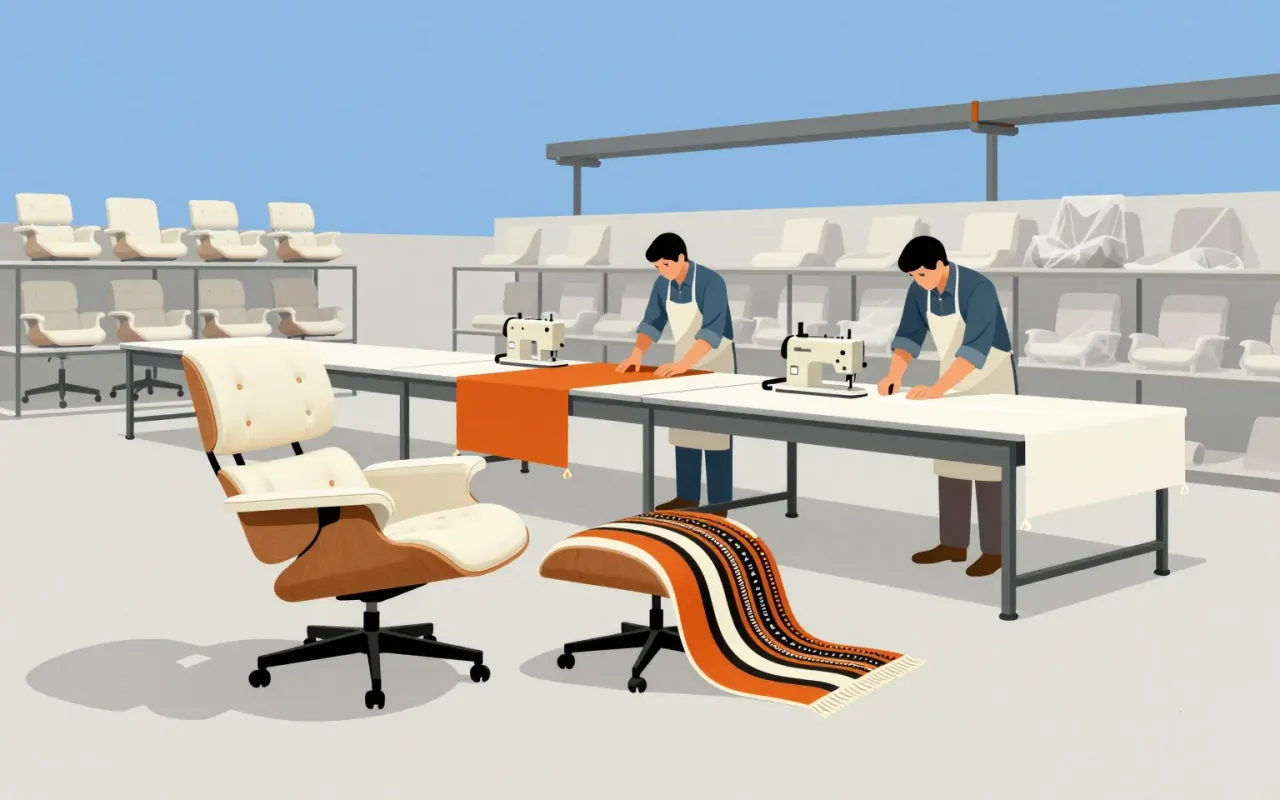
Green tones connected furniture and fabrics with Jacobsen’s modern-garden theme. Organic furniture forms, including the Egg and Swan chairs, sat within the hotel’s more geometric architectural framework.
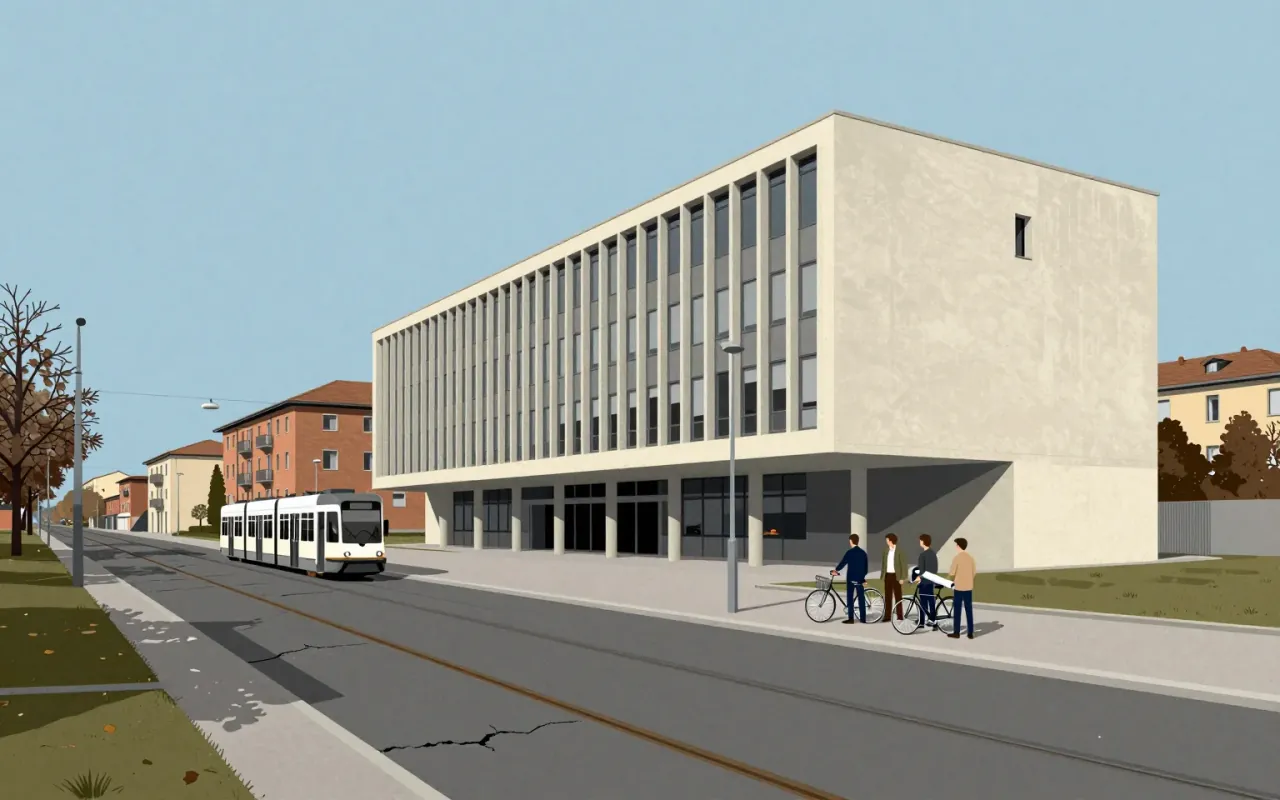
The Swan and Egg chairs stood in the lobby and the restaurant used stainless-steel cutlery of Jacobsen’s design. He was also working as a landscape architect from 1955 to 1960 while pursuing the “modern garden” theme. The tower is a reinforced concrete frame with a curtain wall of aluminium profiles and transparent green and grey anodised glass, with windows that open. The curtain-wall construction had first been used by Jacobsen at Rødovre City Hall in 1955; the hotel’s facade differs mainly in the light-green colour of the intermediate elements and slightly different proportions. Its form, with a two-storey base carrying the tower, was inspired by New York’s Park Avenue buildings, namely Lever House.
What works
The project demonstrates coordination across scales. A chair, a fabric and a room could be developed as related decisions, giving the interior a coherence that cannot be understood through one object alone.
What does not
Much of the original furnishing was subsequently replaced. Surviving room 606 preserves an important reference, but later photographs of the hotel cannot automatically be treated as records of Jacobsen’s complete original interior.
Most of his work was replaced by corporate standard fabrics and furniture, so the hotel has been called Jacobsen’s “Lost Gesamtkunstwerk.” Room 606 keeps the original green furniture and wood wall panels. It is no longer available for booking, but guests can request a tour.
What it influenced
Several furniture and lighting designs went into wider production, while others remained specific to the commission. The hotel therefore connects a particular interior with objects that acquired independent lives elsewhere.
The building itself drew argument. Sketches published in Danish newspapers during design led critics to fear for Copenhagen’s skyline, and it was compared to a punch card. Jacobsen replied that this was what it looked like with the windows open on a hot summer’s day. His former associate Erik Møller called it the “glass cigarbox,” and Philip C. Johnson called it the worst copy of Lever House, to which Jacobsen answered that it had at least come first in a competition for the ugliest building in Copenhagen.
Is it worth your time
Worth studying for interior design and hospitality. Compare archival room photographs with individual pieces and identify the relationships lost when an object is displayed alone. The whole commission provides a different lesson from a catalogue of its famous chairs.