What the work is
Alexander Girard became design director of Herman Miller’s textile division in 1952. This brief concerns that programme, where fabrics brought colour and pattern into the company’s furniture and interior settings.
Herman Miller’s account of the appointment describes office fabrics of the time as tending toward the utilitarian, drab and pattern-less. It quotes Girard as saying of the period, “People got fainting fits if they saw bright, pure color.” Girard was born in New York City, raised in Florence and educated in Europe as an architect.
How it was made
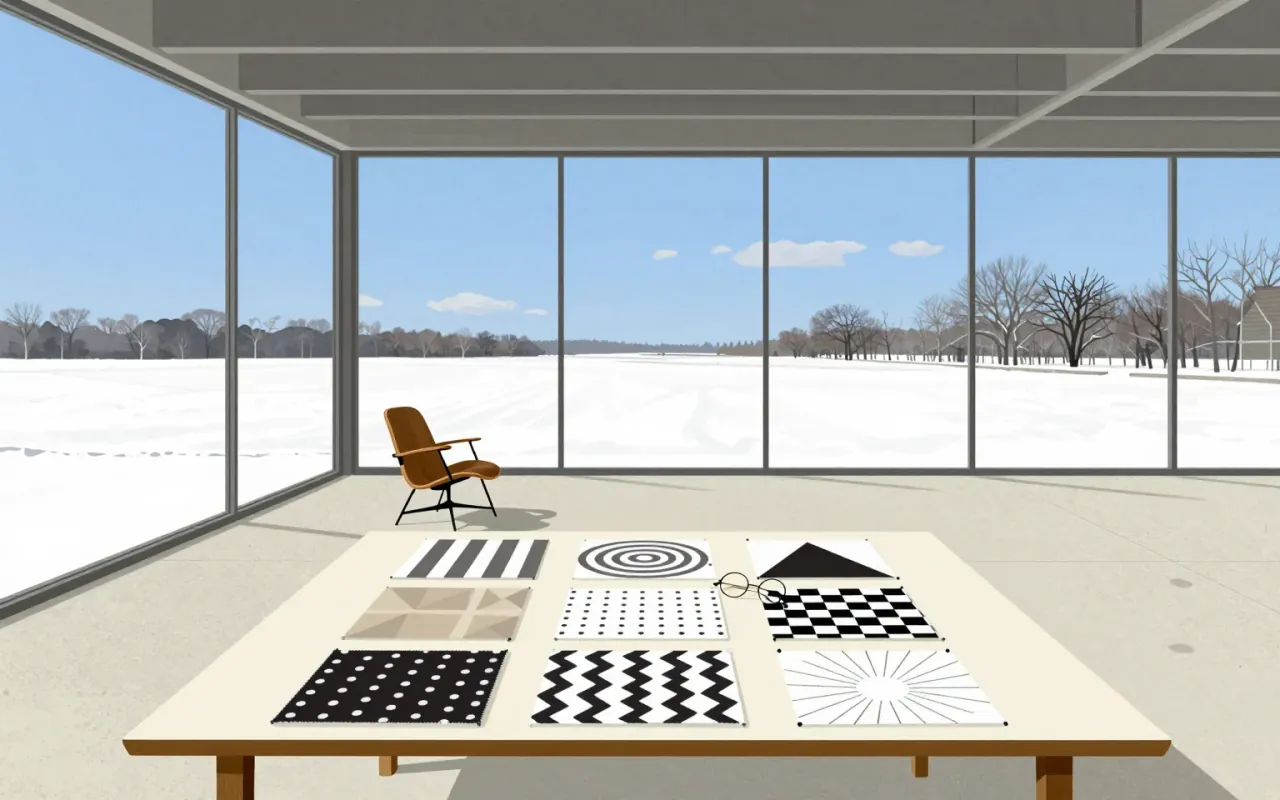
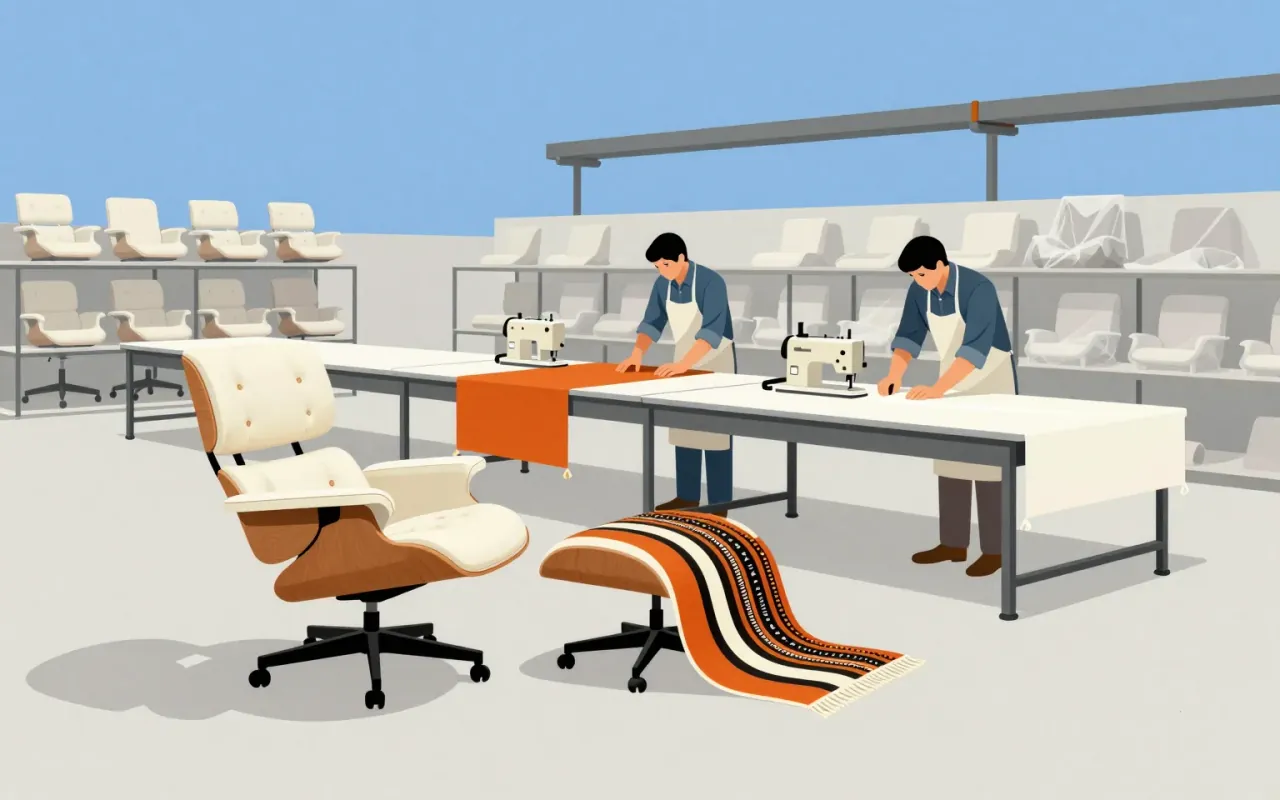
Herman Miller records more than 300 textile designs in multiple colourways during his tenure. Geometric patterns and strong colours offered choices beyond neutral coverings; his work also included decorative panels for Action Office.
Herman Miller says Girard worked with primary colours, concise geometric patterns and “a touch of humor”. Besides the 300-plus textile designs, his tenure produced wallpapers, prints, furniture and objects. Herman Miller says his fabrics were inspired not by a vision of the future but by a love of international folk art, and that his collection of folk toys and similar objects reached roughly 106,000 pieces. It quotes him: “I have no favorite material; anything can be used to create beauty if handled well.” These descriptions come from the manufacturer’s own page, which presents the designer to its customers.
What works
Textile changes how a supporting object is encountered. The same furniture form can acquire a different rhythm and presence through its covering, making fabric an active design decision rather than a finishing afterthought.
What does not
A pattern sample cannot predict a whole room. Scale, repetition and adjacent surfaces affect its presence, while visual appeal does not establish abrasion resistance or suitability for a particular installation.
What it influenced
Girard’s Herman Miller work continued until 1973. Its documented breadth shows how a textile department could contribute to a manufacturer’s identity across furniture, panels and other interior elements.
Herman Miller’s page also credits Girard with interiors beyond the textile division. It cites the New York restaurant La Fonda del Sol in 1959, where he designed interior, graphics, place settings and staff uniforms, and Braniff International Airways in the mid 1960s, for which it says he designed 17,543 different items. These are the company’s figures and are not checked elsewhere.
Is it worth your time
Worth studying alongside the furniture rather than in isolation. Compare a small swatch with the pattern repeated over a larger surface. The design question is how colour, repeat and object shape alter one another.