What the work is
A sustained practice in textile-led environmental design: fabric collections (1952–1973), collaborative Mexican cotton production, furniture systems (1967), and large-scale branding projects like Braniff Airways.
How it was made
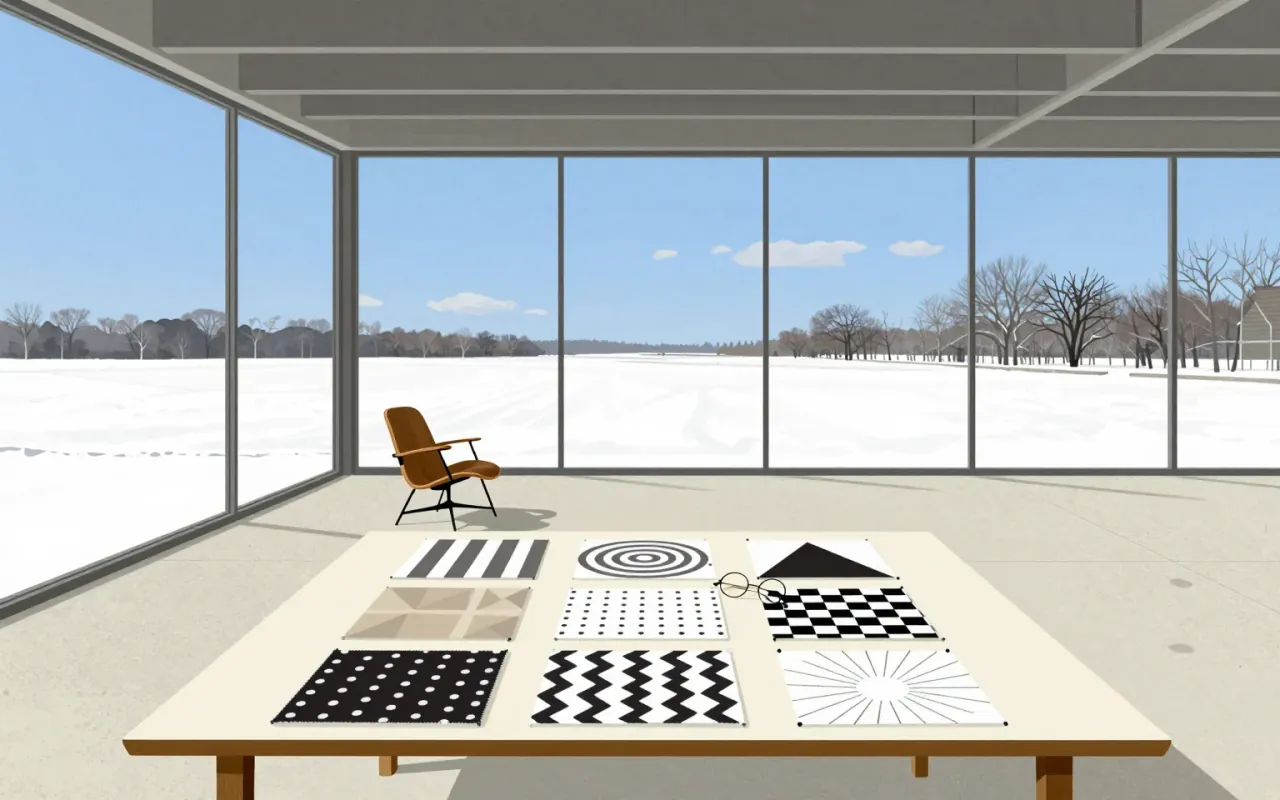
Girard headed Herman Miller’s fabric and textile division from 1952, establishing his first collection using geometric forms—stripes, circles, triangles—rooted in architectural training. He later shifted to folk art–inspired patterns and collaborated with Telares Uruapan in central Mexico to produce handwoven 100% cotton fabrics. His 1967 Herman Miller furniture collection extended textile logic into form, adapting Braniff Airlines lounge designs featuring a low sight line and separable interior/exterior shell.
What works
His shift from architectural geometry to folk art created a distinctive visual grammar grounded in cultural specificity and craft collaboration. The separable shell-and-cushion furniture system enabled varied upholstery—making textile choice a structural variable, not an afterthought.
What does not
The material does not establish Girard’s work as structural architecture, mass-manufacturing breakthroughs, or digital-era influence. It does not support claims about ergonomics, material science, or solo authorship beyond the studio context.
What it influenced
Girard’s methodology influenced interior design systems that integrate colour, pattern, and cultural reference as functional infrastructure—not decoration. His Braniff Airways branding and Herman Miller furniture show how textile sensibility scaled to environmental and corporate identity.
Is it worth your time
Yes—if you need to understand how textile thinking reshaped American mid-century interiors, branding, and furniture systems. No—if you seek discrete objects, industrial innovation, or standalone graphic work.