5:55in productionCh. 1 · What It Is/ 5:55 · ceiling 15 min
Industrial
Pallet
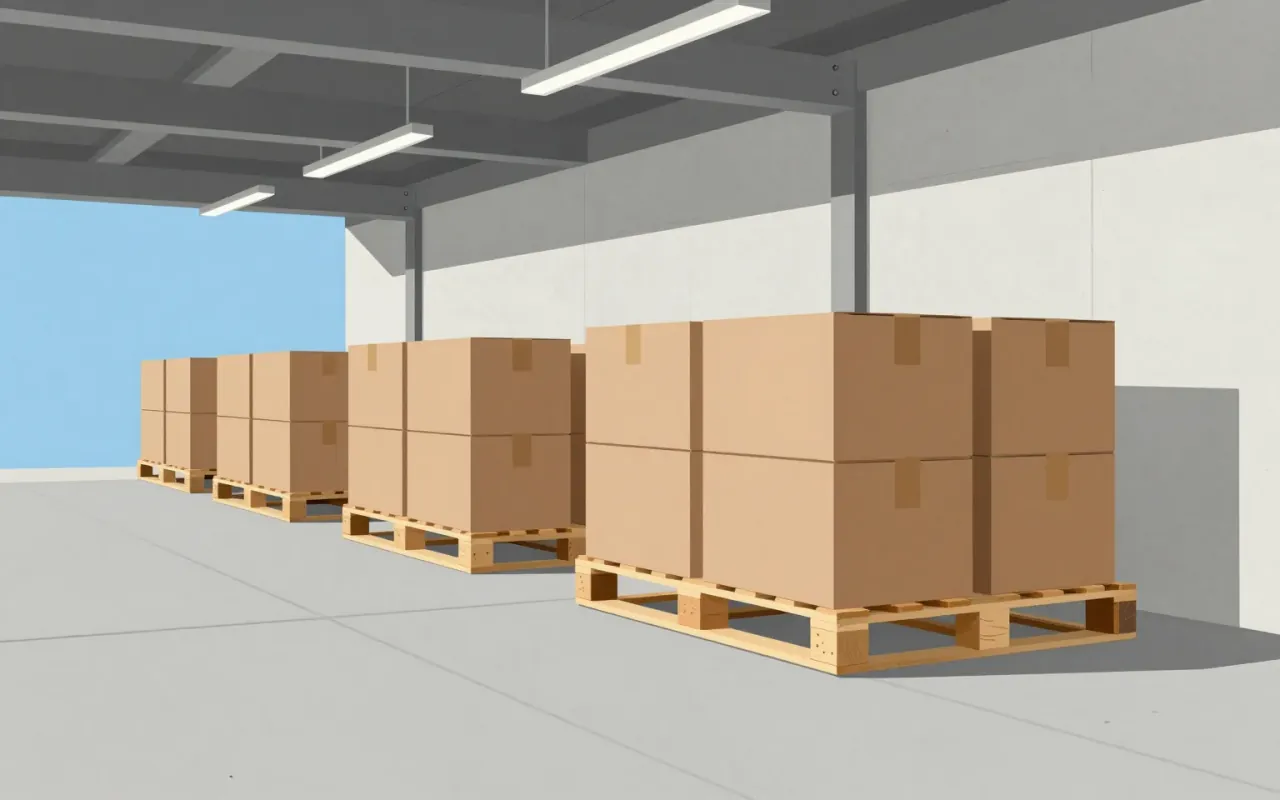
The pallet isn’t a design — it’s the silent contract between forklifts, containers, and capitalism.
The work defines the pallet as a flat transport structure supporting stable goods handling via mechanical equipment. It details structural types, materials, dimensional standards, regulatory requirements, economic impact, hazards, and non-logistical uses. It does not attribute the work 'Pallet' to any individual or collective author named 'Various', nor does it describe a creative, artistic, or research work titled 'Pallet' — it describes the industrial object.
establishes the pallet as the structural foundation of the unit load
clarifies load capacity (1,000 kg)
quantifies scale (2 billion in use in the US as of 2020)
explains efficiency gains from standardisation
What does not
resolve the lack of an international standard
Study it if
logistics professionals
industrial designers
policy analysts
Skip it if
art historians
collectors
interior stylists
The design analysis1 min read
What the work is
The work is a definitional account of the pallet as an industrial object — not a design artefact, artwork, or project by ‘Various’.
How it was made
The work was made by defining the pallet as a functional object: a flat transport structure designed for mechanical lifting and unit-load stability.
What works
It establishes the pallet’s role as the structural foundation of the unit load, its load rating (1,000 kg), its economic scale (2 billion in use in the US as of 2020), and its operational logic (reusable vs. single-use).
What does not
It does not resolve the lack of an international standard; that absence remains a source of ongoing expense.
What it influenced
It influenced the supplanting of wooden boxes and barrels in the twentieth century, enabling compatibility with corrugated boxes and intermodal containers.
Is it worth your time
Yes — it clarifies how a ubiquitous, invisible infrastructure shapes global logistics, cost, and trade friction.