What the work is
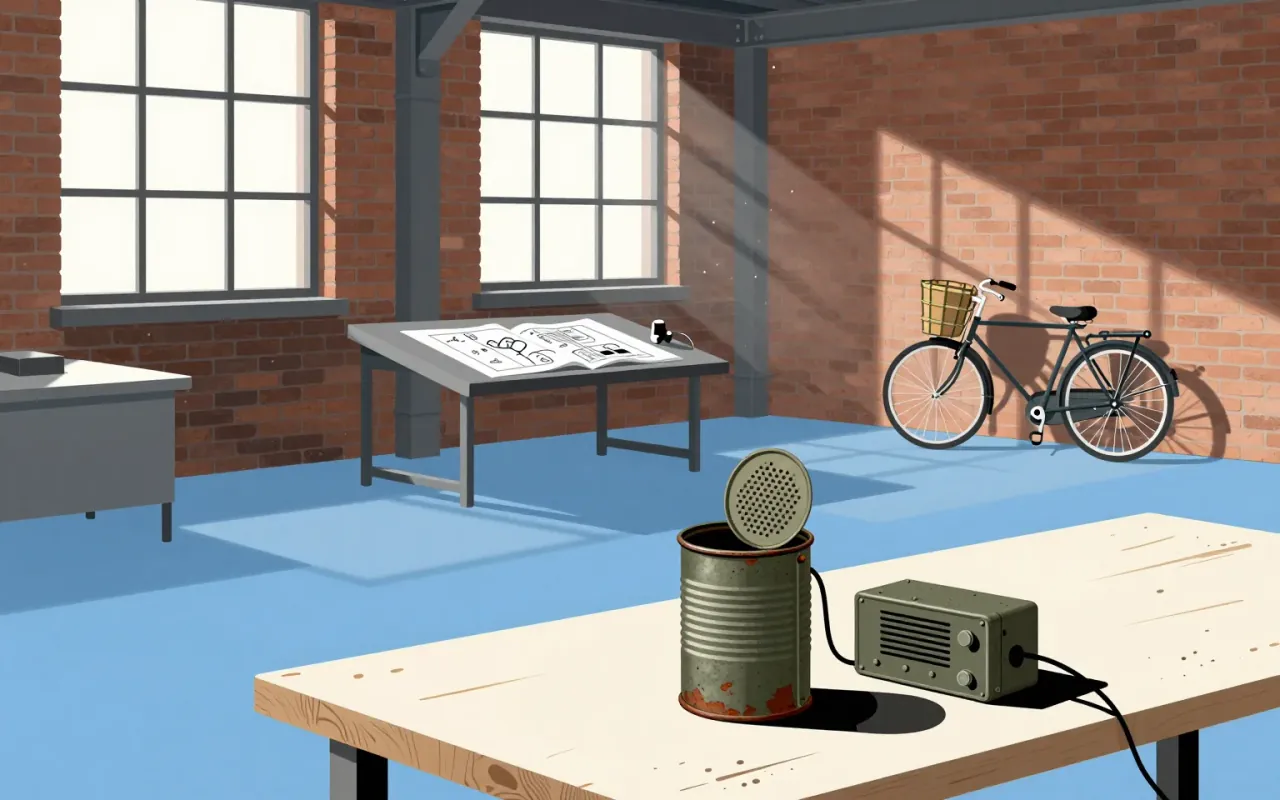
Victor Papanek’s work is a body of prototypes and product concepts — including a $9 educational TV set for Africa, a candle-powered radio from food cans, a taxi for the disabled, reforestation tools, and human-powered transport — grounded in low-cost, context-specific making.
How it was made
Papanek worked through applied, collaborative, low-cost, context-specific prototyping — often with design teams — for underserved populations and developing regions. He designed for UNESCO, WHO, Volvo, and reforestation projects. His methods included repurposing food cans, using candle power, and building human-powered or wide-tired all-terrain vehicles.
What works
His work establishes design as a discipline of constraint-driven problem solving: price ceilings ($9 in 1970), material limits (food cans), energy scarcity (candles), terrain (wide-tired ATVs), and institutional mandates (UNESCO, WHO). Each prototype answers a specific, non-theoretical need.
What does not
The sources do not establish any finished mass-produced products, commercial adoption, long-term deployment data, or user feedback from the field. There is no evidence of durability, repairability, scalability beyond prototype, or cultural uptake of the designs.
What it influenced
Design for the Real World (1971) achieved lasting international impact. It was translated into more than 24 languages. It established socially and ecologically responsible design as a coherent, teachable practice.
Is it worth your time
Yes — if you need a working definition of socially engaged industrial design, not a biography or theory survey. His work is a set of concrete responses to material constraints, not abstract advocacy.