What the work is
A body of built architecture—including the London Aquatics Centre, Broad Art Museum, MAXXI Museum, and Guangzhou Opera House—realising a design process grounded in painting, abstraction, and spatial explosion.
How it was made
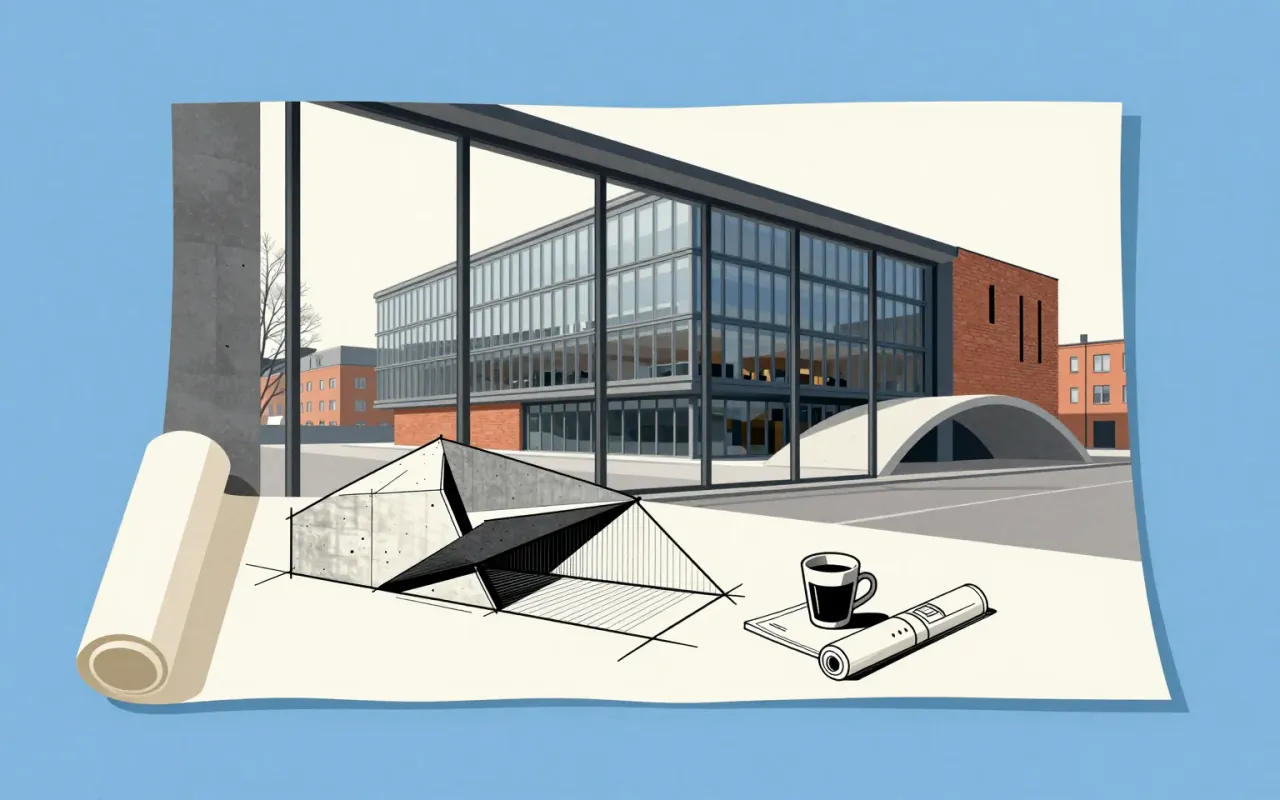
She painted large acrylic compositions inspired by Suprematism, especially Kazimir Malevich, to generate architectural form. She rejected right angles in favour of diagonals emerging from conceptual ‘explosions’ that re-formed space. She hand-drew and built physical models to avoid computational constraint.
What works
Painting as a generative tool works. Diagonals and exploded programmes work to disrupt static space. Hand-drawing and modelling work to preserve conceptual freedom beyond digital limits.
What does not
The material does not establish any built work’s structural innovation, cost, sustainability, user experience, or social impact. It says nothing about construction feasibility, material specifications, or post-occupancy performance.
What it influenced
Her teaching at the Architectural Association, Harvard GSD, Columbia University and others disseminated her methods globally. Her work liberated architectural geometry, giving it a new expressive identity rooted in movement and curvature.
Is it worth your time
Yes—if you need to understand how abstraction, not software, drove a generation’s shift from orthogonal to fluid architecture.