8:05in productionCh. 1 · Origin: A Post-War Rejection/ 8:05 · ceiling 15 min
Architecture
Brutalist architecture
Brutalism isn’t ugly — it’s unbendingly honest about what a building is made of and why it stands there.
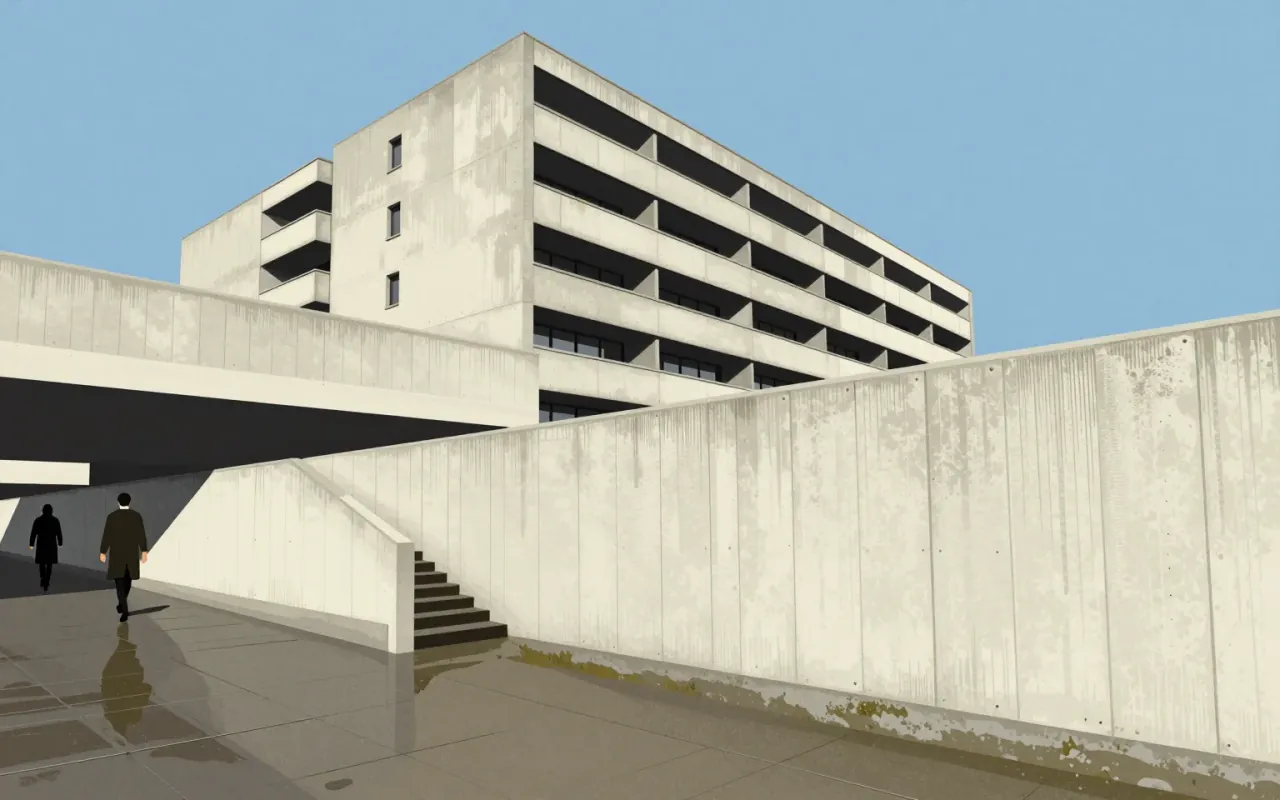
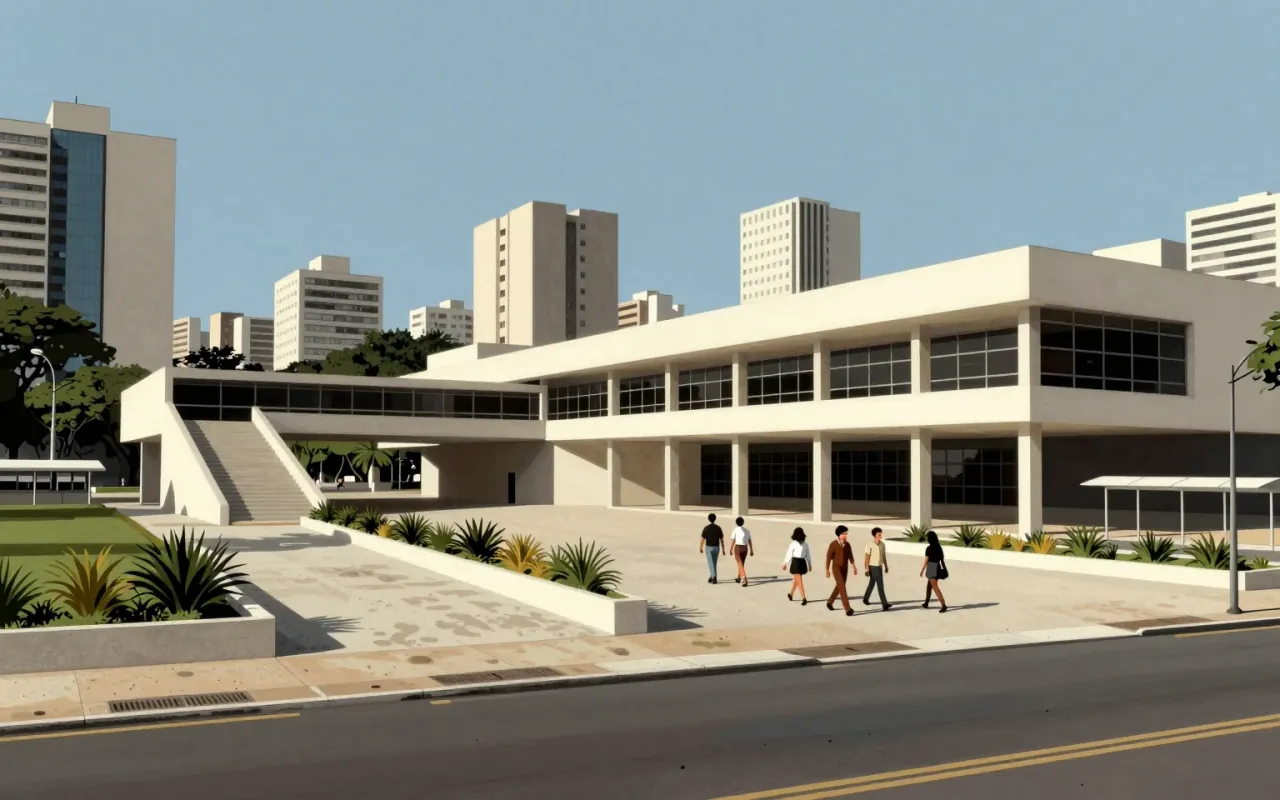
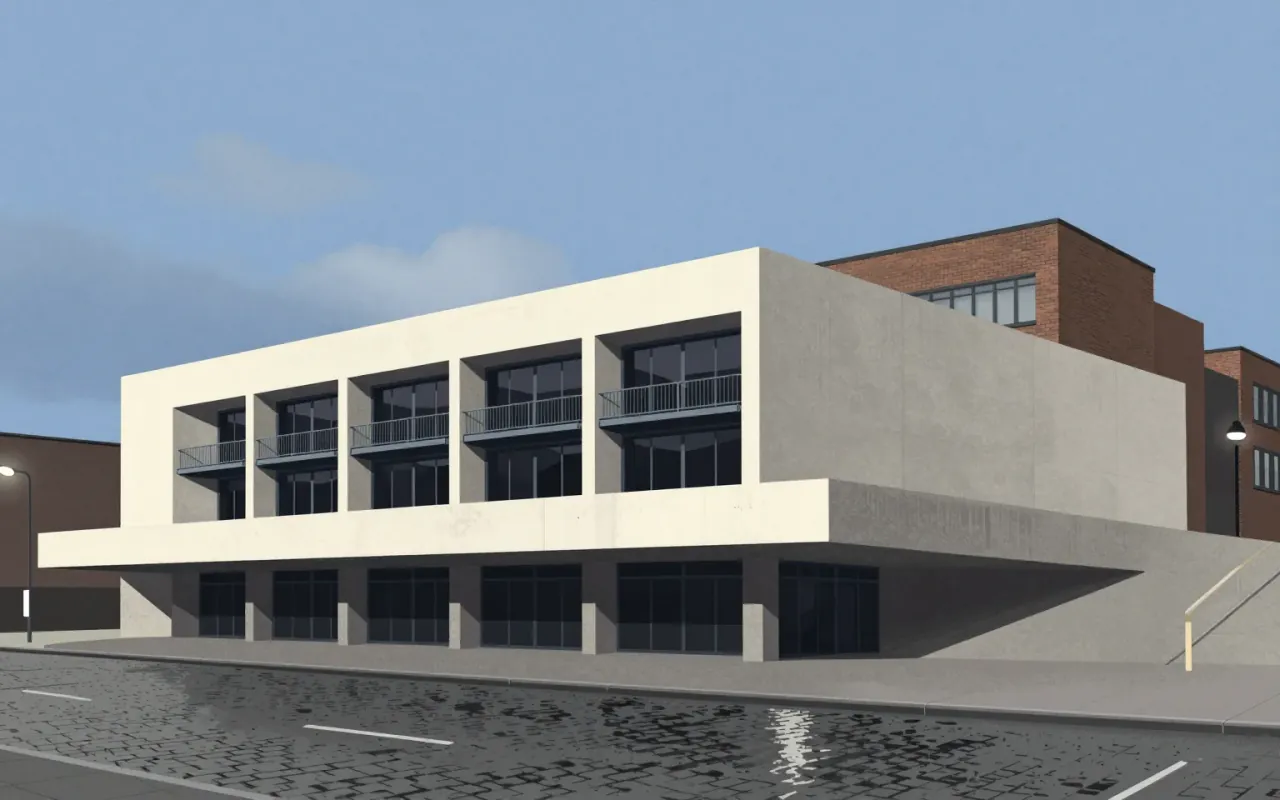
Brutalist architecture is a UK-born, 1950s architectural style defined by exposed materials, structural legibility, and rejection of 1940s nostalgia. It uses minimalist construction to showcase bare materials and structural elements rather than decoration. The style commonly makes use of exposed, unpainted concrete or brick, angular geometric shapes and a predominantly monochrome colour palette; other materials, such as steel, timber, and glass, are also featured. Brutalism descended from modernism and was a reaction against the nostalgia of architecture in the 1940s. Hunstanton School (1954) and Sugden House (1955) are the earliest UK examples of new brutalism.
Brutalist architecture is a UK-born architectural style from the 1950s, defined by exposed materials, structural legibility, and rejection of 1940s nostalgia.
How it was made
Brutalist architecture was made by stripping away ornament to expose raw materials and structure. It used minimalist construction, prioritising honesty of material over decoration.
What works
It establishes clarity of purpose: each element signals its function and material truth. Hunstanton School (1954) proves that minimalism can carry institutional weight without ornament.
What does not
It does not accommodate visual softness, historical reference, or contextual blending. Its monochrome palette and angular geometry reject compromise with surrounding fabric or user expectation.
What it influenced
It influenced decades of civic and institutional architecture across the UK and beyond, establishing concrete as a legitimate, expressive medium for public buildings — not just infrastructure.
Is it worth your time
Yes — if you need to understand how post-war UK architects redefined public responsibility in built form. No — if you seek stylistic variety or human-scaled detail.