What the work is
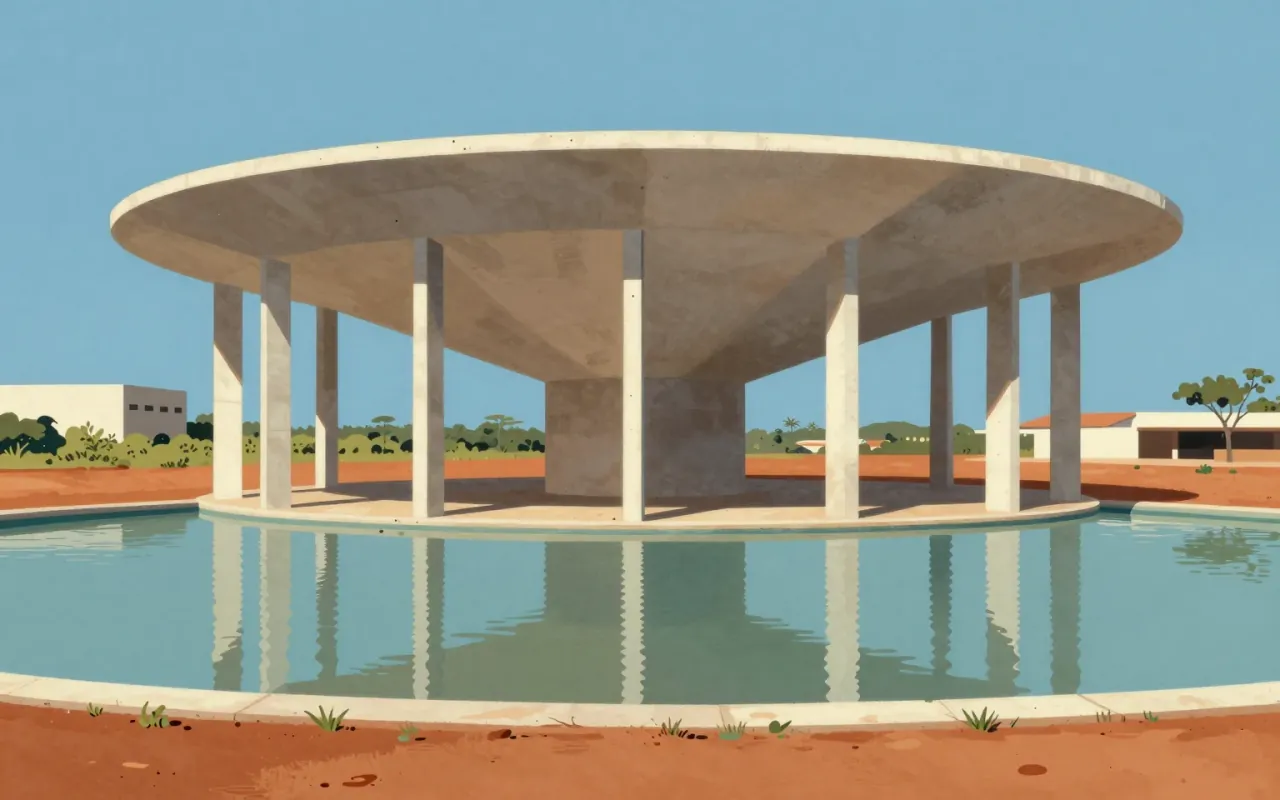
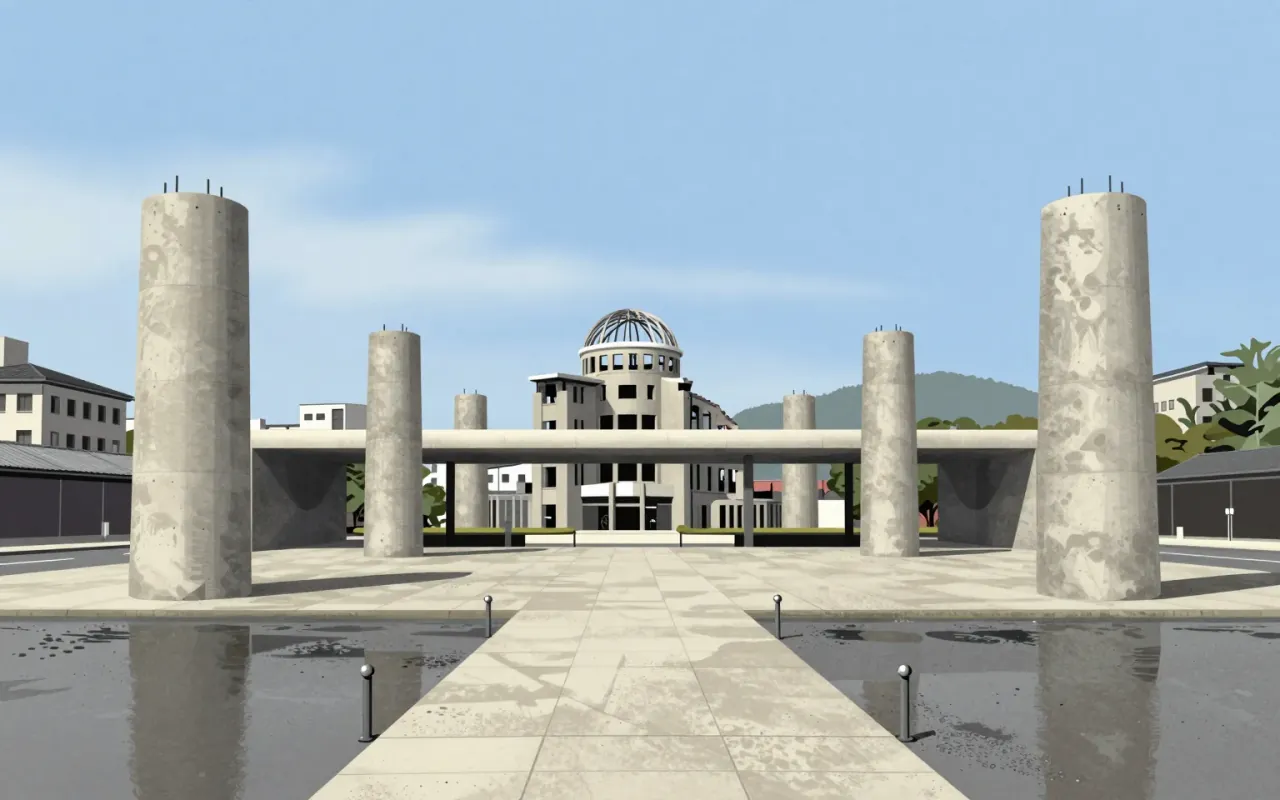
The Hiroshima Peace Memorial Park is a master-planned civic space centred on a museum raised on massive columns. Its axis intersects Peace Boulevard and the atomic bomb dome. The museum is isolated at the centre, distinct from utility buildings.
How it was made
Tange used urban studies to inform postwar reconstruction. He submitted proposals for war-damaged cities at the invitation of the War Damage Rehabilitation Board in summer 1946. He raised the museum six metres on piloti, accessed by a free-standing staircase. The museum is constructed from bare reinforced concrete. Its axial layout echoes his earlier Greater East Asia Co-Prosperity Sphere Memorial Hall competition entry.
What works
The axial framing works. Elevating the museum six metres on piloti frames views along its axis. Bare reinforced concrete delivers material honesty. Centrality and spatial hierarchy deliver symbolic clarity. The separation of museum from utility buildings sharpens focus.
What does not
The document does not establish influence beyond the Hiroshima Peace Memorial Park. It does not describe user experience, maintenance, cost, construction timeline, or public reception. It does not attribute design decisions to political ideology, cultural theory, or engineering innovation beyond what is stated.
What it influenced
The document establishes no direct influence on later work. It notes only that the Hiroshima layout echoed an earlier competition entry—no subsequent projects, schools, or movements are named or implied.
Is it worth your time
Yes—if you are assessing how structural expression and spatial hierarchy were weaponised for symbolic clarity in postwar civic architecture. It is not a survey of Tange’s career or a primer on Japanese modernism.