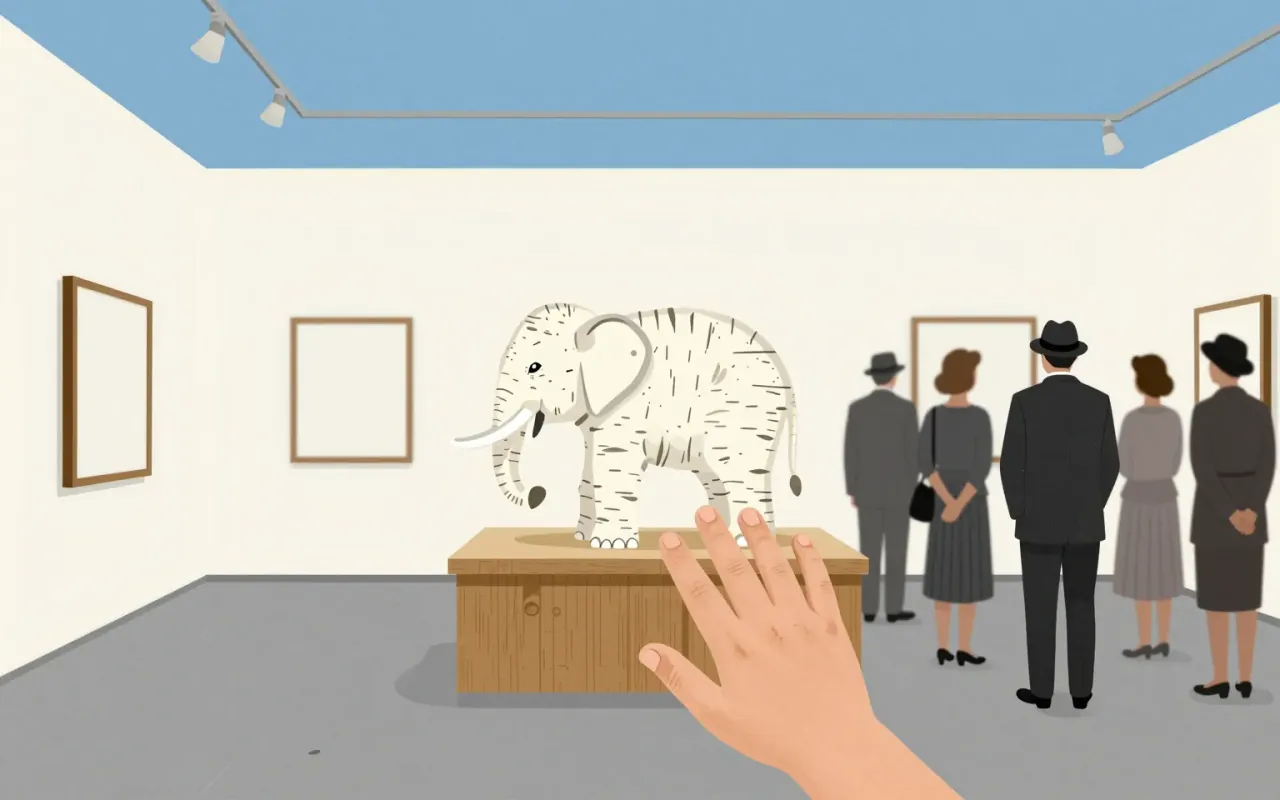
An animal from material experiments
Charles and Ray Eames designed the elephant in 1945 as part of a group of animals for children. Their experiments explored moulding plywood into compound curves. A cardboard study preceded two birch prototypes, which were shown at the Museum of Modern Art in 1946.
The Eames Foundation says the animals were designed during the moulded plywood experiments that produced the Eames LCW, as toys or furniture for children to sit on. Three of the animals, the frog, bear and seal, were mocked up in metal, while the elephant was first prototyped in cardboard. Later, two birch prototypes of the elephant and three horses were fabricated.
Prototype and later production
The elephant did not enter mass production during their lifetimes. Vitra produced a limited plywood edition in 2007 and subsequently introduced a plastic version. The design’s history therefore includes both early material exploration and much later manufactured interpretations.
According to the Eames Foundation, Vitra marked Charles Eames’s centennial in 2007 by producing 2,000 plywood elephants, 1,000 red and 1,000 natural. Shortly afterwards it released the elephant in durable plastic for children.
What to compare
Compare the prototypes with a later edition, keeping material and intended use in view. Ask how a recognizable animal is assembled from curved parts and how the scale relates to a child. The elephant is useful for studying the overlap between a toy, a seat and a sculptural object, while its production history prevents the prototype from being mistaken for an immediately available consumer product.