What the work is
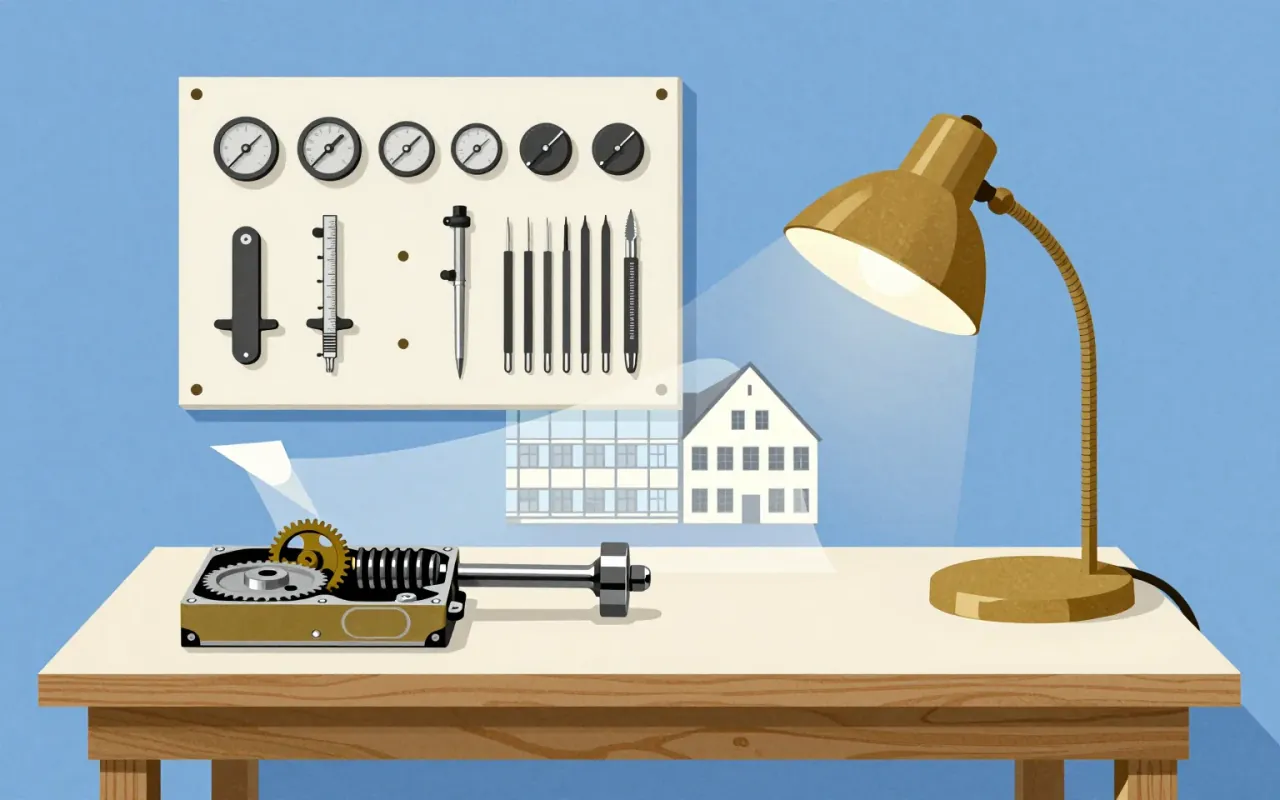
László Moholy-Nagy’s Light Prop for an Electric Stage, later called the Light-Space Modulator, was developed in 1928–1930. It used moving parts to produce changing reflections and shadows when light passed through the apparatus.
How it was made
Moholy-Nagy worked with architect Istvan Seboek on the device for a Deutscher Werkbund exhibition in Paris in 1930. Reflective metal and transparent elements connected mechanical movement with the behaviour of projected light.
What works
The work extends beyond its physical outline. Its changing effects on nearby surfaces make the surrounding space part of what the viewer sees, shifting attention from a fixed sculpture to an event unfolding over time.
What does not
A still photograph of the apparatus leaves out movement and projection. To assess the design, distinguish the object from its light effects and from any film recording, which adds framing and editing of its own.
What it influenced
The apparatus also became material for the film A Lightplay: Black White Gray. That relationship links the construction with Moholy-Nagy’s wider investigation of light across sculpture, projection and moving images.
Is it worth your time
Worth studying for installation and exhibition design. Follow the chain from light source to moving surface to projected effect; the sequence explains how a relatively bounded machine can transform a much larger visual field.