What the work is
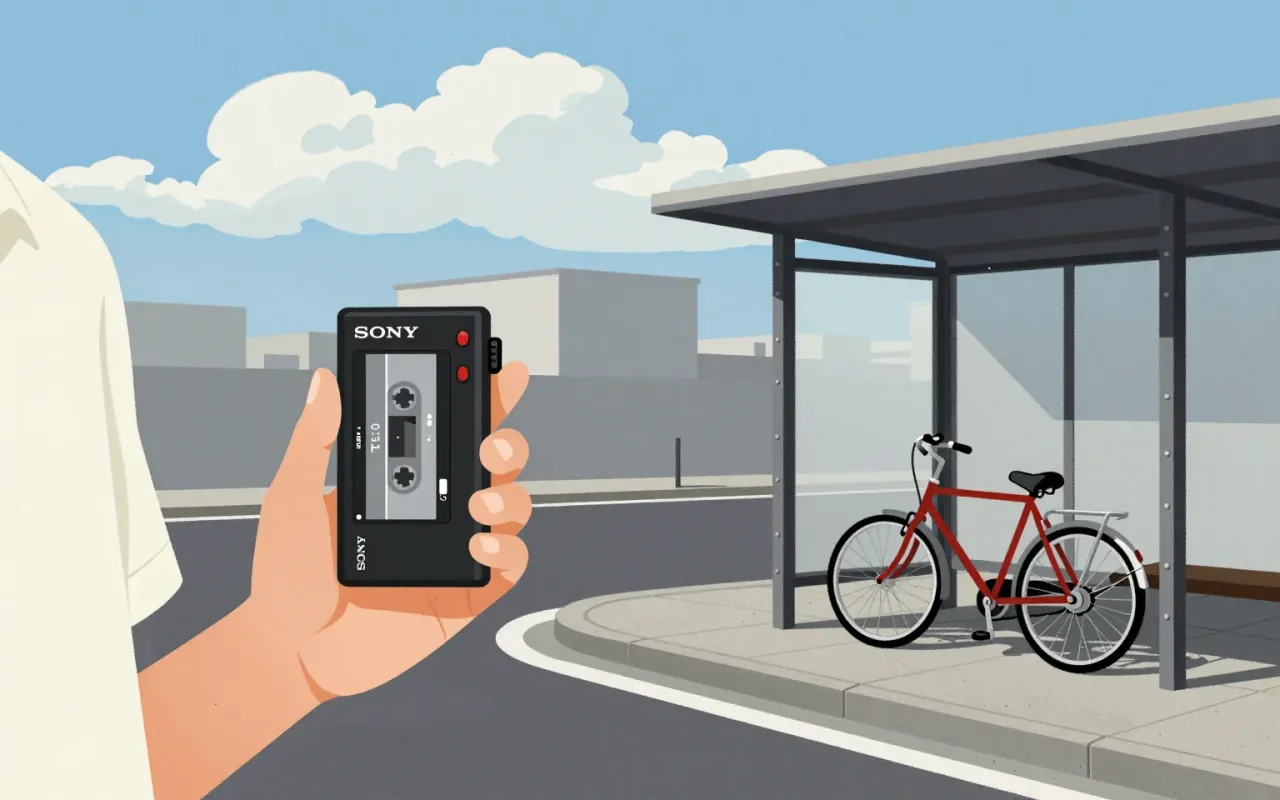
The TPS-L2 is a metal-cased, blue-and-silver cassette player released in Japan on 1 July 1979. It is playback-only. It weighs under 300g. It retailed for ¥33,000.
How it was made
The Walkman was made by modifying Sony’s existing Pressman recorder — a journalist’s tape recorder — into a playback-only device. Masaru Ibuka requested a stereo player optimised for walking. The team removed recording circuitry, reduced size and weight, and added dual headphone jacks.
What works
It works because it answers Ibuka’s specific request: a stereo player that functions while walking. Its dual headphone jacks enabled shared listening without sacrificing portability. Its low cost — relative to professional gear — made it accessible.
What does not
It does not solve battery life, noise isolation, or tape wear. It offers no volume control per ear, no track navigation, and no portability beyond pocket-and-walk — its constraints are physical, not conceptual.
What it influenced
It established the template for all subsequent personal audio devices: headphone-first, body-adjacent, playback-only, and socially discreet. It made portable stereo listening a norm, not a novelty.
Is it worth your time
Yes. It redefined personal listening as mobile, private, and socially legible — not just technically novel but behaviourally decisive.