What the work is
A collaborative practice across industrial design, architecture, film, and exhibition design. Not a style. Not a brand. A method: iterative, hands-on experimentation with bent plywood, driven by functional needs and technical constraints.
How it was made
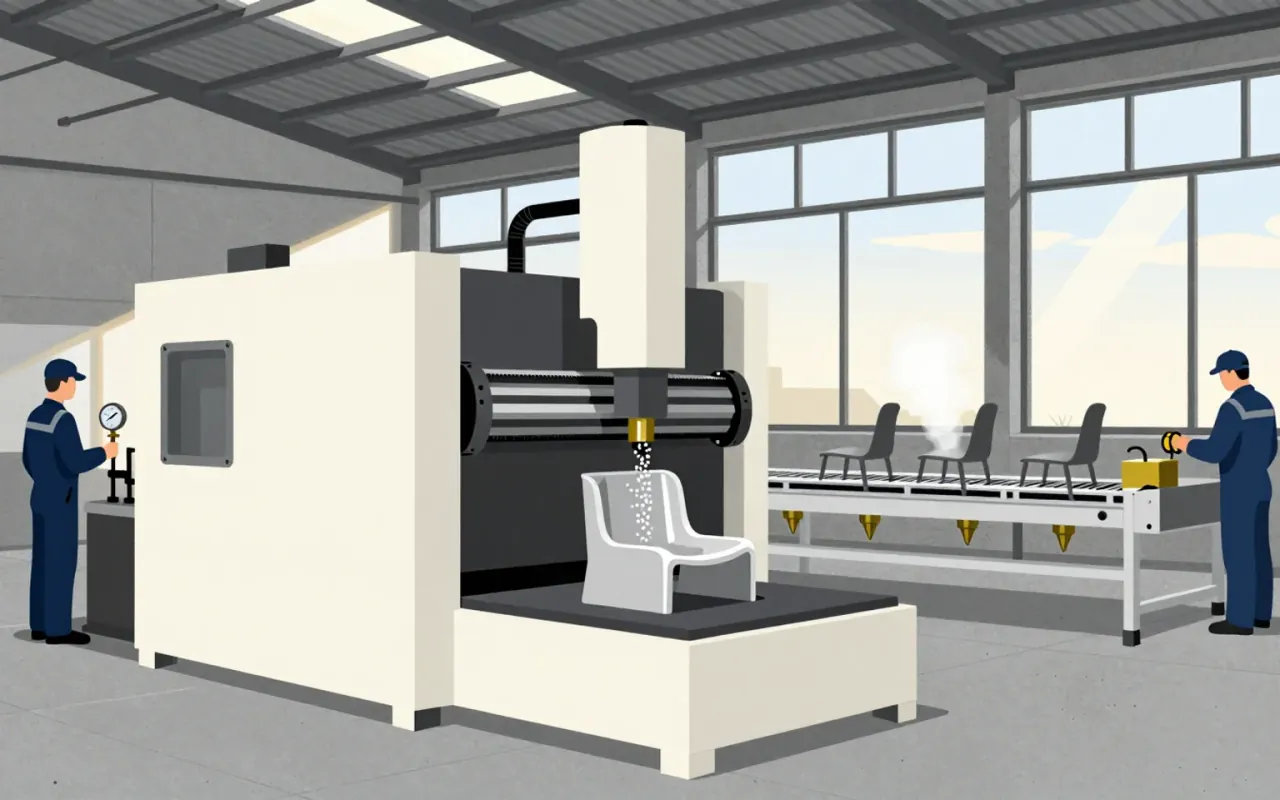
They built a plywood-curing oven called Kazam! in their apartment in 1942. They shaped plywood splints using heat and pressure to form compound curves. They bonded wood veneers with resin glue. They explored bent plywood starting in 1941 for its lightweight and low-cost potential. They attempted to mold a single piece of plywood into a chair.
What works
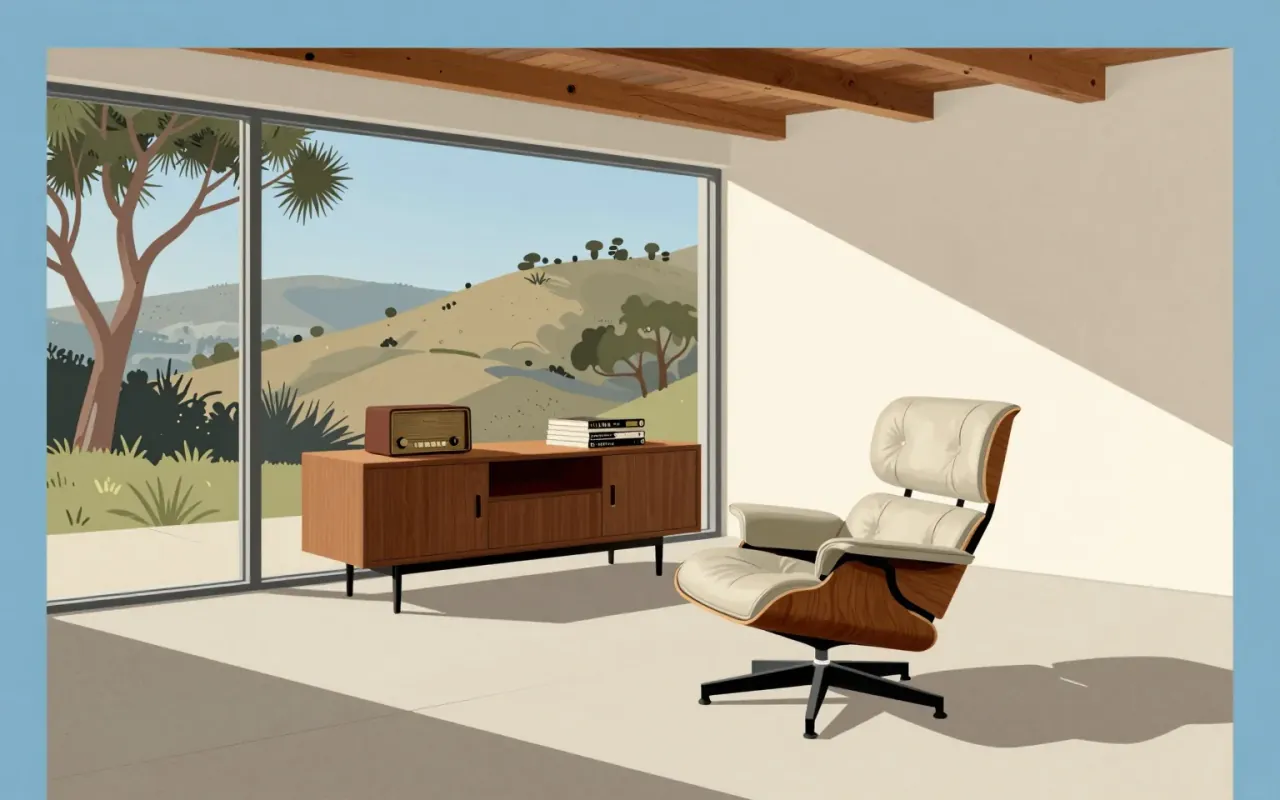
Their plywood splints replaced dangerous metal traction splints. Kazam! enabled production of their first bent-plywood seat shell. Their 1956 lounge chair became a prototype for ergonomic furniture. Their 125 short films served as an outlet for ideas, experimentation, and education.
What does not
The document does not establish a singular ‘Eames chair’ as a resolved, final object. It does not attribute specific furniture pieces to Charles alone or Ray alone. It does not claim ergonomic perfection beyond the 1956 lounge chair being a prototype — not a standard.
What it influenced
Their work influenced mass-producible molded-plywood and fiberglass furniture. Their films established visual demonstration and systems thinking as core tools in design education. Their splint work replaced metal traction splints that caused gangrene.
Is it worth your time
Yes — if you need to understand how material constraint, wartime necessity, and iterative prototyping shape industrial design. No — if you expect a unified theory of design or a finished product without compromise.