What the work is
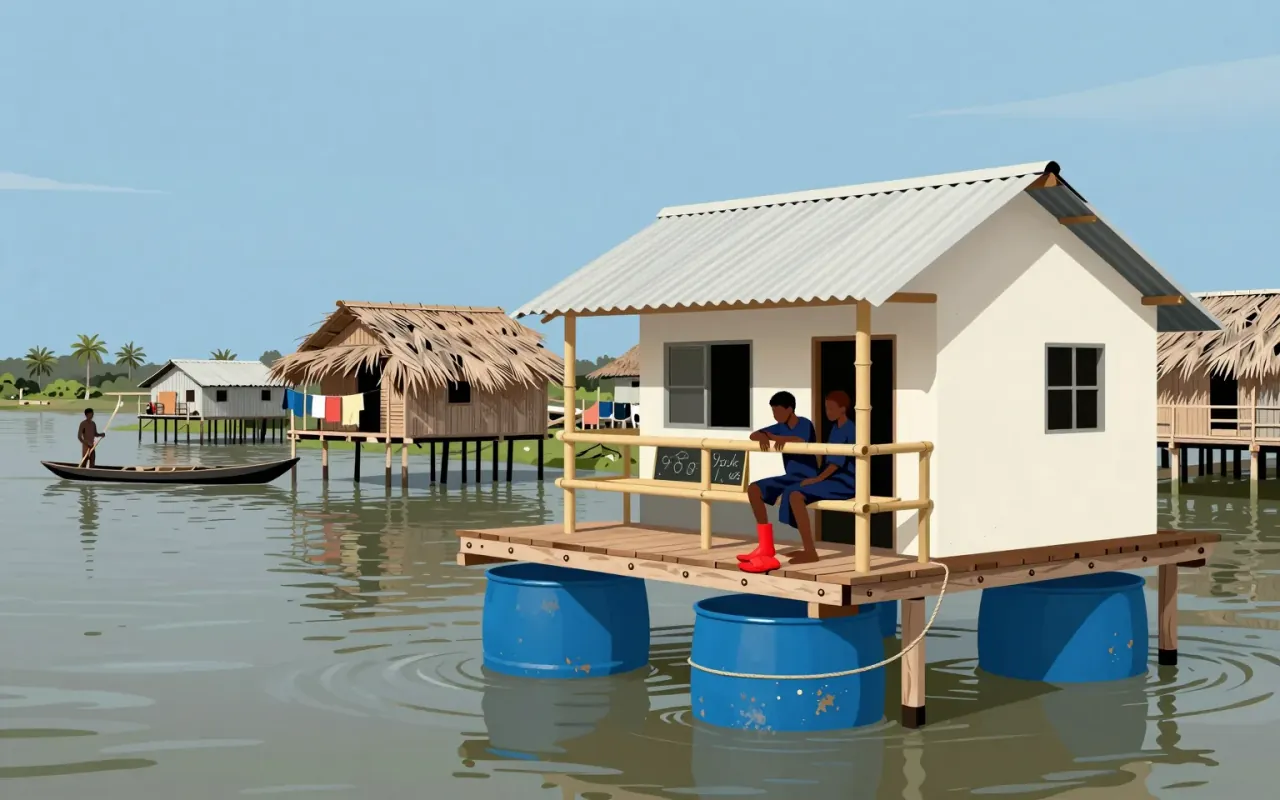
A floating school prototype built in Makoko, Lagos, Nigeria, in 2013 to address flooding and educational access by transforming the waterfront into a ‘floating island’.
How it was made
It was built in 2013 using bamboo, timber, and about 250 plastic barrels for flotation. It was developed through collaboration with NGOs including Heinrich Böll Foundation, UNDP, Nigeria’s Federal Ministry of Environment Africa Adaptation Programme, Yaba LCDA, and the Makoko waterfront community.
What works
It integrated solar cells, rainwater catchment, and composting toilets. It used local materials to respond to physical, social, and cultural needs. It achieved natural ventilation and aeration via barrel-based flotation.
What does not
It did not endure. It was abandoned in March 2016 over safety concerns and collapsed on June 7, 2016, during heavy rain. No occupants were present at collapse.
What it influenced
The document states no influence beyond subsequent iterations (MFS II, MFS III), which are named but not described in method or result.
Is it worth your time
Yes — as a documented case study in adaptive prototyping under constraint, not as a replicable solution. Its collapse three months after abandonment confirms its status as a prototype, not infrastructure.