What the work is
A body of speculative, collaborative architectural proposals — including the East London Fun Palace (1961), Think-Belt (1963–66), and Non-plan (1969) — that treat buildings as temporary, participatory, and responsive systems.
Cedric Price (11 September 1934 to 10 August 2003) was an English architect, and a teacher and writer on architecture. He started his own practice in 1960, after graduating from St John’s College, Cambridge in 1955, studying at the Architectural Association in London and working briefly for several established architects.
How it was made
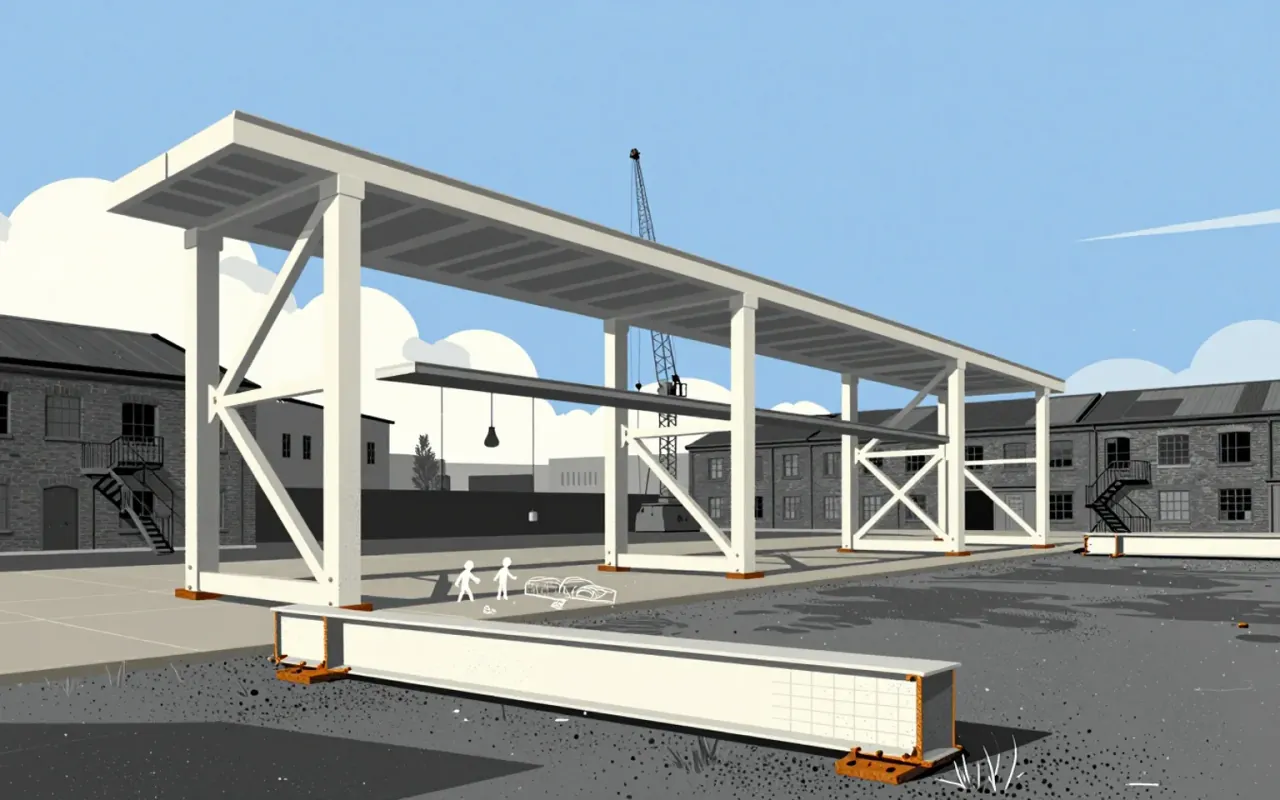
Price collaborated with Joan Littlewood and Gordon Pask on the East London Fun Palace. He co-authored Non-plan with Peter Hall and Paul Barker. He conceived Think-Belt as mobile, reconfigurable modules for an abandoned railway line.
Think-Belt began from the idea of using architecture and education to drive economic redevelopment in the north Staffordshire Potteries. It envisaged the reuse of an abandoned railway line as a roving higher education facility, to re-establish the Potteries as a centre of science and technology, with mobile classroom, laboratory and residential modules that could be moved, grouped and assembled as required. Price taught part-time at the Architectural Association and the Council of Industrial Design from 1958 to 1964, and later founded Polyark, a network of architectural schools. In 1969 Non-plan, with the planner Sir Peter Hall and Paul Barker, editor of New Society magazine, challenged planning orthodoxy. Other collaborations included the Snowdon Aviary at London Zoo (1961), with the Earl of Snowdon and Frank Newby, and the Claverton Dome, with Buckminster Fuller.
What works
Price’s work establishes architecture as a framework for change, not a fixed object. It treats flexibility, user agency, and interdisciplinary input as design constraints — not afterthoughts.
What does not
None of Price’s major proposals were built at full scale. The Fun Palace remained unbuilt. Think-Belt was never realised. Non-plan offered critique without a replacement system.
What it influenced
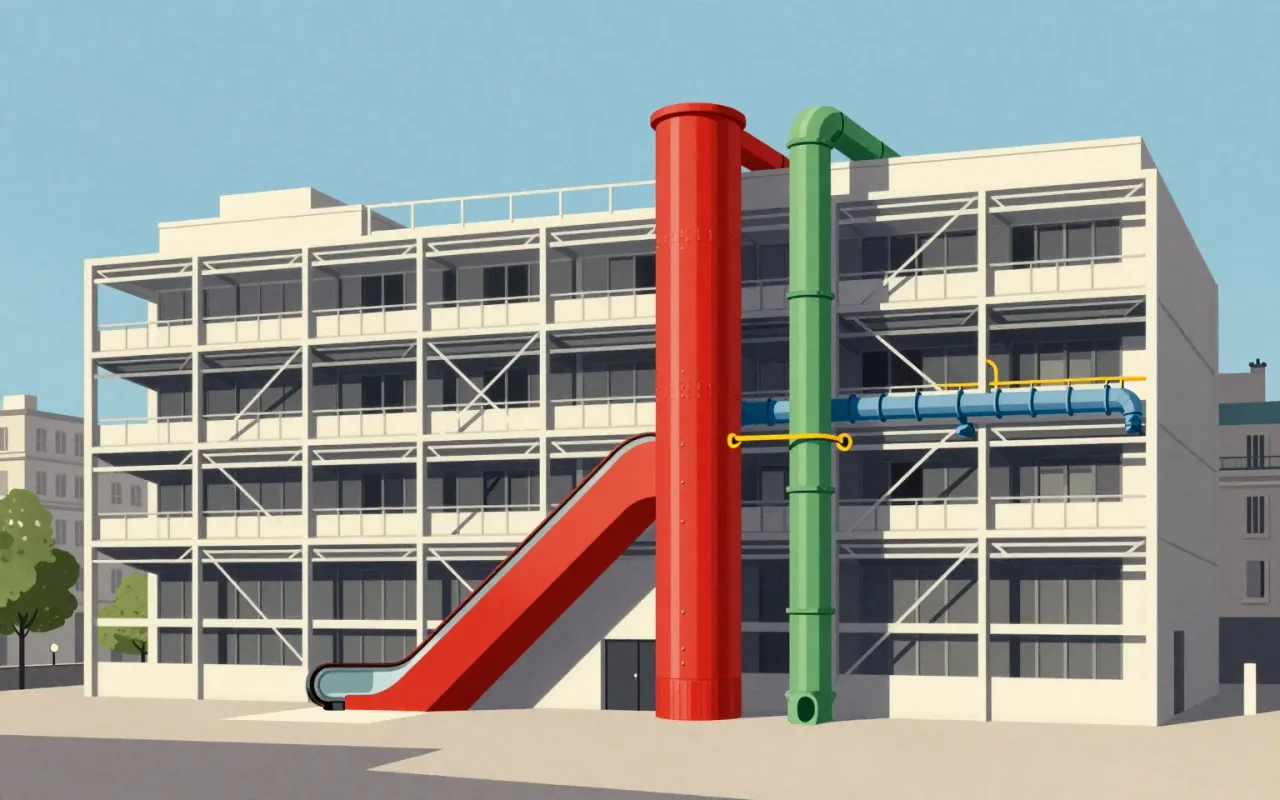
The Fun Palace influenced the Centre Georges Pompidou and the Inter-Action Centre. Its ideas entered built work through Rogers, Piano, and Price’s own scaled-down implementation in Kentish Town.
In 1984 Price proposed redeveloping London’s South Bank and suggested that a giant Ferris wheel be built by the Thames, foreseeing the London Eye. He was awarded the Austrian Frederick Kiesler Prize for Architecture and the Arts in 2002.
Is it worth your time
Yes — if you are interested in how unbuilt proposals shape built reality, or how architecture can model learning, participation, and planning as process rather than product.