What the work is
William Morris developed patterns for wallpapers and textiles, adapting natural motifs to repeated surfaces. They are related areas of practice, but paper and cloth are different media; a familiar pattern name should not erase that distinction.
How it was made
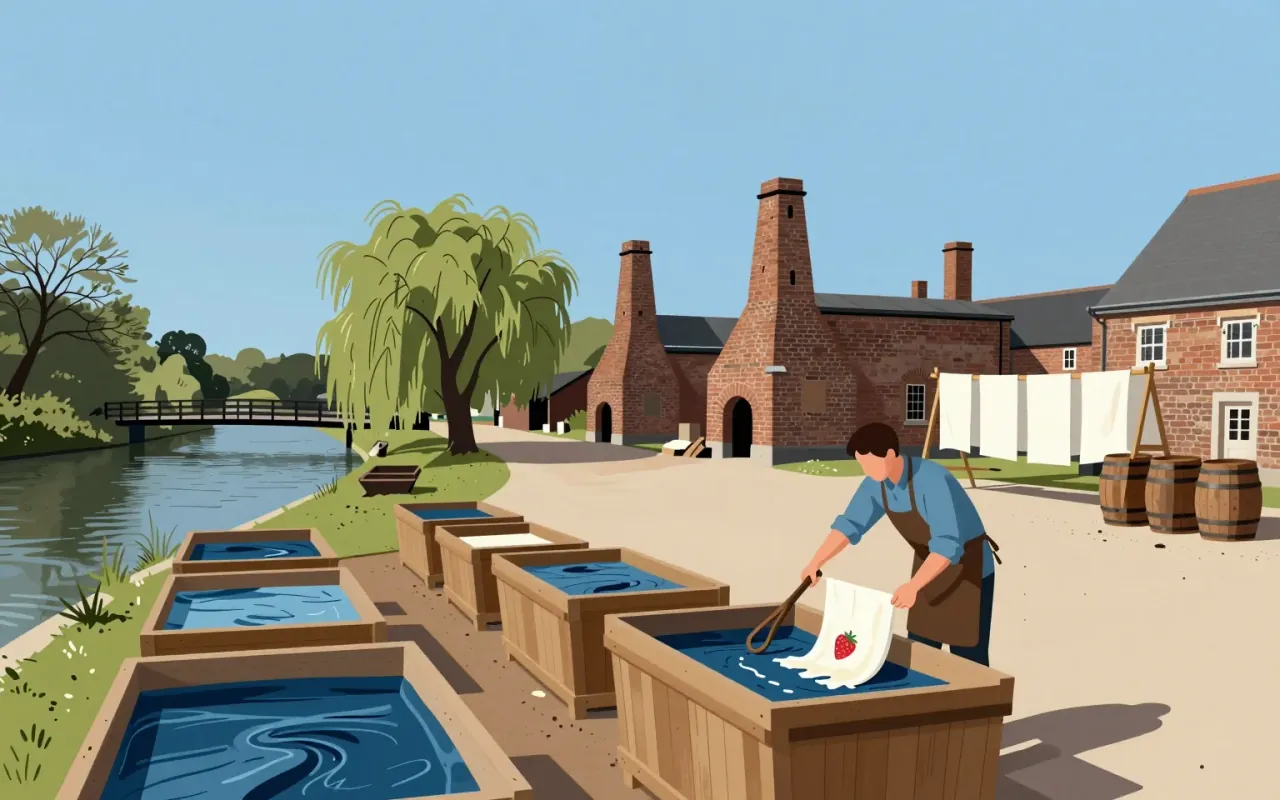
The V&A describes wallpaper printing with multiple carved blocks. Its account of Strawberry Thief fabric emphasizes experiments with dyes and mordants. The finished repeat depends on the printing sequence as well as the drawn motif.
What works
Plants become an organized field rather than isolated botanical illustrations. Looking for the repeat reveals how apparent abundance is held together by recurring relationships, allowing the surface to continue beyond a single framed image.
What does not
Complex manufacture carried a cost. The V&A records objections to the scale of some wallpapers and notes that many people could not afford Morris’s papers. Decorative richness was never a universally accepted or accessible solution.
What it influenced
The museum documents cheaper papers in a Morris-like manner and influence on subsequent designers, including Charles Voysey. That reception should be separated from the authorship and production method of any particular later reproduction.
Is it worth your time
Worth studying as both pattern and process. Compare paper with fabric, locate the repeating unit and identify how the colours were applied. A modern printed souvenir cannot substitute for the original material specification.