What the work is
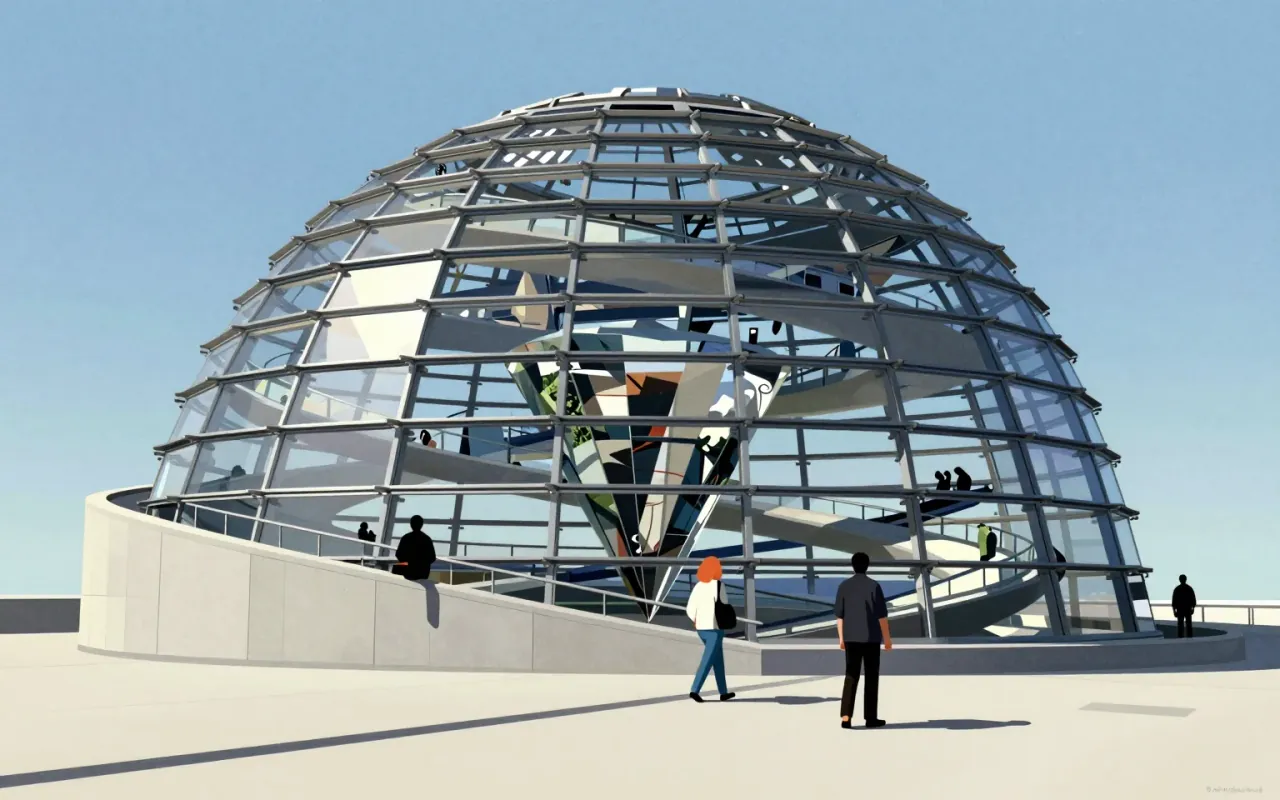
A reconstructed glass dome on the Reichstag building in Berlin. It houses a mirrored cone, public spiral ramps, and an electronic sun shield. It symbolises German reunification and democratic transparency.
How it was made
Norman Foster designed the dome based on Gottfried Böhm’s idea. Waagner-Biro built it as a reconstructed glass structure atop the rebuilt Reichstag in Berlin. It uses a mirrored cone, two steel spiral ramps, an electronically tracked sun shield, and daylight-driven energy efficiency.
What works
It provides a 360° view of Berlin. It makes the Bundestag chamber visible from above. The mirrored cone directs sunlight into the chamber while enabling visitor observation. Daylight reduces artificial lighting and carbon emissions. The sun shield prevents glare and solar gain.
What does not
The sources do not establish how the dome handles acoustics, weather sealing, maintenance access, thermal bridging, or structural load paths. They do not describe visitor capacity, ramp gradient, material thickness, or construction timeline beyond 1999.
What it influenced
The dome became one of Foster’s most recognisable post-modern landmarks — cited alongside 30 St Mary Axe and the British Museum Great Court — anchoring a portfolio defined by glass, light, and institutional legibility.
Is it worth your time
Yes. It is a rare civic object that delivers symbolic clarity, functional transparency, and environmental logic in one built form — all verified by its documented decisions and effects.