What the work is
The 7132 Thermal Baths is a spa complex completed in 1996 in Vals, Switzerland. It sits atop the only thermal springs in the Graubünden canton. Peter Zumthor designed the spa component. It is not the full hotel/spa complex — only the spa building is attributed to Zumthor in the sources.
How it was made
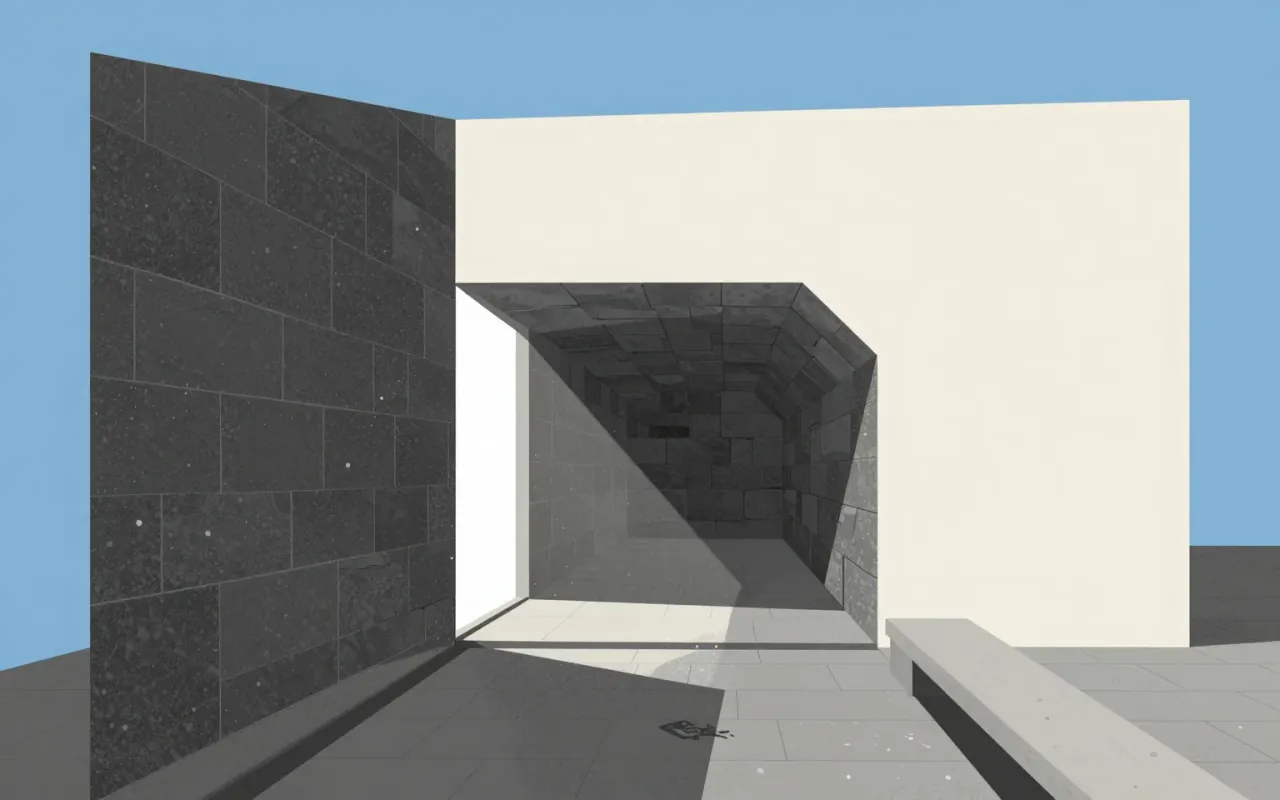
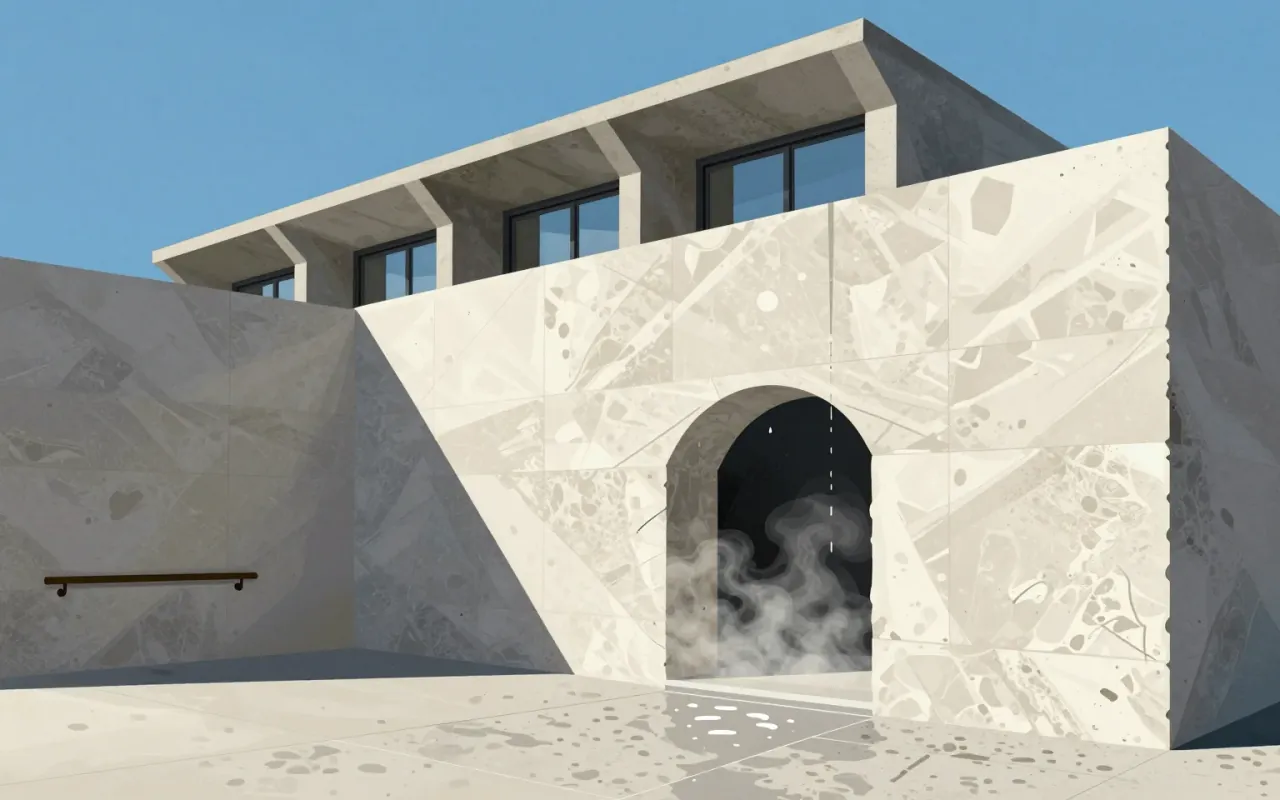
Peter Zumthor designed the spa as an architectural interpretation of a stone quarry. It was built using locally quarried Valser quartzite slabs. The structure comprises 15 interlocking, table-like units, each 5 metres high. Each unit has a cantilevered concrete roof supported by tie-beams. The units fit together like a giant jigsaw puzzle. The roofs do not join; 8 cm gaps between them are covered by glass to prevent water ingress.
What works
The roof design produces a perceptual dichotomy: concrete conveys heaviness while the glazed 8 cm gaps create an impression of levity. This contrast emerges directly from the construction method — interlocking stone units with deliberately unjoined cantilevered roofs. The use of local Valser quartzite anchors the building to its site and reinforces the quarry concept.
What does not
The brief does not establish any claim about thermal performance, accessibility, operational capacity, guest experience, maintenance, cost, or longevity. It says nothing about interiors beyond the roof’s perceptual effect, nor about integration with the hotel component.
What it influenced
The brief does not state what the work influenced. No claims about influence, reception, replication, criticism or legacy appear in the sources.
Is it worth your time
Yes. It rewards close attention to how material, geometry and detail produce perceptual tension — but only if you are interested in architecture that prioritises tectonic legibility over comfort, circulation or programmatic flexibility.